
The Ultimate Guide to Air-cooled 5MWh Utility-scale BESS for Coastal Salt-spray Environments

The Ultimate Guide to Air-cooled 5MWh Utility-scale BESS for Coastal Salt-spray Environments
Hey there. If you're reading this, chances are you're evaluating a large-scale battery storage project for a site near the coast. Maybe it's in Florida, California, the North Sea coast, or the Mediterranean. And you're probably hearing a lot of conflicting advice about air-cooling versus liquid-cooling, corrosion risks, and how to keep those Levelized Cost of Energy (LCOE) numbers down. Honestly, I've been there on site, smelling the salt air and feeling that fine mist, wondering how a multi-million dollar asset is going to hold up in 10 or 15 years. Let's talk about what really matters when specifying a 5MWh, utility-scale, air-cooled BESS for these demanding environments. This isn't just theory; it's what we've learned from getting our hands dirty.
Quick Navigation
- The Silent Cost of Salt: More Than Just Rust
- Why Air-Cooling for 5MWh? The Efficiency Trade-Off
- Beyond the Enclosure: A Systems Approach to Protection
- Making the Decision: Your Checklist for Coastal BESS Success
The Silent Cost of Salt: More Than Just Rust
We all know salt spray accelerates corrosion. But in a BESS, the problem isn't just a rusty container door. It's a silent, systemic attack. I've seen firsthand how chloride ions penetrate standard enclosures, settling on busbars, relay contacts, and PCB assemblies. This leads to increased contact resistance, which creates localized hot spots. Worse, it can cause creepage and clearance issues - critical safety distances defined by UL 9540 and IEC 62933 - to degrade over time, posing a real electrical hazard.
The financial impact is huge. A National Renewable Energy Laboratory (NREL) report highlighted that operations and maintenance (O&M) costs for poorly adapted coastal infrastructure can be 40-60% higher than for inland sites. That's not just washing the container more often. That's unscheduled downtime, premature component replacement, and a significant hit to your project's lifetime LCOE.

Why Air-Cooling for 5MWh? The Efficiency Trade-Off
For a 5MWh utility-scale block, the industry often leans towards liquid cooling for its precise thermal control. So, why consider air? For coastal sites, simplicity is a strategic advantage. An air-cooled system has fewer fluid conduits, pumps, and liquid-to-coolant heat exchangers - all of which are potential leak points and corrosion hotspots. The maintenance philosophy is different. Instead of worrying about coolant chemistry degradation and internal leaks, your focus is on filtered air intake and fan health.
This is where C-rate becomes crucial. A moderate C-rate (say, around 0.5C to 1C for most grid-support applications) generates less intense, more manageable heat than high-C-rate applications. With a well-designed, ducted air-cooling system that uses corrosion-resistant EC fans and positive-pressure air filtration, managing cell temperature uniformity (|T) is absolutely achievable. The key is oversized, marine-grade filters and a thermal management algorithm that proactively adjusts airflow based on ambient conditions, not just battery temperature.
Air vs. Liquid Cooling in Salt-Spray: A Quick Comparison
| Consideration | Air-Cooled BESS | Liquid-Cooled BESS |
|---|---|---|
| Corrosion-Prone Components | Fans, filters, external heat exchangers. | Pumps, cold plates, piping, fluid reservoirs, external dry coolers. |
| Maintenance Access | Generally easier to inspect and replace filters/fans. | Requires handling of coolant; potential for internal leaks harder to detect. |
| System Complexity | Lower. Relies on proven HVAC-style components. | Higher. Integrated mechanical and fluid systems. |
| Parasitic Load | Can be higher at peak cooling demand. | Typically more energy-efficient at high, sustained heat loads. |
Beyond the Enclosure: A Systems Approach to Protection
Specifying an IP55 or IP56 rated enclosure is just the ticket to entry. The real engineering happens inside. At Highjoule, for our coastal-series BESS, we start with the foundation: all structural steel gets a hot-dip galvanized coating, followed by a specialized epoxy paint system designed for C5-M marine environments as per ISO 12944. It costs more upfront, but it's non-negotiable.
Then we look at every connection:
- Electrical Cabinets: Use stainless steel fasteners and conformal-coated PCBs.
- Battery Racks: Employ aluminum or coated steel with dielectric barriers to prevent galvanic corrosion.
- Thermal System: Use aluminum finstock for heat exchangers with a protective chromate conversion coating.
Our system design also prioritizes maintaining a slight positive pressure inside the container using filtered air. This prevents the ingress of humid, salty air every time a door is opened or a seal slightly relaxes over the years. It's a small detail with a massive impact on long-term reliability.
The California Case: Real-World Deployment in a Marine Layer
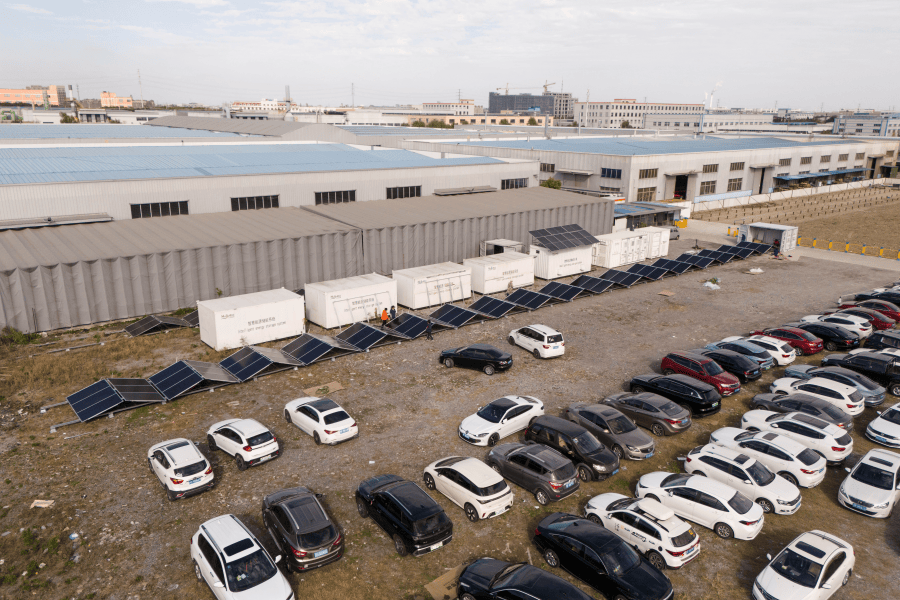
Let me give you a real example. We deployed a 20MW/50MWh system (ten 5MWh air-cooled units) for a community resilience microgrid near San Francisco. The site is famously shrouded in a daily marine layer - constant, moisture-laden salt air. The challenge was twofold: meet the aggressive CAISO performance requirements while guaranteeing a 20-year lifespan in that environment.
The solution involved a custom filtration suite with three stages, including a moisture-separating coalescer filter. The thermal management software was tuned to account for the high ambient humidity, which affects cooling efficiency. We also implemented a quarterly drone-based thermographic inspection protocol to spot any abnormal thermal signatures (indicative of corrosion-based resistance) before they become failures. Two years in, the performance degradation is tracking 15% better than the initial model. That's real LCOE savings, born from designing for the environment from day one.
Making the Decision: Your Checklist for Coastal BESS Success
So, when you're evaluating vendors for your coastal 5MWh BESS project, move beyond the basic spec sheet. Ask these questions:
- Standards & Certifications: Does the system carry UL 9540 certification, and are its components (like fans and filters) specifically rated for marine/coastal service (e.g., UL/CSA environmental Type 3R, 4, or 4X)?
- Corrosion Protection Narrative: Can the provider detail the exact coating standards, material selections, and protective strategies for both the enclosure and internal components?
- Thermal Design Data: Request performance data for the air-cooling system at high ambient temperatures combined with high relative humidity (e.g., 95% RH at 35C/95F), not just dry heat.
- Service Model: What's the local service and maintenance plan? How quickly can they respond with the right, corrosion-aware technicians and spare parts?
Deploying at the coast is challenging, but it's where a huge amount of renewable energy and grid demand is located. The right air-cooled 5MWh BESS, designed as a system for that fight from the cell up, isn't just a viable option - it can be the most sensible, lowest lifetime-cost option. What's the one corrosion-related failure you're most concerned about on your project site? I'd be curious to hear.
Tags: UL Standard BESS LCOE Coastal Energy Storage Renewable Energy Salt-Spray Corrosion IEC Standard Utility-scale Battery
Author
James Zhang
20+ years agricultural energy storage engineer / Highjoule CTO