
The Ultimate Guide to Air-cooled Industrial ESS Containers for Industrial Parks
Contents
- The Quiet Shift in Industrial Power
- The Real Cost Isn't Just the Price Tag
- Why Air-Cooling is the Smart Choice for Most Parks
- A Real-World Look: How It Works On-Site
- Your Checklist for a Smart Deployment
The Quiet Shift in Industrial Power
Honestly, if you're managing an industrial park in Europe or the US right now, your energy bill isn't just a line item anymore - it's a strategic risk. I've been on sites from California to North Rhine-Westphalia, and the conversation has completely changed in the last five years. It's no longer just about buying cheaper kilowatt-hours. It's about control, resilience, and frankly, staying competitive when your neighbor is slashing their energy costs with solar and storage.
The push for on-site renewables is huge, but here's the catch everyone discovers: the sun sets, the wind calms. That beautiful solar array needs a partner. That's where Battery Energy Storage Systems (BESS) come in, specifically the containerized solutions that have become the workhorse for industrial-scale applications. But not all containers are created equal, and the choice between cooling methods - air versus liquid - is where many projects get tripped up on cost and complexity.
The Real Cost Isn't Just the Price Tag
Let's talk about the elephant in the room. When most folks first look at deploying a BESS, they get a quote for the container itself and think that's the majority of the cost. I've seen this firsthand on site. The real financial drain - and the operational headache - comes from three places:
- Deployment Complexity & Time: Liquid-cooled systems often require intricate plumbing, specialized coolant, and more complex site prep. This means longer construction times and higher labor costs, especially under strict Western union and safety rules.
- Ongoing Maintenance & Downtime: More moving parts (pumps, chillers, liquid lines) mean more potential points of failure. A leak in a liquid system isn't a simple fix; it can mean a full shutdown and a hazardous material cleanup. Air-cooled systems, with their simpler fan-and-filter approach, are just easier and safer for site teams to manage.
- Total Cost of Ownership (TCO): This is the big one. The Levelized Cost of Storage (LCOS) C think of it like the "lifetime cost per kWh" C is where air-cooling often wins for industrial duty cycles. According to a National Renewable Energy Laboratory (NREL) analysis, balance-of-system costs and O&M are massive drivers of final LCOS. A simpler, more robust thermal management system directly attacks those costs.
The safety standards angle is critical too. In the US, UL 9540 is the benchmark for system safety, and in Europe, IEC 62933 series sets the tone. These aren't just checkboxes. They represent a design philosophy. An air-cooled system, with its separation of cells and simpler heat dissipation path, can often align with these rigorous safety goals in a more straightforward, inspectable way. For a site manager, that's peace of mind you can't put a price on.
Beyond the Hype: The C-Rate Reality
You'll hear a lot about high "C-Rates" (how fast you can charge/discharge the battery). Honestly, for most industrial park applications - smoothing solar peaks, shifting time-of-use charges, providing backup - you don't need the extreme, race-car-level C-Rates that liquid cooling promises. You need reliable, daily cycling. Pushing for extreme performance you don't need is a surefire way to inflate your capital expenditure and maintenance burden. The sweet spot for cost and longevity in industrial settings often lies in the moderate C-Rate range, which is perfectly served by modern, well-designed air-cooled architectures.
Why Air-Cooling is the Smart Choice for Most Parks
So, where does the air-cooled industrial ESS container fit in as the solution? It's the pragmatic, high-reliability option. Think of it like choosing a heavy-duty pickup truck over a Formula 1 car for a construction site. One is built for showroom specs, the other is built for daily, rugged use.
At Highjoule, our approach has always been to engineer for the real world. Our air-cooled ESS containers are designed around this principle of operational simplicity. We use intelligent, staged fan systems and cell-level spacing to manage heat effectively, even in demanding climates. This isn't just about keeping the batteries happy; it's about extending their calendar life, which is the single biggest lever for improving your project's LCOE (Levelized Cost of Energy).
Compliance isn't an afterthought for us; it's the foundation. From the ground up, our systems are architected to meet and exceed UL 9540 and IEC 62933 requirements. We know the certification process inside out because we've been through it repeatedly with authorities having jurisdiction (AHJs) across different states and countries. That local deployment experience is key - what flies in Texas might need a tweak for approval in Germany, and we've built that knowledge into our platform designs.

A Real-World Look: How It Works On-Site
Let me give you an example from a project we completed last year. A manufacturing park in the Midwest US was getting hammered by demand charges and wanted to pair their existing rooftop PV. Their challenge was space, a tight budget, and a small facilities team with no specialized HVAC training.
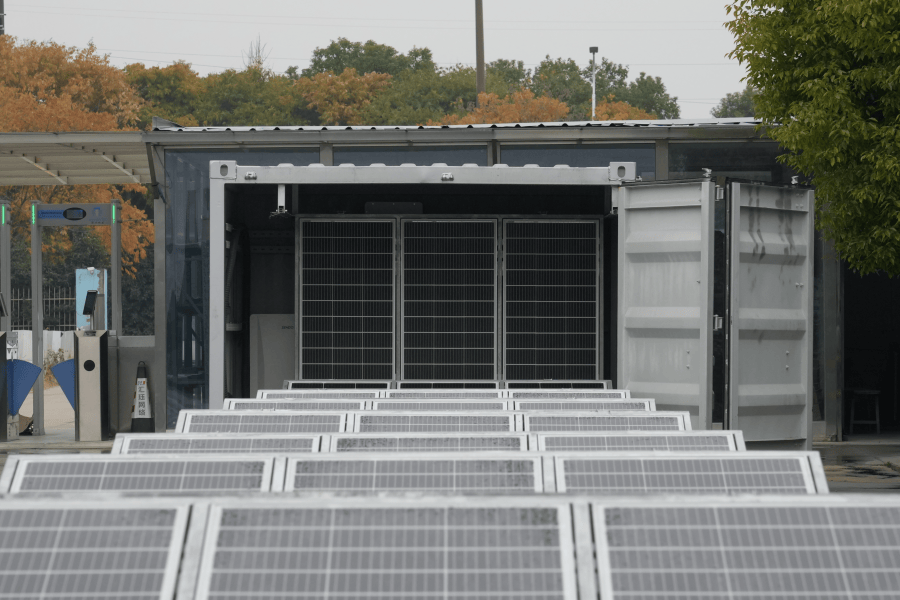
The liquid-cooled quotes they got were daunting - both in upfront cost and the projected maintenance complexity. We proposed a 1.5 MWh air-cooled ESS container. The deployment was straightforward: a concrete pad, grid interconnection, and commissioning. The thermal management? It's just fans and filters. The site team understands that. They can visually inspect the air paths, and routine maintenance is as simple as changing a filter - something they already do for other plant equipment.
A year in, the system is performing above expectations on peak shaving. The site manager told me the biggest benefit he didn't fully anticipate was the operational confidence. His team isn't afraid of it. They own it. And from our side, our remote monitoring platform lets us provide proactive support, but we've had zero thermal-related service dispatches. That's the goal.
Your Checklist for a Smart Deployment
If you're evaluating options for your park, here's what you should be asking, based on what I've seen separate successful projects from troubled ones:
- Thermal Design for Your Climate: Does the air-cooling design account for your local ambient temperature extremes? Ask for the operational temperature range and derating curves.
- Safety Certifications (The Real Ones): Don't just accept "designed to meet." Ask for the actual certification reports (UL 9540, IEC 62933).
- Serviceability: Can your in-house team safely access and replace major components like fans or battery modules? Request a maintenance walkthrough.
- Grid Compatibility: Is the inverter system proven to work seamlessly with your local grid code for frequency response and voltage support? This is where a provider with local grid experience is invaluable.
- Total Cost Projection: Insist on a 10-year TCO model comparing different solutions, factoring in estimated maintenance, potential downtime, and energy yield.
The journey to a more resilient, cost-effective energy setup for your industrial park is less about chasing the highest-tech spec sheet and more about finding the most robust, understandable, and financially sound partner. The right air-cooled ESS container isn't just a piece of equipment; it's a strategic asset that should work for you, not the other way around.
What's the one operational constraint in your park that keeps you up at night when thinking about adding storage?
Tags: UL Standard BESS LCOE Europe US Market Industrial Energy Storage Renewable Energy Air-cooled ESS
Author
James Zhang
20+ years agricultural energy storage engineer / Highjoule CTO