
The Ultimate Guide to Air-cooled Photovoltaic Storage System for Construction Site Power
Contents
- The Problem: Why Your Construction Site Power is Costing You More Than You Think
- The Real Cost of "Business as Usual"
- The Solution: A Smarter Hybrid Power Plant for Your Site
- Why Air-Cooled? The On-Site Engineer's Perspective
- Making It Work: A Real-World Blueprint
- The Future is Modular and Mobile
The Problem: Why Your Construction Site Power is Costing You More Than You Think
Let's be honest. When you're managing a construction site, temporary power is usually an afterthought. The default move? Roll in the diesel gensets, string up some cables, and deal with the noise, the fumes, and the weekly fuel truck visits. It works, sort of. But from my 20+ years on sites from Texas to Bavaria, I can tell you it's a model built on hidden costs and constant headaches.
The real pain point isn't just the diesel bill. It's the volatility. Fuel prices swing. Noise ordinances get stricter by the day - I've seen projects get fined or forced into night-shift-only work because of genset decibel levels. And then there's the carbon footprint. In Europe and increasingly in parts of the US, you're bidding for projects where your environmental strategy is part of the scoring. Showing up with a fleet of diesels doesn't exactly scream "sustainable."

The Real Cost of "Business as Usual"
We need to talk numbers. The International Energy Agency (IEA) has highlighted that diesel generators are one of the most expensive and polluting ways to generate electricity, especially for off-grid applications. On site, the cost goes beyond fuel. It's logistics, security for fuel storage, maintenance downtime, and the sheer inefficiency of running a large genset at partial load. They're terrible at that, burning fuel inefficiently and causing more wear and tear.
I was on a project in Northern Germany where the site manager showed me his energy log. Nearly 40% of his diesel was consumed not by active equipment, but by gensets idling or running at low load to support essential site trailers and security lighting overnight. That's money literally evaporating into the cold night air. This is the agitation - the constant, low-grade drain on your budget and operational sanity that you just learn to live with. But you don't have to.
The Solution: A Smarter Hybrid Power Plant for Your Site
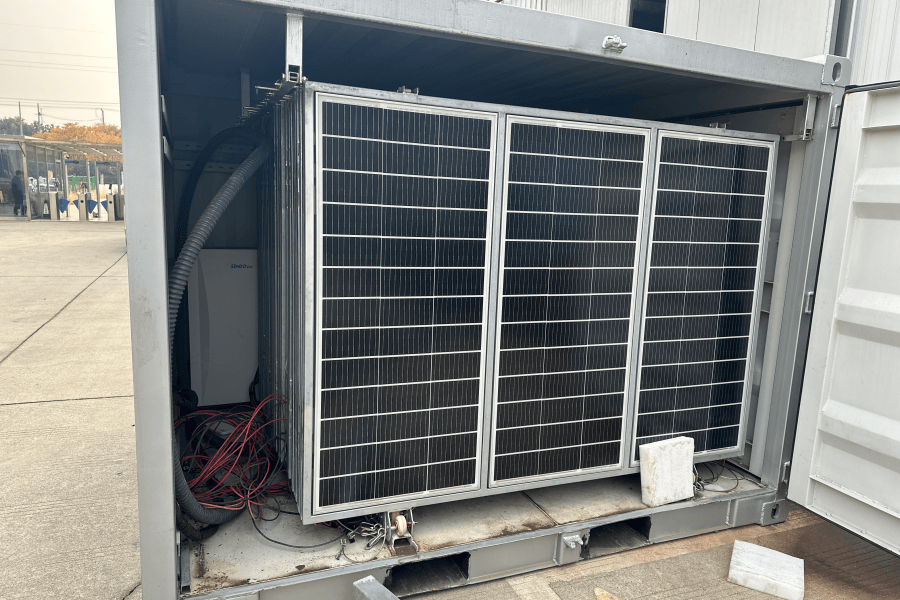
This is where the concept of an air-cooled photovoltaic (PV) storage system changes the game. Think of it not as a battery box, but as your site's quiet, clean, and intelligent mini power plant. The ultimate guide here isn't about a single product; it's about a system philosophy: integrate solar panels (even temporary, ground-mounted ones) with a battery energy storage system (BESS) that uses simple, robust air-cooling, and let smart controls decide the most economical way to power your site every minute of the day.
The logic is beautifully simple. Solar generates free power during the day, charging the battery and running equipment. The battery then takes over during peak demand, at night, or when a cloud passes over. The diesel genset? It becomes a backup, or better yet, a "peak shaver," only kicking in for the absolute highest power demands. This slashes fuel use, runtime, and emissions by 60-80% in the projects I've overseen. Honestly, the quiet is the first thing crews notice - and appreciate.
Why Air-Cooled? The On-Site Engineer's Perspective
You might hear about liquid-cooled systems for big, stationary grid projects. For mobile, tough construction sites, air-cooling is your best friend. Here's my take from the field:
- Reliability & Simplicity: Fewer moving parts. No pumps, no coolant loops to leak or maintain. It's essentially a sophisticated, high-power version of the cooling in your computer server. This simplicity translates directly to uptime.
- Dust & Ruggedness: Properly designed air-cooled BESS units use filtered, positive-pressure systems to keep dust out. I've seen our Highjoule units deployed in arid California and dusty Texas sites, and the maintenance is basically filter changes - something any site mechanic can handle.
- Cost & Deployment Speed: Lower complexity means a lower all-in cost. But more importantly, it means a lower Levelized Cost of Energy (LCOE) for your site power. LCOE is just a fancy term for the total cost of owning and operating the system per kWh it produces. By cutting fuel and maintenance, the LCOE of a solar+storage hybrid beats diesel hands down over a project's life. Plus, they're plug-and-play. You don't need a specialist to fill coolant; you position it, connect it, and go.
And crucially, for the US and EU markets, air-cooled systems can be fully certified to the safety standards you need - UL 9540 for the energy storage system and UL 1973 for the batteries in North America, and the equivalent IEC 62619 internationally. This isn't just a sticker; it's a rigorous design philosophy that we've baked into our products from day one, ensuring thermal management is safe and predictable even in demanding conditions.
Making It Work: A Real-World Blueprint
Let me give you a concrete example from a logistics hub construction project in California. The challenge: power a site office, tool charging stations, and intermittent heavy equipment (like pile drivers) while adhering to strict local noise and emission rules. Diesel alone was a non-starter.
The solution was a 250kW/500kWh air-cooled BESS from Highjoule, paired with a 150kW array of temporary solar canopies. Here's how it worked:
- The solar canopies did double duty - providing shade for worker parking and generating power.
- The BESS, with its smart controller, acted as the brain. It seamlessly blended solar power, stored energy, and only called on a small, silenced diesel genset for the 30-minute periods of peak piling activity.
- The result? An 85% reduction in diesel consumption. The fuel truck visits went from weekly to bi-monthly. The project manager told me the biggest win was the "silent confidence" of having predictable, clean power that never risked a noise violation.
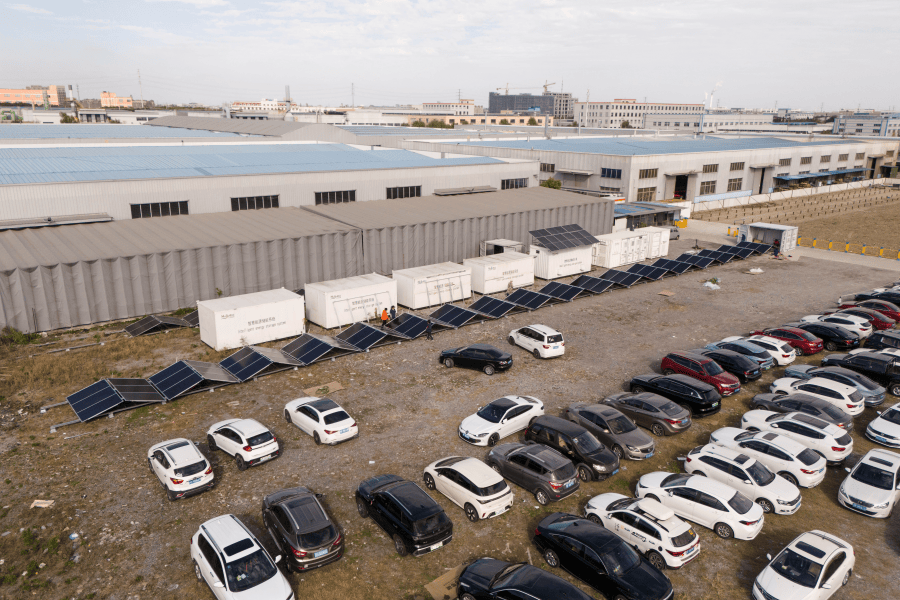
The key to success here was treating it as a system. It wasn't just about dropping off a battery. It involved a site assessment, load profiling, and designing a solution that matched the real, messy power needs of a construction site. That's the service wrap that makes the technology sing - local expertise to design and support it.
The Future is Modular and Mobile
The beauty of this approach is its scalability. Need more power for the next phase? Add another air-cooled BESS container. They're designed to be paralleled. Finished on this site? Flatbed it to the next one. This mobility transforms the system from a project cost into a reusable company asset.
So, if you're tired of the diesel grind, the noise, and the unpredictable costs, the question isn't really if hybrid solar-storage makes sense. The guide leads to a more practical question: What does your site's specific load profile look like, and what's the fastest way to pilot a system to start saving? The technology is proven, the standards are clear, and the economics are now decisively in its favor. Maybe it's time for a quieter, cleaner, and more profitable site.
Tags: Construction Site Power UL Standard BESS Off-grid Power Renewable Energy Air-cooled Energy Storage
Author
James Zhang
20+ years agricultural energy storage engineer / Highjoule CTO