
Black Start Hybrid Solar-Diesel Systems for Mining & Industrial Power Resilience
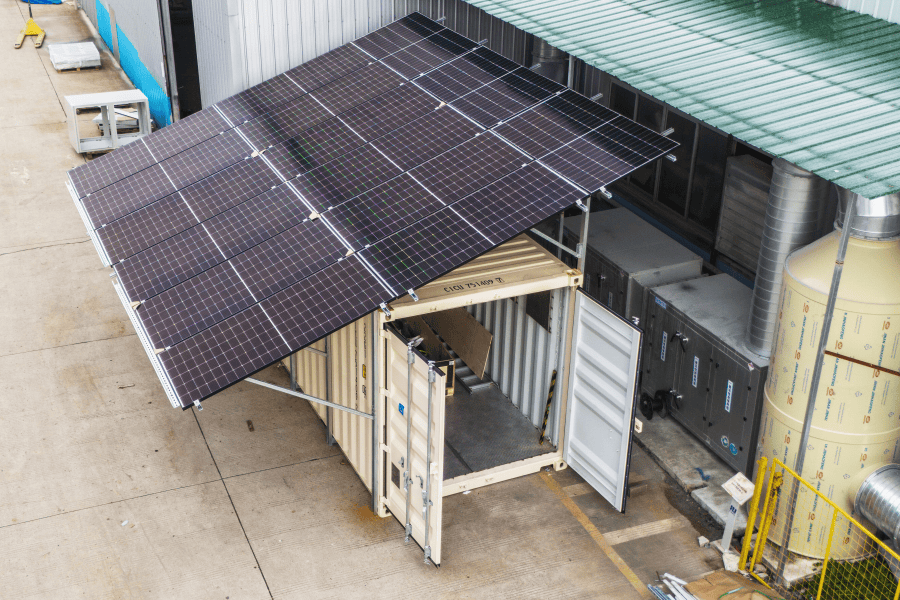
Beyond Backup: Why "Black Start" is the New Benchmark for Industrial Power Resilience
Hey there. If you're reading this, you're probably wrestling with a power problem that keeps you up at night. It's not just about keeping the lights on anymore, is it? It's about what happens when the grid - or your entire power island - goes completely, utterly dark. The silence after a total shutdown in a mining operation or a remote industrial plant isn't just quiet; it's expensive, dangerous, and a logistical nightmare to climb out of. I've been on-site for those cold, dark starts, coordinating crews and hoping the diesel gensets fire up as they should. Honestly, it's a high-stress scenario we've accepted for too long.
Quick Navigation
- The Real Problem: More Than Just an Outage
- The Staggering Cost of "Dark" Downtime
- The Solution Evolved: The Black Start Capable Hybrid System
- Making It Work: The Nuts, Bolts, and Brains
- A Case in Point: Learning from a Texas Microgrid
- Where Do You Go From Here?
The Real Problem: More Than Just an Outage
In the U.S. and Europe, we talk a lot about backup power. But for critical industrial facilities - whether it's a mine, a data campus, or a chemical plant - the conversation is shifting. The real vulnerability isn't the short interruption; it's the complete blackout with no external grid to lean on. Traditional diesel gensets are great for standby, but they need a source of power to start themselves - their own "starter motor" needs electricity. In a true blackout, you're left with manual, sequential cranking, which can take hours, involves significant risk, and is entirely dependent on fuel supply and human response.
I've seen this firsthand on site: the scramble, the delayed production restart, the safety checks. It's a process fraught with uncertainty. And with increasing renewable penetration, sometimes the grid itself is less stable, making this "islanded black start" capability not just for remote mines in Mauritania, but a critical consideration for industrial players in North America and Europe seeking true energy independence.
The Staggering Cost of "Dark" Downtime
Let's agitate that pain point with some numbers. It's not just lost production hours. According to a National Renewable Energy Laboratory (NREL) analysis on grid resilience, the cost of downtime for critical industrial processes can exceed $100,000 per hour, easily climbing into the millions for a multi-hour full shutdown. That's before you factor in equipment stress from uneven cranking, potential damage from voltage spikes during manual re-energization, and the sheer operational risk.
Your diesel generators also have a hidden cost: the Levelized Cost of Energy (LCOE). When you run them continuously or for frequent black starts, fuel and maintenance costs skyrocket. The International Energy Agency (IEA) consistently highlights fuel price volatility as a major risk for diesel-dependent operations. So, you're paying a premium not just for the outage event, but for the fuel-guzzling recovery process itself. This is where the old way of thinking falls apart.
The Solution Evolved: The Black Start Capable Hybrid System
So, what's the answer? It's an integrated, intelligent system that turns the problem on its head. A Black Start Capable Hybrid Solar-Diesel System isn't just adding solar panels to a diesel plant. It's about making a Battery Energy Storage System (BESS) the beating heart and the jump-starter of your entire power island.
Here's how it flips the script: Instead of relying on diesel gensets to restart everything, the UL 9540 and IEC 62933-compliant BESS acts as the first responder. In a total blackout, its stored energy (from solar or the grid when available) is used to precisely and sequentially energize critical control systems, then "soft start" the diesel generators, and finally re-energize the main load in a controlled manner. This isn't theory; it's how we design systems at Highjoule to meet the strict grid-forming and black start requirements now being demanded by operators on both sides of the Atlantic.
The magic is in the hybrid controller - the brain of the operation. It doesn't just switch between sources; it orchestrates them. It decides when to pull from solar, when to charge the batteries, when to run the gensets at their optimal efficiency point, and, crucially, it holds the detailed black start sequence in its memory, ready to execute autonomously within milliseconds.
Core Advantages of This Approach
- Instantaneous Response: The BESS provides power in milliseconds, stabilizing the system for a smooth genset start.
- Diesel Optimization & LCOE Reduction: Gensets run less often and at peak efficiency when they do, slashing fuel use and maintenance. Solar directly offsets diesel consumption, lowering your overall LCOE.
- Enhanced Safety & Compliance: Automated, sequenced starts eliminate human error and meet stringent local safety codes (like NFPA 110 in the U.S.) and IEEE standards for islanded systems.
- Future-Proofing: This architecture is ready to integrate more renewables, green hydrogen, or participate in grid services if connection becomes available.
Making It Work: The Nuts, Bolts, and Brains
Let's get into some practical tech talk, but I'll keep it simple. Two concepts are key here: C-rate and Thermal Management.
C-rate is essentially the speed at which a battery can discharge its energy. For black start, you need a high C-rate - a powerful "surge" of energy to crank those heavy industrial loads and motors. Not all BESS are built for this. We spec our systems with battery chemistry and power conversion architecture that can deliver that high-power punch without breaking a sweat or degrading prematurely.
Which brings me to Thermal Management. Pushing high power generates heat. Poor thermal management is the number one cause of battery degradation and, in worst cases, safety incidents. A containerized BESS sitting in the Texas sun or a German winter needs a robust, active liquid cooling system that keeps every cell at its ideal temperature. This isn't an area to cut corners. Our design philosophy is that reliability is baked in at the cell, rack, and container level, with multiple safety redundancies that exceed UL and IEC standards.

A Case in Point: Learning from a Texas Microgrid
Let me share a relevant example, though the location differs. We deployed a system for a critical manufacturing facility in Texas that faced frequent grid instability. Their challenge was to maintain 24/7 operations and have guaranteed black start capability without adding more diesel capacity.
The Solution: A 2.5 MW/5 MWh BESS integrated with their existing 4 MW solar carport and 3 MW diesel backup. The BESS, with its advanced grid-forming inverters, became the primary source of voltage and frequency control in island mode.
The Outcome: During a planned grid outage test, the system performed a flawless black start. The BESS powered the critical control loads, started one diesel genset, and then the system seamlessly picked up the full plant load. Diesel runtime was reduced by over 70%, and they now have a resilience asset that also saves them money daily through solar time-shifting and demand charge management. The principles are directly transferable to a large-scale mining operation seeking ultimate power security.
Where Do You Go From Here?
Thinking about a black start capability is no longer a niche consideration. It's a core component of modern, resilient industrial power design. The technology is proven, the standards are clear (UL, IEC, IEEE), and the financial case, when you factor in total LCOE and risk mitigation, is stronger than ever.
The first step is to shift the conversation from "backup" to "resilience and recovery." Audit your current power system's true black start procedure. How long would it really take? What are the risks? Then, model a hybrid solution. At Highjoule, we do this through detailed feasibility studies that look at your specific load profiles, fuel costs, and resilience goals - not just selling a box, but engineering a system that becomes the reliable foundation of your operations.
What's the one critical process in your facility that a prolonged, chaotic black start would put at unacceptable risk?
Tags: UL Standard BESS LCOE Black Start Renewable Energy Mining Operations Hybrid Power Systems
Author
James Zhang
20+ years agricultural energy storage engineer / Highjoule CTO