
Black Start Hybrid Solar-Diesel Systems: The Ultimate Guide for Reliable Island Microgrids
Table of Contents
- The Silent Threat to Island Energy Independence
- Beyond the Diesel Genset: The True Cost of Unreliability
- The Black Start Hybrid: Your Grid's Intelligent Safety Net
- Anatomy of Reliability: Key Tech Explained (Without the Jargon)
- Lessons from the Field: A Pacific Island Case Study
- Your Next Steps Towards Unshakable Resilience
The Silent Threat to Island Energy Independence
Let's be honest. When we talk about remote island microgrids, the postcard-perfect image of solar panels against a blue ocean often overshadows a gritty, on-the-ground reality I've seen firsthand. The real challenge isn't just generating clean power; it's surviving the "black start" C that critical moment when the entire grid goes dark, and you need to rebuild power from absolute zero, often with limited crew and no external help. Many hybrid systems look great on paper, with impressive solar penetration percentages, but they have a hidden Achilles' heel: they can't self-recover. They remain paralyzed, waiting for a diesel genset that might be slow to start or, worse, fail under the pressure. This isn't a hypothetical. I've stood on sites in the Caribbean and the Pacific where operators held their breath during a storm, not just for the weather, but for the agonizing wait to see if the lights would come back on.
Beyond the Diesel Genset: The True Cost of Unreliability
The problem goes deeper than inconvenience. We're talking about frozen food storage for entire communities, interrupted medical services, and halted tourism - the economic lifeblood of many islands. The traditional reliance on diesel gensets for black start is a costly and fragile strategy. Diesel engines, especially if not meticulously maintained, can be notoriously unreliable for a cold start under load. And even if they start, the fuel logistics are a nightmare. According to the International Energy Agency (IEA), fuel costs can constitute over 60% of the total Levelized Cost of Electricity (LCOE) for diesel-dependent island grids. Every minute of downtime while waiting for a diesel kickstart is money evaporating and trust eroding.
Furthermore, modern high-renewable penetration grids add complexity. You can't just "ramp up" solar PV after an outage - it needs a stable grid frequency and voltage to synchronize to. Without a sophisticated, autonomous controller to orchestrate the restart sequence between storage, diesel, and renewables, you're stuck. The agitation here is real: you've invested in renewable energy for sustainability and cost savings, only to find your entire system's resilience hinging on the least sustainable, most volatile component.

The Black Start Hybrid: Your Grid's Intelligent Safety Net
This is where the game changes. A properly designed Black Start Capable Hybrid Solar-Diesel System isn't just an equipment list; it's an intelligent, self-healing energy ecosystem. The core solution lies in redefining the role of the Battery Energy Storage System (BESS). Instead of being a passive buffer, it becomes the active "heart starter" for the microgrid. Here's how it works in practice: when a total blackout occurs, the BESS - which holds its charge in a ready state - immediately begins forming a stable "grid" on its own. It then sequentially and safely energizes critical loads, starts the diesel genset under a stable, no-load condition (massively increasing its start success rate), and finally, seamlessly re-integrates solar PV. It's a choreographed recovery that happens in minutes, not hours, often fully automated.
At Highjoule, we've built this intelligence into our GridAnchor? BESS platform from the ground up. Our systems are pre-configured with black start sequences that comply with IEEE 1547 and UL 9540 standards, ensuring safety and interoperability aren't afterthoughts. The controller doesn't just switch things on; it manages voltage ramps, frequency stability, and harmonic distortion during the delicate restart phase - things I've spent hours debugging on legacy systems.
Anatomy of Reliability: Key Tech Explained (Without the Jargon)
Let's break down two critical specs that matter for black start, in plain English:
- C-rate (Charge/Discharge Rate): Think of this as the "power muscle" of the battery. A higher C-rate means the BESS can deliver a huge surge of power instantly - exactly what's needed to "crank" the grid back to life and start large motors. A low C-rate battery might have enough energy, but it can't release it fast enough, like a strong but slow-moving giant. Our designs prioritize a high C-rate cell chemistry paired with robust power conversion to deliver that instant punch.
- Thermal Management: A black start event is the battery's marathon sprint. It's working extremely hard in a short time, generating heat. If the cooling system (thermal management) can't keep up, the system will throttle itself to avoid damage, potentially failing the restart. We use a liquid-cooling architecture that I swear by, especially for tropical island environments. It keeps cell temperatures uniform and stable, ensuring full performance is available exactly when you need it most, not just on a cool day.
Calculating the Levelized Cost of Electricity (LCOE) for such a system tells the true story. While the upfront capital might be higher than a simple solar+storage setup, the dramatic reduction in downtime losses, fuel waste during failed starts, and extended diesel genset life (from gentler, controlled starts) drives the operational cost down. You're paying for unbreakable resilience, and over 20 years, it pays back multiples.
Lessons from the Field: A Pacific Island Case Study
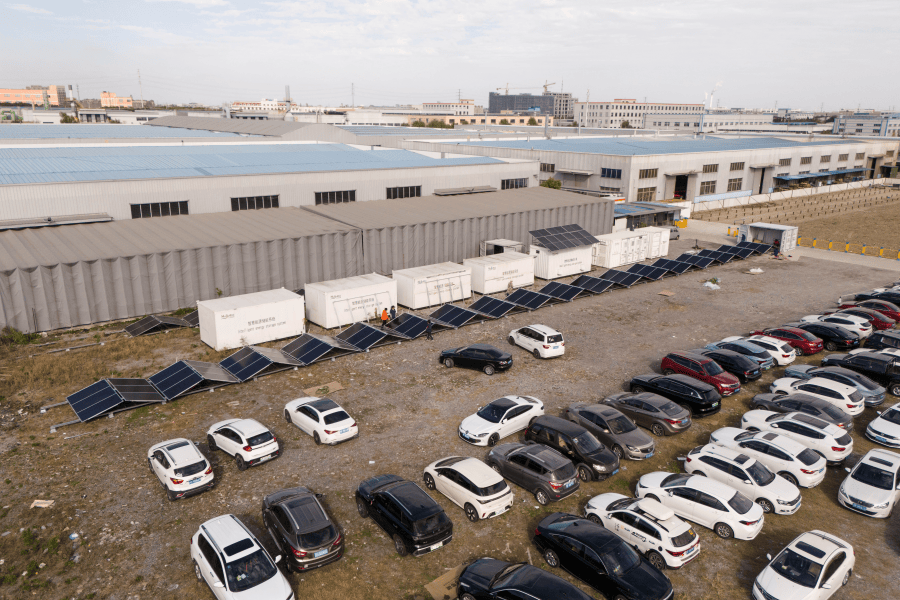
Let me share a scenario from a project we completed for a resort and community microgrid on a Pacific island (NDA prevents naming names, but the details are real). Their old system had 1.5MW of solar and a 2MW diesel genset, but a lightning strike would routinely cause a full blackout. Recovery took up to 90 minutes, with guests complaining and kitchen operations in chaos.
The challenge was to add black start capability without a complete overhaul. We integrated a 1MWh GridAnchor? BESS with a 1.5MW inverter, specifically sized for its high C-rate discharge capability. The key was our Microgrid Controller (HMC-3000), which we programmed with the precise black start sequence: BESS forms grid > powers critical resort loads (kitchen, comms) > signals diesel genset to start & synchronize > gradually transfers base load to genset > finally, re-energizes the solar farm. The first test was nerve-wracking for the local team. We simulated an outage. The system went dark, and within 45 seconds, the lights were back on in the main lodge. The diesel genset started smoothly 2 minutes later. The resort manager's relief was palpable. The system now handles multiple transient faults autonomously, and diesel runtime has been cut by over 40%.
Your Next Steps Towards Unshakable Resilience
So, where do you begin? The biggest mistake is treating the BESS as a commodity item. You need a system engineered for the duty cycle of a grid-forming asset, not just for energy time-shift. Ask your provider pointed questions: "Can you demonstrate a black start sequence compliant with IEEE 1547.4?" "What is the guaranteed C-rate of the system at end of life?" "How does the thermal management system perform in 40C ambient temperature?"
Our approach at Highjoule is to partner through the entire lifecycle. We don't just sell containers; we provide localized deployment support with engineers who understand island logistics, and our EagleEye? remote monitoring ensures we can help diagnose issues before they become problems. The goal is to give you the confidence that your microgrid isn't just efficient, it's resilient. Because honestly, in a remote location, resilience isn't a feature - it's the entire product.
What's the single point of failure in your current island energy plan, and how much is one total blackout event costing you?
Tags: UL Standard BESS Black Start Hybrid Solar-Diesel System Island Microgrid
Author
James Zhang
20+ years agricultural energy storage engineer / Highjoule CTO