
Black Start Capable PV Storage: Ultimate Guide for Military Base Energy Security
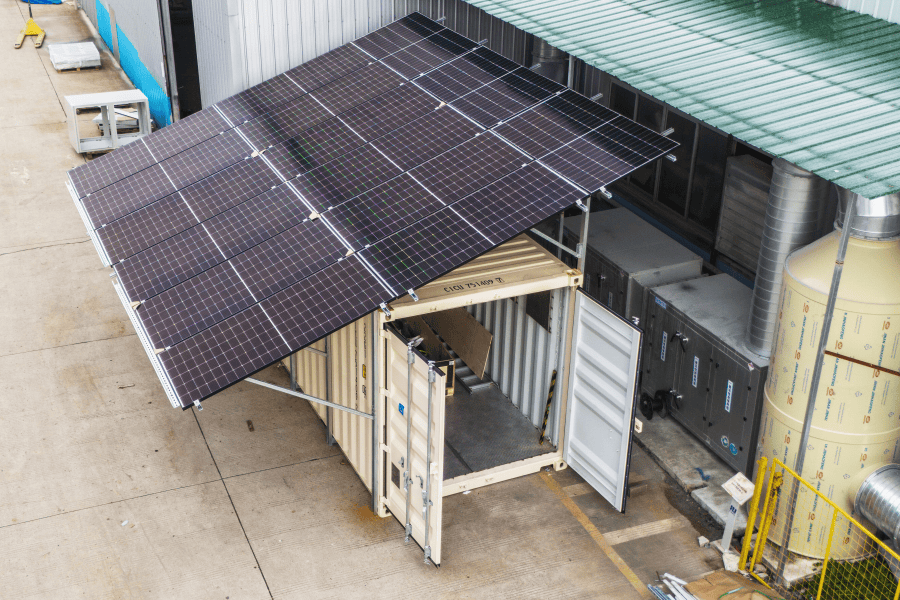
Table of Contents
- The Silent Threat: When the Grid Goes Dark on Base
- Why Traditional Backup Often Fails in a True Blackout
- The Black Start Solution: More Than Just Backup Power
- Building a Resilient System: Key Technical Considerations
- A Real-World Blueprint: Lessons from the Field
- Your Path to Energy Sovereignty
The Silent Threat: When the Grid Goes Dark on Base
Let's be honest. For any military installation, a prolonged grid outage isn't just an inconvenience; it's a critical vulnerability. I've been on-site during grid failure simulations, and the clock starts ticking immediately. Mission-critical communications, perimeter security, data centers, and essential facilities C they all hinge on reliable power. The traditional playbook has relied on diesel generators, and while they're a part of the solution, they present a glaring single point of failure. What happens if fuel supply lines are compromised? Or if maintenance was due and you didn't get the memo? The 2021 Texas winter storm, as reported by NREL, highlighted how even robust infrastructure can fail, leaving critical assets exposed. For a base commander, this isn't an abstract risk; it's a daily operational concern.
Why Traditional Backup Often Fails in a True Blackout
Here's the nuance most sales brochures won't tell you: not all backup power is "black start" capable. A standard battery system or generator often needs an external signal from the grid to "wake up" and synchronize. In a complete blackout C a true "island" scenario C that signal is gone. This is the core problem. You have solar panels on rooftops or in fields, but most grid-tied inverters are designed to shut down for safety when the grid disappears (a requirement under standards like IEEE 1547). So, you're left with a silent solar array and a battery bank that's waiting for a command that will never come. The dependency on external grid stability for internal security is, frankly, a strategic paradox.
The Black Start Solution: More Than Just Backup Power
This is where a purpose-built Black Start Capable Photovoltaic Storage System changes the game. Think of it as giving your base its own autonomous energy nervous system. The goal isn't just to have power; it's to initiate power from a state of total darkness, using your on-site solar as the primary fuel. The system's brain C the advanced inverter and controller C is designed to self-start, establish a stable voltage and frequency "island" (a microgrid), and then strategically energize loads, prioritizing critical operations. It seamlessly integrates solar production, battery storage, and often existing generators into a single, resilient entity. Honestly, moving from a reactive backup mindset to a proactive energy sovereignty strategy is the real shift here.

Building a Resilient System: Key Technical Considerations
Deploying this isn't plug-and-play. Based on two decades of field work, here are the non-negotiable technical pillars for a military-grade system:
- UL 9540 & IEC 62619 Certification: This is your baseline for safety. It's not just about the battery cell; it's about the entire BESS unit's fire safety, electrical safety, and system integrity. Never compromise here.
- High C-rate Capability: During black start, you need to surge power to spin up large loads or motors. A battery's C-rate dictates how fast it can discharge. A higher C-rate means more "punch" to restart critical infrastructure without stumbling. It's the difference between a steady hum and a stutter.
- Military-Grade Thermal Management: I've seen systems in the Arizona desert and Nordic winters. Passive cooling won't cut it. An active liquid or precision air-cooling system is essential to maintain optimal battery temperature, ensuring performance, safety, and longevity (directly impacting your LCOE - Levelized Cost of Energy) in any climate.
- Cybersecurity & Grid Code Compliance: The system must be a hardened digital asset. It needs to comply with local grid codes (like UL 1741 SB, IEEE 1547 in the US) for reconnection, but more importantly, its communication and control interfaces must be securable against cyber threats.
At Highjoule, our design philosophy for such critical applications embeds these principles from day one. We don't just add components; we engineer the system interaction. For instance, our thermal management design is modeled for the specific duty cycle of a black start event, not just average daily cycling, which is a nuance that pays off in reliability a decade down the line.
A Real-World Blueprint: Lessons from the Field
Let me share a scenario inspired by a recent deployment for a National Guard facility in the Midwest. The challenge was classic: ensure 72+ hours of critical operation during grid outages, reduce diesel dependency, and do it all within a strict space footprint.
The solution was a containerized Black Start Capable PV Storage System. We integrated a 1.5 MW/3 MWh UL 9540-certified battery system with their existing 800 kW rooftop solar. The key was the control logic. During a simulated blackout, the system performed a black start in under 2 minutes, establishing a stable microgrid. It first powered the command center and comms, then sequenced in the motor loads for the ventilation systems. The solar arrays, now free from grid dependency, began contributing power as dawn broke, actively recharging the batteries and stretching the generator fuel. The local utility also approved its anti-islanding protection, a crucial step for safe reconnection.
The real insight? The most intense engineering work went into the sequencing logic and protection coordination, not just the hardware. It's about orchestration.
Your Path to Energy Sovereignty
The conversation is evolving from "how much backup" to "how much operational independence." A Black Start Capable Photovoltaic Storage System is the cornerstone of that independence. It transforms your base from a grid consumer into a self-sufficient energy hub. The technology is proven, the standards are clear, and the strategic imperative is undeniable. What's the first critical load you would prioritize powering in a total blackout? Defining that is the perfect place to start your own resilience assessment.
Tags: UL Standard BESS Black Start Microgrid IEEE 1547 Energy Security PV Storage System Military Base
Author
James Zhang
20+ years agricultural energy storage engineer / Highjoule CTO