
High-voltage DC 1MWh Solar Storage for Agricultural Irrigation: A Practical Guide
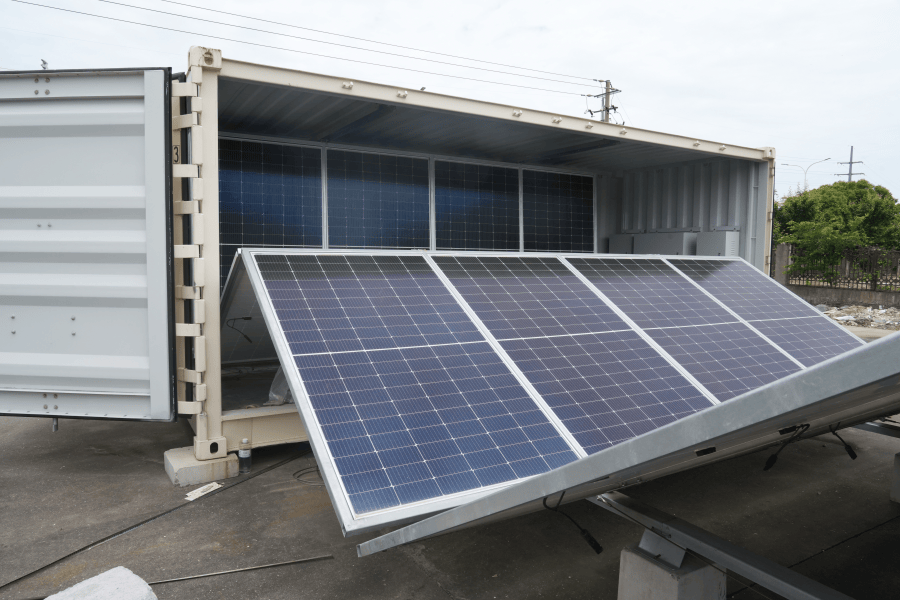
Table of Contents
- The Real Problem: More Than Just Energy Bills
- Why It Hurts: The Hidden Costs of Getting It Wrong
- A Better Way: Why High-voltage DC Architecture is a Game-Changer
- Case in Point: A 1MWh System in California's Central Valley
- Expert Insights: Decoding the Tech for Your Bottom Line
- Making It Work for You: The Deployment Reality
The Real Problem: More Than Just Energy Bills
Let's be honest. When we talk about solar and storage for agriculture, especially large-scale irrigation, the conversation usually starts with reducing the electricity bill. And that's fair. But after two decades on sites from Texas to Tuscany, I've seen the real, gut-wrenching problem isn't just cost - it's unpredictability. You're dealing with a perfect storm: peak irrigation demand that lines up perfectly with peak grid rates (and sometimes peak grid strain), coupled with a solar generation curve that doesn't always match. You're left either paying exorbitant demand charges or relying on noisy, high-maintenance diesel gensets. The dream of energy independence feels just out of reach, buried under complexity and concerns about system safety and longevity.
Why It Hurts: The Hidden Costs of Getting It Wrong
This mismatch isn't just an inconvenience; it directly attacks your profitability. Choosing a standard, off-the-shelf low-voltage battery system for a 1MWh irrigation load might seem like a quick fix, but it amplifies the pain. We're talking about hundreds of battery cells and miles of cabling strung together. That means more points of potential failure, more complex thermal management, and significantly higher installation labor costs. Honestly, I've seen firsthand on site how these systems can become a maintenance nightmare, with efficiency losses in the conversion chains (DC to AC and back again) silently eating into your projected savings. According to a National Renewable Energy Laboratory (NREL) analysis, system architecture and balance-of-plant costs can make or break the financial case for agricultural storage.
The Standards Minefield
And then there's compliance. In the US, you have UL 9540 for the overall system and UL 1973 for the batteries. In Europe, it's IEC 62619. These aren't just acronyms; they're your insurance policy. A system not built from the ground up for these standards faces huge hurdles in permitting and insurance - if it gets approved at all. This complexity scares off many farm operators, leaving potential savings on the table.
A Better Way: Why High-voltage DC Architecture is a Game-Changer
This is where the conversation shifts. For a robust, 1MWh-scale solution for irrigation, high-voltage DC-coupled solar storage isn't just an option; it's the logical endpoint. Think of it like this: your solar panels produce high-voltage DC. A traditional system would convert that to AC to feed the grid or your farm, then convert it back to DC to charge the batteries, then back to AC to power your pumps. Every conversion loses 2-3% energy. A high-voltage DC system keeps everything in the DC realm, connecting the solar array directly to a similarly high-voltage battery stack. The result? Fewer conversion steps, higher overall efficiency (we consistently see 2-4% more), simpler wiring, and a more resilient system. It's designed from the outset for the heavy, cyclic duty of irrigation - starting large motors and handling sustained loads.
At Highjoule, this isn't theoretical. Our containerized 1MWh BESS units are built around this principle. The entire power conversion and management system is engineered to meet UL and IEC standards as a unified product, not a patchwork of components. This simplifies everything from fire department approval to your long-term service plan.
Case in Point: A 1MWh System in California's Central Valley
Let me give you a real example. We deployed a 1MWh high-voltage DC system for a 500-acre almond farm in California's San Joaquin Valley. The challenge was classic: huge peak demand charges from running 15 center-pivot irrigation pumps, coupled with a time-of-use rate structure that punished daytime operation. Their existing solar was underutilized.
The solution was a single, pre-integrated container. The high-voltage DC bus took direct input from the existing solar inverter DC lines. The system was programmed for two primary modes: demand charge management (capping grid draw during peak periods) and solar self-consumption optimization (storing excess midday solar for late afternoon/evening irrigation).
The outcome? They slashed their peak demand charges by over 90% and increased their solar self-consumption rate from ~40% to over 85%. The simplified DC architecture meant the installation was completed in 3 days, not 3 weeks. The farm manager's biggest compliment? "I forget it's even there. It just works."

Expert Insights: Decoding the Tech for Your Bottom Line
You'll hear specs like "C-rate" and "LCOE." Let's translate them into farming terms.
- C-rate (Charge/Discharge Rate): This is how fast the battery can drink or deliver energy. A 1MWh battery with a 1C rate can discharge 1MW in one hour - perfect for matching a large pump's surge. A lower C-rate means you'd need a bigger, more expensive battery bank for the same job. High-voltage DC systems often support higher C-rates more efficiently.
- Thermal Management: This is the battery's climate control. Lithium-ion cells hate extreme heat. A poorly managed system degrades fast. Our approach uses an active liquid cooling system that's independent of the external container HVAC. It's like having a dedicated, precision cooling system for the engine, ensuring a 20+ year lifespan even in 115F Central Valley heat.
- LCOE (Levelized Cost of Energy): This is your ultimate metric - the total lifetime cost of the system divided by the energy it produces. A high-efficiency, long-life, low-maintenance system has a lower LCOE. The International Energy Agency (IEA) notes that falling battery costs are driving down LCOE, but system architecture is critical. By minimizing conversion losses and maximizing cycle life, a well-designed high-voltage DC system directly targets the lowest possible LCOE for your operation.
Making It Work for You: The Deployment Reality
So, what does moving forward look like? It starts with a site-specific analysis, not a generic proposal. We look at your irrigation schedule, pump motor sizes, solar production, and utility rate tariff. The goal is to right-size the system - a 1MWh unit is a common sweet spot for mid-to-large operations, but it must be tailored.
The advantage of a pre-engineered, standardized 1MWh high-voltage DC container is scalability and speed. Need 2MWh? That's two containers. The permitting is repetitive, not a new puzzle each time. And because it's all built to UL 9540 from the start, the path to approval is clear.
Ultimately, the right storage system transforms your solar investment from a partial subsidy into the backbone of your operational resilience. It turns unpredictable energy costs into a fixed, manageable line item. The question isn't really if storage makes sense for large-scale irrigation, but how to implement it in the simplest, most robust, and most profitable way possible. What's the one operational constraint you'd love to solve with your energy system?
Tags: UL Standard BESS LCOE Europe US Market Agricultural Irrigation Renewable Energy High-voltage DC
Author
James Zhang
20+ years agricultural energy storage engineer / Highjoule CTO