
Optimizing Mobile Power Container Deployment for Eco-Resorts: A Practical Guide
Beyond the Grid: A Real-World Guide to Mobile Power for Your Eco-Resort
Honestly, if I had a dollar for every time a resort developer told me their dream of going 100% renewable was stalled by grid constraints or sky-high infrastructure costs, I'd be writing this from my own private island. I've seen this firsthand on sites from the Caribbean to the California coast. The vision is clear: a pristine, sustainable retreat powered by the sun. But the reality? Often a tangled mess of logistical headaches, regulatory hurdles, and that nagging question of reliability when guests expect perfect comfort.
That's where the conversation around rapid deployment mobile power containers gets interesting. It's not just about dropping a box on site. It's about a strategic asset that can make or break your resort's energy independence and bottom line. Let's talk about how to get it right.
Quick Navigation
- The Real Problem Isn't Just Power, It's Predictability
- Why Mobile Containers? It's More Than Just Speed
- The Optimization Checklist: Beyond the Spec Sheet
- A Case in Point: Lessons from a Coastal Retreat
The Real Problem Isn't Just Power, It's Predictability
Eco-resorts are typically in beautiful, remote places - which usually means weak or non-existent grids. Relying on diesel generators is a PR nightmare and an operational cost vortex. Solar is the obvious hero, but its intermittency is a villain for 24/7 operations. You get a perfect sunset, but your kitchen's peak demand is during dinner prep, long after the sun's gone down. This mismatch isn't just an engineering issue; it's a guest experience and revenue risk.
The agitation comes when you realize traditional fixed BESS installations for such sites can be a permitting marathon. Pouring concrete foundations, navigating complex, long-term interconnection studies with local utilities... it can take 18-24 months. According to the National Renewable Energy Laboratory (NREL), soft costs - like permitting, financing, and customer acquisition - can still make up a significant chunk of total project costs, especially for non-standard deployments. Time is capital, and in the resort business, delayed opening is revenue forever lost.
Why Mobile Containers? It's More Than Just Speed
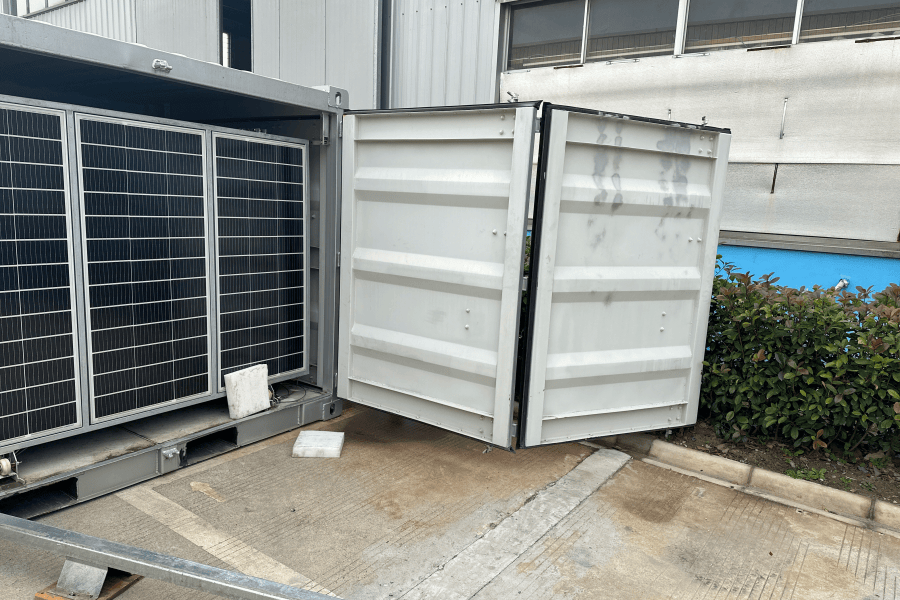
This is where the rapid deployment mobile container shifts from a "nice-to-have" to a "game-changer." The core value isn't just mobility; it's strategic flexibility. Think of it as a plug-and-play power plant that's pre-engineered, pre-tested, and arrives on a trailer. It bypasses the need for permanent, site-built structures in the initial phase, dramatically cutting that deployment timeline down to weeks, not years.
But - and this is a big but I've learned from the field - "rapid deployment" is only the starting point. An optimized container is one that is right-sized for both your immediate needs and future growth, and one that won't become a maintenance liability in a humid, salty, or dusty environment.
The Optimization Checklist: Beyond the Spec Sheet
So, how do you optimize? It's not just about picking the biggest battery. Here's what we really look at, drawn from our playbook at Highjoule Technologies:
1. Safety & Standards: The Non-Negotiable Foundation
This isn't a place to cut corners. Your container must be built to the specific standards of your market. In the US, that means UL 9540 for the system and UL 1973 for the cells. In Europe, look for IEC 62619. These aren't just acronyms; they are your insurance policy. They mandate rigorous testing for fire safety, electrical safety, and environmental resilience. A container without these certifications is a massive liability, full stop.
2. Thermal Management: The Heart of Longevity
Batteries hate being too hot or too cold. In a tropical resort, ambient heat is the enemy. I've seen systems where poor thermal design led to accelerated aging and reduced capacity in just a couple of years. An optimized system uses a liquid cooling or advanced forced-air system that maintains a tight temperature range. This isn't just about comfort; it directly impacts the battery's lifespan and your long-term Levelized Cost of Energy (LCOE) - the true metric of what your stored power costs over the system's life.

3. Right-Sizing the Chemistry & C-Rate
This is where many go wrong. "C-rate" simply means how fast you can charge or discharge the battery relative to its total capacity. A 1C rate means you can fully discharge in one hour. For a resort, you typically don't need extremely high C-rates (like for grid frequency regulation). You need high energy density for long-duration discharge (powering the resort through the night). Optimizing means choosing a lithium-iron-phosphate (LFP) chemistry, for example, which offers a great balance of safety, cycle life, and energy density for this use case, rather than a chemistry built for racing-car discharge speeds.
4. Grid-Forming Capability & Seamless Integration
If you're going truly off-grid, your BESS can't just follow; it must lead. It needs "grid-forming" inverters that can create a stable voltage and frequency waveform from scratch, mimicking a traditional grid. This allows your solar arrays and backup generators to plug in smoothly. An optimized container has this intelligence built-in, allowing for a seamless handoff between solar, battery, and backup sources without a flicker in the lights.
A Case in Point: Lessons from a Coastal Retreat
Let me share a scenario from a project we supported in the Bahamas. A high-end resort was expanding but the local grid couldn't support the new villas and desalination plant. They needed a solution fast, and diesel was off the table.
- Challenge: Fast-track power for expansion, integrate existing solar, ensure 100% reliability in a hurricane-prone zone.
- Solution: Two UL 9540-certified mobile power containers from Highjoule were shipped and commissioned in under 10 weeks. They were pre-configured with grid-forming inverters and a high-capacity LFP battery bank optimized for overnight load shifting.
- Outcome: The containers now store excess daytime solar to power the resort at night, reducing diesel generator runtime by over 90%. The mobile nature also allows the resort to physically relocate the units if future site plans change. The key was treating it not as a temporary fix, but as a core, permanent piece of energy infrastructure with a 20-year design life.
Making It Work for Your Vision
The optimization journey starts with asking the right questions before you buy: What are my peak and average loads, hour by hour? What's my solar production profile? What local codes and standards must we meet? How will we service this in five years?
At Highjoule, our approach is to co-develop the specification with you. We don't just sell a box; we model your load, simulate different scenarios, and design a system that hits the sweet spot of upfront cost and lifetime value (that LCOE again). And because we've done this across different climates and regulatory environments, we bake those lessons - like corrosion-resistant coatings for coastal air or extended temperature range operation - into the base design.
So, the next step? Map out your ideal 24-hour energy day. Then, let's talk about how a mobile power solution can be engineered not just to fit it, but to future-proof it. What's the one energy reliability worry keeping you up at night?
Tags: UL Standard BESS Renewable Integration Energy Storage Mobile Power Container Eco-Resort
Author
James Zhang
20+ years agricultural energy storage engineer / Highjoule CTO