
High-voltage DC 1MWh Solar Storage for EV Charging: A Practical Guide
Beyond the Grid: Why High-Voltage DC Storage is the Missing Link for Your EV Charging Hub
Honestly, if I had a dollar for every time a commercial client told me their EV fast-charging project got stalled by grid upgrades or insane demand charges, I'd be writing this from my own private island. The excitement around electric vehicles is real, but the infrastructure C specifically the power behind the plug C is facing a real-world crunch. Having spent over two decades on sites from California to Bavaria, I've seen this firsthand: a beautiful, sun-drenched charging canopy, and a cripplingly expensive grid connection lying dormant beside it. That's where the conversation around high-voltage DC-coupled 1MWh solar storage systems gets interesting. It's not just another battery; it's becoming the essential brain and brawn for a viable, profitable EV charging business model. Let's talk about why.
Quick Navigation
- The Real Problem: It's Not Just About Power, It's About Timing and Cost
- Why It Hurts: The Math That Keeps Operators Awake at Night
- The High-Voltage DC Advantage: Cutting Out the Middleman
- Case in Point: A 1MWh System in Action
- Key Considerations: Beyond the Spec Sheet
- Making It Work for Your Business
The Real Problem: It's Not Just About Power, It's About Timing and Cost
The dream is simple: deploy a cluster of DC fast chargers (DCFC), ideally powered by your own solar canopy, and watch the revenue roll in. The reality is a tangle of grid constraints. Utilities, frankly, are overwhelmed. Getting a new multi-megawatt connection for a charging plaza can take years and cost millions in infrastructure upgrades C costs often passed to you, the site host.
Even if you have the grid connection, the operational costs can be brutal. Demand charges C fees based on your highest 15 or 30-minute power draw in a billing cycle C are the killer. A few EVs charging at 350kW simultaneously can spike your demand, resulting in a monthly bill that obliterates your margin. According to the National Renewable Energy Lab (NREL), demand charges can constitute 90% of a commercial site's electricity bill. Let that sink in.
Why It Hurts: The Math That Keeps Operators Awake at Night
Let me paint a picture from a project in Texas last year. A truck stop wanted to add six fast chargers. Their existing grid service was maxed out. The utility quote for a transformer upgrade and line extension? $850,000, with an 18-month lead time. The alternative was to limit charger power, making them unattractive to fleet operators C the target customer. They were stuck.
This isn't unique. Across the EU and US, grid modernization is lagging behind EV adoption. You're left with a capital-intensive asset (the chargers) that either can't run at full capacity or becomes prohibitively expensive to operate. The traditional AC-coupled battery system helps, but it adds another layer of efficiency loss, converting DC from solar and batteries to AC for the grid, then back to DC for the car. Every conversion is wasted energy and money.
The High-Voltage DC Advantage: Cutting Out the Middleman
This is where a purpose-built, high-voltage DC-coupled 1MWh system changes the game. Think of it as a direct energy pipeline.
- Solar PV generates DC power.
- The Battery (BESS) stores DC power.
- EV Chargers require DC power.
A high-voltage DC system connects these three directly on a common DC bus, minimizing conversions. The efficiency gain is significant C we're talking about moving from ~92% round-trip efficiency (AC-coupled) to ~97%+ (DC-coupled). Over a 15-year lifecycle, that saved energy translates directly into a lower Levelized Cost of Storage (LCOS), a critical metric we always calculate for clients at Highjoule.
More importantly, the 1MWh capacity is a sweet spot. It's substantial enough to buffer several hours of solar generation, shave peak demand charges effectively, and deliver multiple full-battery electric truck charges without needing to draw heavily from the grid during expensive peak periods.
Technical Insight: Why Thermal Management is Your Silent Insurance Policy
When we talk about high-voltage DC systems and high C-rate charging/discharging (how fast you pull energy in and out), heat is the enemy. I've seen systems derate power output on a hot Arizona afternoon because their thermal design was an afterthought. A robust liquid cooling system isn't a luxury; it's what ensures your 1MWh system can actually deliver its full 1MW+ power output consistently, in a Texas summer or a German heatwave, for its entire warranty period. This is a core part of our design philosophy at Highjoule C it's baked in from the start, compliant with UL 9540 and IEC 62485 safety standards, which are non-negotiable for insurance and permitting, especially in North America.
Case in Point: A 1MWh System in Action
Let's look at a real deployment. We worked with a logistics depot in North Rhine-Westphalia, Germany. Their challenge: charge 20 electric delivery vans overnight without exceeding their grid contract and utilize their large rooftop solar array that was otherwise being curtailed.

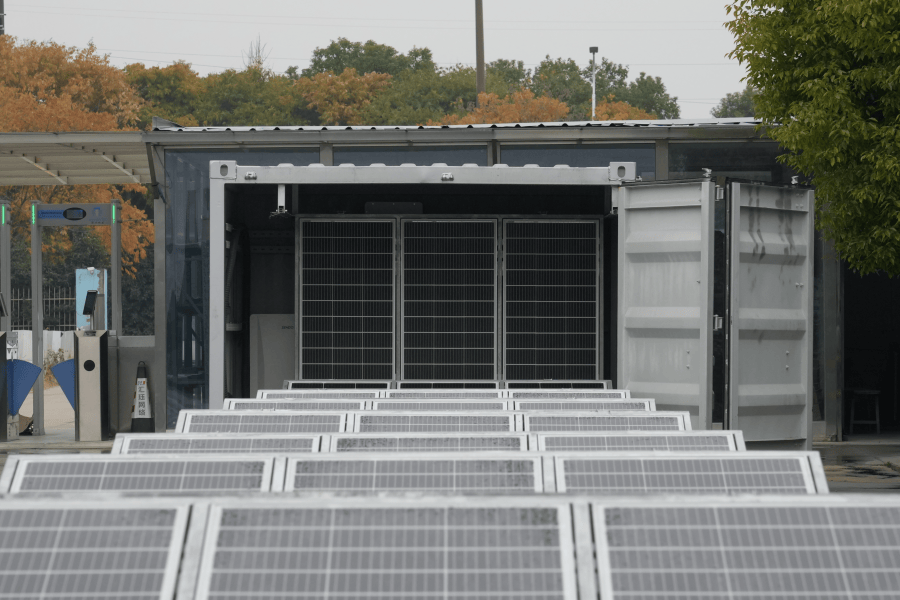
The solution was a containerized 1MWh high-voltage DC system. Here's what it does:
- Daytime: Solar PV directly charges the battery and powers depot operations. Excess solar is stored, not fed to the grid at low rates.
- Evening Peak: The battery powers the depot, avoiding grid draw during high tariff periods.
- Overnight: The stored solar energy, supplemented by low-cost off-peak grid power, charges the van fleet. The grid connection is used slowly and steadily, eliminating demand spikes.
The result? They deferred a ?200k grid upgrade, cut their energy costs by 40% through arbitrage and demand charge management, and secured 100% renewable operation for their fleet. The system's UL/IEC-certified design sped up local authority approval, which is a huge, often underestimated, factor in project timelines.
Key Considerations: Beyond the Spec Sheet
When evaluating a system like this, don't just focus on the headline kWh and MW numbers. Ask these questions:
| System Voltage: | Does it match your solar array and charger voltage? Higher voltage (e.g., 1500V DC) means lower current, reducing losses and cabling costs. |
| Control & Software: | Can it intelligently decide when to charge from solar, grid, or discharge based on real-time electricity prices, solar forecast, and charging schedules? The brain is as important as the battery. |
| Service & Support: | Who provides local commissioning and 24/7 monitoring? A system this complex needs expert eyes. Our teams in both the EU and US provide that localized support. |
| Future-Proofing: | Is the container or enclosure sized to allow for additional battery racks later? Can the software integrate new revenue streams like frequency regulation? |
Making It Work for Your Business
The ultimate guide isn't about selling you a box of batteries. It's about designing a resilient power asset. A well-integrated 1MWh high-voltage DC storage system transforms your EV charging station from a grid-dependent cost center into a grid-independent profit center. It future-proofs your site against rising energy costs and grid congestion.
The question isn't really "can we afford this storage system?" but rather, "can we afford the grid delays, demand charges, and lost revenue without it?" Based on what I'm seeing on the ground from California to the Netherlands, the answer for serious commercial and fleet operators is becoming clear.
What's the single biggest grid constraint facing your next charging project?
Tags: UL Standard BESS Microgrid Solar Storage High-voltage DC EV Charging
Author
James Zhang
20+ years agricultural energy storage engineer / Highjoule CTO