
IP54 Outdoor Mobile Power Container for Industrial Parks: The Ultimate Guide
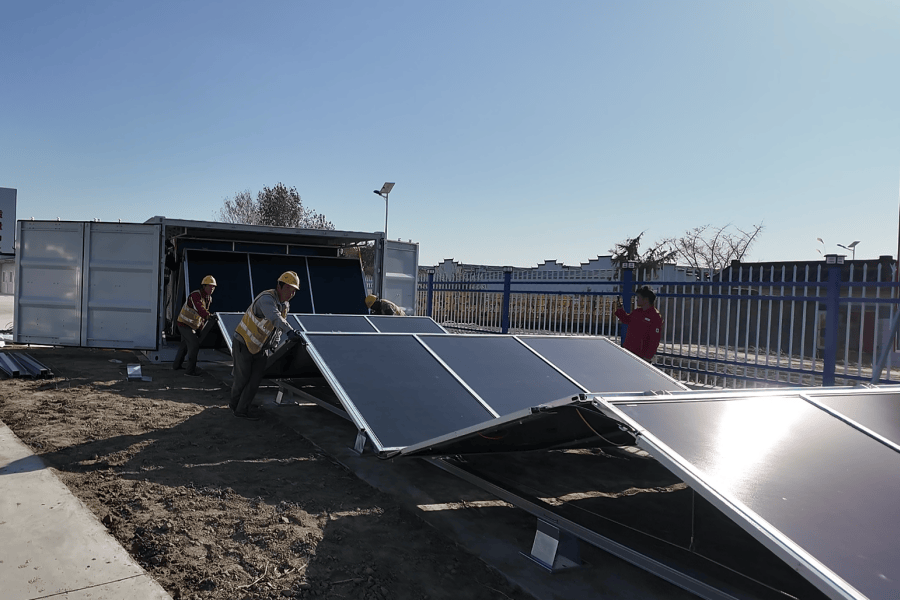
Table of Contents
- The Real Problem: Why "Just Any" Outdoor Storage Isn't Enough
- The Hidden Costs of Getting It Wrong
- The Mobile, Rugged Solution: More Than Just a Box
- A Case in Point: How a German Manufacturer Found Flexibility
- What Makes It Tick: A Quick, Non-Technical Peek Inside
- Beyond the Spec Sheet: What to Look For in a Partner
The Real Problem: Why "Just Any" Outdoor Storage Isn't Enough
Honestly, if I had a dollar for every time a plant manager told me they needed "an outdoor battery system," I'd be retired. The request seems simple. But here's the thing I've seen firsthand on site: most industrial parks in the US and Europe aren't asking for just a battery. They're asking for a solution to unpredictability. One day it's a sudden demand charge spike from the grid operator, the next it's a critical process that can't afford a millisecond of interruption, and all the while, there's pressure to use that shiny new solar array more effectively. The International Energy Agency (IEA) notes that industrial electricity demand is set to grow by over 30% by 2030, and with that comes incredible vulnerability to cost and reliability.
The knee-jerk reaction is to pour a concrete pad, fence it off, and install a permanent system. But what if your energy needs shift in 18 months? What if that perfect spot today is in the way of a planned expansion next year? That fixed asset starts to look like a liability. The real pain point isn't storage itself; it's inflexible, vulnerable storage that can't adapt as fast as your business does.
The Hidden Costs of Getting It Wrong
Let's agitate that pain point a bit. I was on a site in Texas last year where a "weatherproof" enclosure for some critical backup power failed - not during a hurricane, but during a heavy, sideways rainstorm. The internal humidity soared, the system faulted, and a scheduled maintenance window turned into a 36-hour downtime scramble. The cost wasn't just in repairs; it was in lost production and shaken confidence. This is where standards like UL 9540 for energy storage systems and the IP (Ingress Protection) rating become your best friends, not just checkboxes.
An IP54 rating, which we'll get into, specifically means protection against dust (not total, but enough to prevent harm) and water sprayed from any direction. For most of Europe and many parts of the US, that's the baseline for surviving real-world industrial environments - think dust from logistics yards, pollen, or driven rain. Deploying something less robust isn't saving money; it's pre-paying for a future failure. The financial aggravation comes from unplanned downtime, accelerated component degradation, and the sheer rigidity of a solution that can't be moved when your site plan evolves.
The Mobile Solution: More Than Just a Box
This is where the concept of an IP54 Outdoor Mobile Power Container shifts from being a product to a strategic asset. The solution isn't merely a battery in a box. It's a pre-engineered, pre-tested, and fully integrated power plant on a skid or trailer, designed to be deployed in weeks, not months, and relocated as needed.
At Highjoule, when we talk about our mobile containers, we're really talking about delivering three things: Speed, Resilience, and Optionality. Speed in deployment because it's assembled and tested in a controlled factory environment against UL and IEC standards. Resilience is baked in through that IP54-rated shell and an independent thermal management system that doesn't rely on the site's infrastructure. And optionality - the power to move it, scale it, or repurpose it - gives financial decision-makers a way to protect their investment against an uncertain future.

A Case in Point: How a German Manufacturer Found Flexibility
Let me give you a real example from the Ruhr region in Germany. A mid-sized automotive parts manufacturer had significant rooftop PV but faced two issues: grid connection constraints that limited how much solar they could feed in, and volatile afternoon energy prices. They needed to store excess solar and discharge it during peak price periods, but their campus layout was tight and future expansion plans were unclear.
A traditional fixed BESS would have required a lengthy grid interconnection study and permanent land commitment. Instead, they opted for a mobile IP54 container solution. We delivered a 1 MWh system on a skid. It was connected to their medium-voltage infrastructure and was up and running in under 6 weeks. The mobile aspect was key: when they needed to clear the area for a new warehouse 2 years later, they simply disconnected it, and a heavy-lift truck moved it 500 meters to its new, permanent home. No decommissioning costs, no wasted infrastructure. The system paid for itself in under 4 years through peak shaving and solar self-consumption optimization.
What Makes It Tick: A Quick, Non-Technical Peek Inside
For the non-engineers making the budget calls, here's the plain-English version of what matters inside that container:
- The C-Rate (It's About Power Speed): Think of this as the "sprint vs. marathon" setting. A lower C-rate (like 0.5C) means the battery discharges its energy slowly over 2 hours - great for shifting solar energy. A higher C-rate (like 1C) means it can discharge full power in 1 hour - critical for rapid demand charge reduction or backup. A good mobile container offers a configurable balance.
- Thermal Management (The Climate Control): This is the unsung hero. Batteries get stressed if they're too hot or too cold. An independent, IP54-compatible cooling/heating system inside the container keeps the cells at their happy place, 24/7, regardless of whether it's Arizona heat or Norwegian winter. This alone is the biggest factor in long-term health and safety.
- LCOE (Levelized Cost of Energy): This is your true north metric. It's the total lifetime cost of the system divided by the energy it will produce. A mobile container with high resilience and flexibility lowers the effective LCOE because it extends the system's usable life (you can move it to a new project) and avoids costly site-specific engineering each time.

Beyond the Spec Sheet: What to Look For in a Partner
So you're convinced a mobile, rugged container is the way to go. The final piece isn't just the hardware; it's the partner behind it. The spec sheet might list UL 9540, IEC 62933, and IEEE 1547 compliance (and it absolutely should), but here's what your RFP might miss:
Look for a provider with on-the-ground deployment experience in your region. Does their engineering team understand the local utility interconnection process in Ohio or the specific grid codes in Germany's Mittelspannungsebene (medium-voltage level)? For instance, at Highjoule, our project rollout includes local commissioning crews who speak the language, both technically and literally, to navigate permits and utility handoffs. Our service model is built on remote monitoring with the ability to dispatch local technicians - because a fault at 2 AM in an industrial park needs a local response, not a transatlantic flight.
The ultimate guide isn't just about a product category. It's about finding a strategic, flexible asset and a partner who treats your energy resilience like it's their own. So, what's the one constraint in your expansion plan that a mobile power solution could unlock?
Tags: UL Standard BESS Industrial Energy Storage Energy Resilience IP54 Outdoor Power Container
Author
James Zhang
20+ years agricultural energy storage engineer / Highjoule CTO