
The Ultimate Guide to IP54 Outdoor Photovoltaic Storage System for Construction Site Power
The Ultimate Guide to IP54 Outdoor Photovoltaic Storage System for Construction Site Power
Honestly, if I had a nickel for every time a project manager told me their diesel generator was a "necessary evil," I'd be retired by now. We've all seen it - the racket, the fumes, the fuel trucks rolling in every other day, and the sheer unpredictability of it all. It's 2024, and yet, powering a remote construction site or a temporary industrial project often feels like we're stepping back in time. The real pain point? You're not just paying for diesel; you're paying for downtime, logistical headaches, and a carbon footprint that's increasingly hard to justify to stakeholders and communities.
Table of Contents
- The Real Problem: More Than Just an Inconvenience
- Why "IP54" Isn't Just a Fancy Label
- From Blueprint to Reality: A German Case Study
- Looking Beyond the Box: Thermal Management & C-Rate
- Making the Move: What to Look For
The Real Problem: More Than Just an Inconvenience
Let's agitate that pain point a bit. It's not just about noise complaints. I've been on sites in Texas where afternoon thunderstorms would shut down operations for hours because the genny couldn't handle the sudden load demand from critical equipment. The cost? Thousands per hour in idle labor and delayed milestones. According to the National Renewable Energy Laboratory (NREL), fuel and maintenance can constitute over 70% of the total cost of operating a diesel generator over its lifespan. Now, layer on evolving environmental regulations, like California's CARB rules or the EU's stringent emissions directives, and that "temporary" power solution starts looking like a permanent liability.
Why "IP54" Isn't Just a Fancy Label
This is where the solution comes into sharp focus: a purpose-built, outdoor-rated Battery Energy Storage System (BESS) coupled with solar. The "IP54" rating is the hero of our story. In plain English, "Ingress Protection 54" means the enclosure is dust-protected (5) and can handle water splashes from any direction (4). For a construction site, that's non-negotiable. We're talking about wind-blown dust from excavators, rain, and even pressure washing nearby. A standard indoor cabinet would fail within weeks. This isn't theoretical; I've seen firsthand on site how a properly rated system just keeps humming along while everything else is covered in a fine layer of grit.
At Highjoule, when we design our outdoor BESS solutions, we start with IP54 as the baseline. But we go further. It's about the entire ecosystem: UL 9540 and IEC 62933 certification for the system safety, robust HVAC for thermal management (more on that below), and a design that allows for easy connection to a photovoltaic array. The goal is a true "plug-and-play" power station that you can drop on a gravel pad, connect, and forget about.

From Blueprint to Reality: A German Case Study
Let me walk you through a project we did last year in North Rhine-Westphalia, Germany. The challenge was a 12-month highway expansion project. The client needed reliable power for site offices, lighting, and electric tool charging stations, but grid connection was prohibitively expensive and slow. Diesel was the initial plan, but community pushback and a corporate net-zero target made it a no-go.
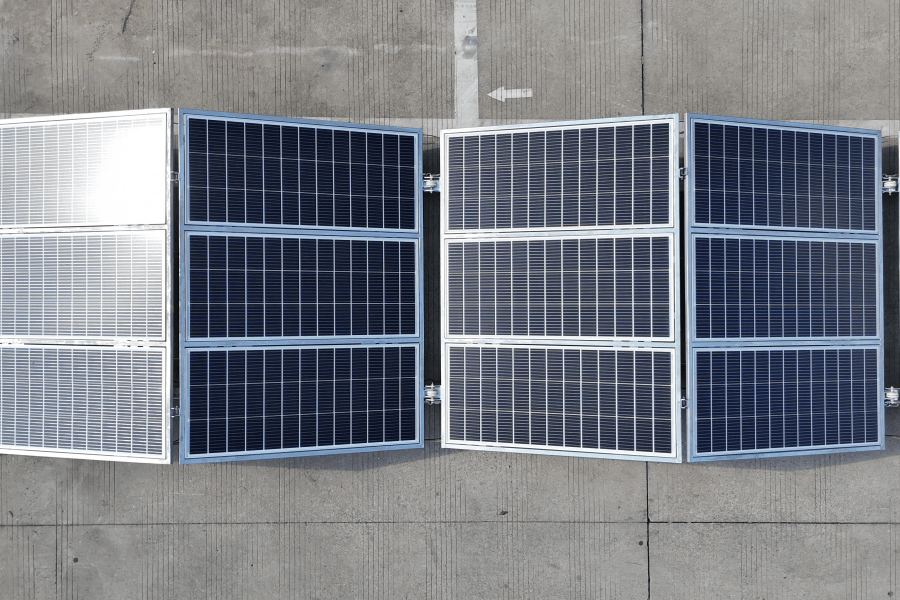
We deployed two of our IP54-rated containerized BESS units, paired with a temporary, ground-mounted solar canopy. The system was designed for:
- Autonomy: Solar charging during the day covered 60-80% of daily load, with grid charging (from a low-capacity connection) topping up at night.
- Resilience: During a week of particularly grey weather, the BESS provided full power without a single diesel runtime.
- ROI: The calculated Levelized Cost of Energy (LCOE) C essentially the total lifetime cost per kWh C came in 40% below the projected diesel cost, even factoring in the equipment rental.
The site manager's feedback was priceless: "We stopped being fuel managers and went back to being construction managers."
Looking Beyond the Box: Thermal Management & C-Rate
Here's some expert insight you won't get from a spec sheet. Two technical aspects make or break an outdoor BESS for this application: Thermal Management and C-Rate.
Thermal Management: Batteries hate extreme temperatures. An outdoor unit in Arizona or Spain needs a cooling system that can handle 45C ambient heat, while one in Norway needs heating for winter operation. Our systems use a closed-loop, liquid-cooled climate control system. It's not just an air conditioner; it precisely maintains cell temperature for optimal life and safety. I've opened up competitor units on failed projects where thermal stratification (hot spots inside the pack) led to premature capacity fade.
C-Rate: This is how fast you can charge or discharge the battery. A 1C rate means you can use the full capacity in one hour. For a construction site, you might have a crane that needs a huge, sudden draw of power (a high discharge C-rate). Or, you might want to charge the batteries from a limited grid connection quickly overnight (a high charge C-rate). A system with a low C-rate might not be able to power that crane without tripping. We design our chemistry and system architecture to support the necessary C-rates for dynamic site loads, which is something we nail down in the very first planning call with a client.
Making the Move: What to Look For
So, you're considering ditching the diesel genny? Brilliant move. Here's my practical checklist, drawn from two decades of getting this right (and occasionally seeing it go wrong):
- Certifications, Not Just Claims: Demand proof of UL 9540/IEC 62933 and the specific IP rating. Ask for the test report.
- Ask About the "What Ifs": What's the real-world protocol if a cell fails? How is the system monitored remotely? Highjoule, for instance, provides a dedicated 24/7 NOC (Network Operations Center) that often spots issues before the local crew even notices a blip.
- Total Cost of Ownership Model: Request a detailed TCO/LCOE comparison against diesel. It should include fuel, maintenance, rental, carbon costs, and potential grid fees. A good provider will build this model with you.
- Service & Support Footprint: Does the provider have local technicians? For our EU and US clients, this is a deal-breaker. A container shouldn't be a black box that needs an expert flown in from another continent for every alarm.
The shift to smart, resilient, clean site power isn't just coming; it's already here. The right outdoor BESS isn't an expense - it's a productivity and predictability engine. What's the one piece of equipment on your next site that's currently holding you back?
Tags: Construction Site Power UL Standard BESS Europe US Market Photovoltaic Storage Renewable Energy IP54 Rating
Author
James Zhang
20+ years agricultural energy storage engineer / Highjoule CTO