
The Ultimate Guide to LFP Energy Storage Containers for Eco-Resorts
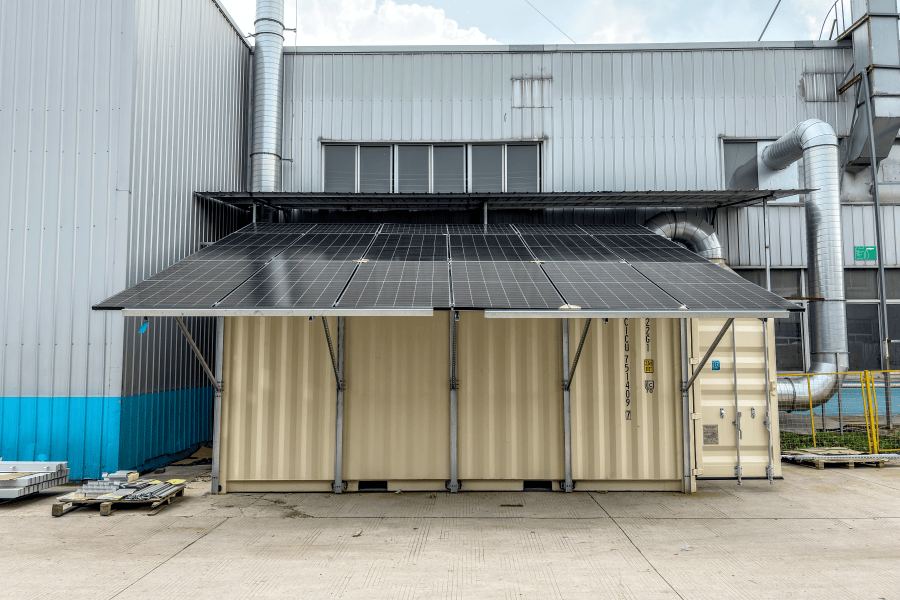
The Ultimate Guide to LFP Energy Storage Containers for Eco-Resorts: From a Guy Who's Been On-Site
Honestly, if you're running or developing an eco-resort, you know the power struggle is real. You want that pristine, off-grid experience, but the diesel generator's rumble and smell just doesn't fit the "sustainable luxury" brochure. You've got solar panels, sure, but what happens when the sun sets or a cloud passes? I've been to these sites, from the mountains of Colorado to the islands of Greece, and the challenge is always the same: reliable, clean, and safe power that doesn't break the bank. Let's talk about how modern LFP energy storage containers are becoming the silent, clean-burning engine for the future of hospitality.
Quick Navigation
- The Real Power Problem for Eco-Resorts
- Why Old Solutions Fall Short (And Cost More)
- The LFP Container: Your Off-Grid Game Changer
- It's More Than Just a Battery: What's Inside the Box
- A Case in Point: A Resort in the California Redwoods
- Making the Right Choice: What to Look For
The Real Power Problem for Eco-Resorts
It's not just about having electricity. It's about guest experience, operational integrity, and your brand's promise. The core pain points I see on site boil down to three things:
- Unreliable Grids (or No Grid at All): Many beautiful locations are at the "end of the line" for utilities. A single fault can plunge your resort into darkness, leading to lost revenue and frantic guests.
- The Dirty Secret of Diesel: Generators are a necessary evil, but they're noisy, polluting, and their fuel costs are wildly unpredictable. Transporting diesel to remote sites? That's a logistics and cost nightmare.
- Solar's Big Limitation: Solar PV is fantastic, but its output is intermittent. Without storage, you're dumping precious solar energy at noon and burning diesel at night. It's inefficient and frankly, a bit ironic for an eco-resort.
Why Old Solutions Fall Short (And Cost More)
Let's agitate this a bit. You might think, "We'll just get a big battery system." But not all batteries are created equal. The traditional choice for large-scale storage often leaned towards other lithium-ion chemistries, like NMC. While energy-dense, they come with inherent challenges for a remote resort:
- Thermal Runaway Risk: Higher risk profiles require incredibly complex and expensive fire suppression and spacing systems. In a remote location, emergency response is a major consideration.
- Shorter Lifespan: They degrade faster, especially with frequent charging cycles. Over a 10-year period, you might be looking at replacement sooner, destroying your project's financials.
- Supply Chain & Compliance Headaches: Shipping and installing large battery systems that don't meet UL 9540 (US) and IEC 62933 (EU) standards as a complete unit can be a regulatory maze.
The International Renewable Energy Agency (IRENA) notes that system longevity and safety are top concerns for off-grid commercial energy storage adopters. This isn't just theory; it's what keeps resort managers up at night.
The LFP Container: Your Off-Grid Game Changer
This is where the pre-engineered LiFePO4 (LFP) energy storage container enters as a true solution. Think of it as a "power plant in a box," specifically designed for your challenges.
Why LFP Chemistry Wins for Resorts: LFP batteries have a fundamentally safer chemistry. They're far more stable at high temperatures, drastically reducing thermal runaway risk. This isn't just a datasheet claim. I've seen containers in Texas heatwaves where the internal thermal management system was barely breaking a sweat, while other systems were throttling output. For you, this means simpler safety plans, easier insurance, and peace of mind.
Then there's lifespan. A quality LFP system can deliver 6,000+ cycles while retaining most of its capacity. This directly translates to a lower Levelized Cost of Storage (LCOS) C the real metric that matters for your ROI. You're getting more usable energy over the system's life, making your solar investment work harder.

It's More Than Just a Battery: What's Inside the Box
As an engineer, what excites me isn't just the cells, but the integrated intelligence. A modern container from a reputable provider like ours at Highjoule isn't just a shell with batteries thrown in. It's a fully integrated system:
- Advanced Thermal Management: A dedicated liquid cooling/heating system keeps every cell at its ideal temperature year-round. This is non-negotiable for both performance and longevity, whether you're in the Arizona desert or the Canadian Rockies.
- Grid-Forming Inverters: This is the magic that lets the system create a stable, clean "grid" from scratch (black start capability). Your guests' sensitive electronics and the resort's kitchen equipment won't know the difference from a utility grid.
- Built-in Safety & Compliance: The entire unit is tested and certified as a single system to standards like UL 9540. This turnkey approach saves you months of design, testing, and approval headaches. We handle the compliance, you get a plug-and-play solution.
- Energy Management System (EMS): The brain. It automatically decides when to store solar, discharge to the resort, or even run the generator at its most efficient point if needed, minimizing fuel use.
A Case in Point: A Resort in the California Redwoods
Let me give you a real example. We deployed a 500 kWh LFP container for a high-end eco-resort in Northern California. Their challenge: reduce diesel use by 90% and ensure 24/7 power for 40 cabins and a central lodge, all while meeting strict local environmental codes.
The Solution: We paired their existing solar array with a single Highjoule LFP container. The container's EMS was programmed for peak shaving and solar self-consumption. The thermal system was spec'd for the region's cool, humid climate to prevent condensation.
The Outcome: Within the first year, they hit their 90% diesel reduction target. The resort manager told me the quietness was the most unexpected benefit - guests commented on the "profound natural silence." Financially, they locked in their energy costs and are on track for a 5-year payback, especially after leveraging available state incentives for storage. The UL 9540 certification smoothed the permitting process significantly.
Making the Right Choice: What to Look For
So, if you're evaluating LFP containers, look beyond the brochure's kWh number. Ask these questions, the ones we'd discuss over coffee:
- Is it a truly integrated, tested system or a kit of parts? Insist on full system certification (UL/IEC).
- How does the thermal management work? Liquid cooling is becoming the industry benchmark for containers.
- What's the projected LCOS, not just upfront cost? A reputable provider should model this for your specific load and solar profile.
- What's the support model? For remote resorts, remote monitoring and a clear service partner network are critical. At Highjoule, for instance, our platform provides real-time visibility, and we partner with local energy service companies for boots-on-the-ground support if ever needed.
The goal isn't just to buy a battery. It's to buy reliable, clean, and predictable power for the next 15+ years. Your guests expect an unforgettable, sustainable experience. Your power system should be the invisible foundation that makes it all possible, without a roar or a puff of smoke in sight. What's the one operational headache you'd love to solve by rethinking your resort's power backbone?
Tags: UL Standard BESS LCOE Europe US Market Renewable Energy Eco-Resort LiFePO4 Battery
Author
James Zhang
20+ years agricultural energy storage engineer / Highjoule CTO