
The Ultimate Guide to Novec 1230 Fire Suppression for Eco-resort BESS
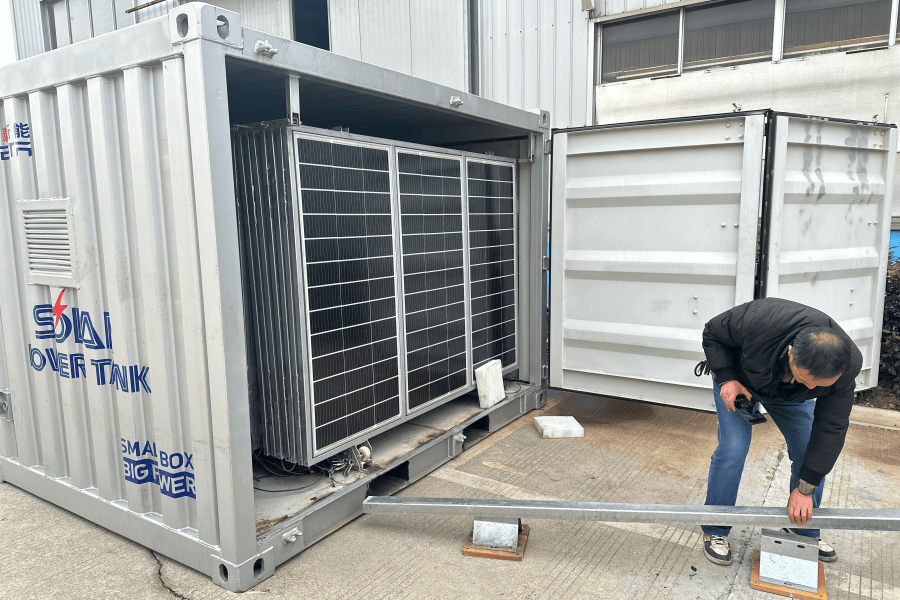
The Ultimate Guide to Novec 1230 Fire Suppression for Your Eco-resort's BESS
Hey there. Let's talk about something that keeps folks like you and me up at night. You've invested in a beautiful, remote eco-resort. You've got the solar panels, maybe a small wind turbine, and a battery system to store that clean energy, aiming for true energy independence. It's a fantastic vision. But then, in the back of your mind, a question nags: "What if something goes wrong with the batteries?" Honestly, after 20+ years on sites from California to the Swiss Alps, I can tell you that this isn't just paranoia - it's prudent planning. The single biggest hurdle for deploying Battery Energy Storage Systems (BESS) in sensitive, off-grid locations isn't the tech itself anymore; it's managing the perceived and real safety risks, especially fire. Today, I want to walk you through why the fire suppression system you choose isn't just a compliance checkbox, but the heart of your project's long-term viability, and why solutions like Novec 1230 are becoming the go-to for forward-thinking developers.
Quick Navigation
- The Real Problem: More Than Just a "What-If"
- Why This Matters for Your Bottom Line & Reputation
- The Solution: Not All Fire Suppression is Created Equal
- Novec 1230 Deep Dive: How It Works in the Real World
- A Case in Point: Lessons from a Coastal Retreat
- Making the Right Choice for Your Project
The Real Problem: More Than Just a "What-If"
The phenomenon is clear: eco-resorts and remote commercial sites are leading the charge in adopting renewables-plus-storage. But these sites are often far from fire departments. A standard sprinkler system might contain a fire, but it can also cause catastrophic collateral damage to the battery units and electronics, essentially turning a thermal event into a total system write-off. Water and lithium-ion batteries? Not a great mix. The challenge is finding an agent that stops the fire without stopping your operations or harming the environment your resort is built to celebrate.
Why This Matters for Your Bottom Line & Reputation
Let's agitate that pain point a bit. A fire event, even a small one, isn't just about equipment replacement. It's about business continuity. If your resort's power goes down for weeks, you're looking at massive revenue loss, not to mention guest relocation and reputational damage that can take years to rebuild. The National Renewable Energy Laboratory (NREL) has highlighted that safety concerns remain a top barrier to wider BESS adoption, particularly in the commercial sector. Insurance premiums for BESS installations are heavily influenced by the risk mitigation measures in place. A subpar fire suppression system directly translates to higher operational costs over the life of the system, hurting your project's Levelized Cost of Energy (LCOE) - the total lifetime cost per kWh of energy produced. I've seen firsthand on site how the right safety specs can make or break a project's financing and insurance.
The Solution: Not All Fire Suppression is Created Equal
This is where we move from problem to solution. The industry's answer for sensitive, mission-critical electronics has evolved towards "clean agent" fire suppression systems. These are gases that extinguish fire by removing heat or disrupting the chemical chain reaction, leaving no residue. And among these, Novec 1230 fluid has emerged as a standout for BESS applications, particularly in environmentally conscious settings like yours.
Novec 1230 Deep Dive: How It Works in the Real World
Okay, let's get a bit technical, but I'll keep it simple. Novec 1230 is a fluorinated ketone. In plain English, it's a synthetically engineered fluid that's incredibly effective at putting out fires. Here's why it fits the eco-resort BESS puzzle so perfectly:
- Zero Residue & Non-Conductive: It evaporates completely. This means if the system discharges, there's no messy cleanup, no corrosion on your expensive battery racks or inverters, and no risk of electrical short circuits. You can potentially be back online much faster after an incident check.
- Exceptional Environmental Profile: Its global warming potential is 1 (yes, one), and its atmospheric lifetime is just 5 days. Compared to older agents, it's a sustainability win, aligning perfectly with your resort's ethos. It also has zero ozone depletion potential.
- People-Safe for Occupied Spaces: It's designed to be used in areas where people might be present. Its safety margin is wide, which is crucial if your BESS container is near staff areas or utility buildings.
- Meets the Key Standards: It's listed and approved under critical standards like UL 9540A (test method for evaluating thermal runaway fire propagation) and the NFPA 2001 standard for clean agent fire extinguishing systems. For us at Highjoule, designing systems that meet and exceed UL, IEC, and local IEEE standards isn't optional; it's the baseline. Our BESS enclosures are integrated with Novec 1230 systems from the design phase, ensuring seamless compatibility and optimal agent distribution.
Think of Thermal Management and fire suppression as a two-layered defense. The first layer is the BESS's own cooling system (managing C-rate - a measure of charge/discharge speed - to prevent overheating). The second, critical layer is the suppression system like Novec 1230, which acts as the ultimate fail-safe if the first layer is breached.
A Case in Point: Lessons from a Coastal Retreat
Let me give you a real-world example. We worked with a high-end eco-lodge on the Big Sur coastline in California. Stunning location, completely off-grid. Their challenge was twofold: extreme space constraints (the BESS had to be tucked into a hillside) and an unwavering mandate for minimal environmental impact. A water-based system was a non-starter due to space and runoff concerns. Together, we deployed a modular BESS solution with a built-in, early-detection gas-based fire suppression system using Novec 1230.
The system was pre-engineered to comply with California's strict fire codes and UL standards. The compact nature of the agent storage meant we didn't need a separate, bulky tank room. The resort management and their insurer slept better at night knowing that a single event wouldn't lead to toxic runoff into the sensitive coastal zone or a prolonged power outage. It turned a major risk factor into a managed, accepted part of their operational blueprint.

Making the Right Choice for Your Project
So, what should you, as a decision-maker, be looking for? Don't just ask, "Does it have fire suppression?" Drill deeper. Ask about the agent type, its environmental and safety data sheets, and how it's integrated. Is it an afterthought add-on, or is it designed into the container's ventilation and monitoring system from day one? At Highjoule, our approach is holistic. We optimize the entire system - from cell selection and thermal management design to the suppression system - to lower your long-term LCOE and mitigate risk. Our local deployment teams are trained not just on installation, but on ensuring these integrated safety systems are commissioned correctly and understood by your on-site staff.
The right fire suppression strategy does more than protect assets; it protects your investment, your brand, and the pristine environment your guests come to experience. It's the silent guardian that lets you fully harness the benefits of storage with confidence.
What's the one safety concern at your site that your current plans haven't fully addressed yet?
Tags: UL Standard BESS Renewable Energy Novec 1230 Fire Suppression Eco-Resort
Author
James Zhang
20+ years agricultural energy storage engineer / Highjoule CTO