
Novec 1230 Fire Suppression for BESS at EV Charging Stations: The Safety Guide
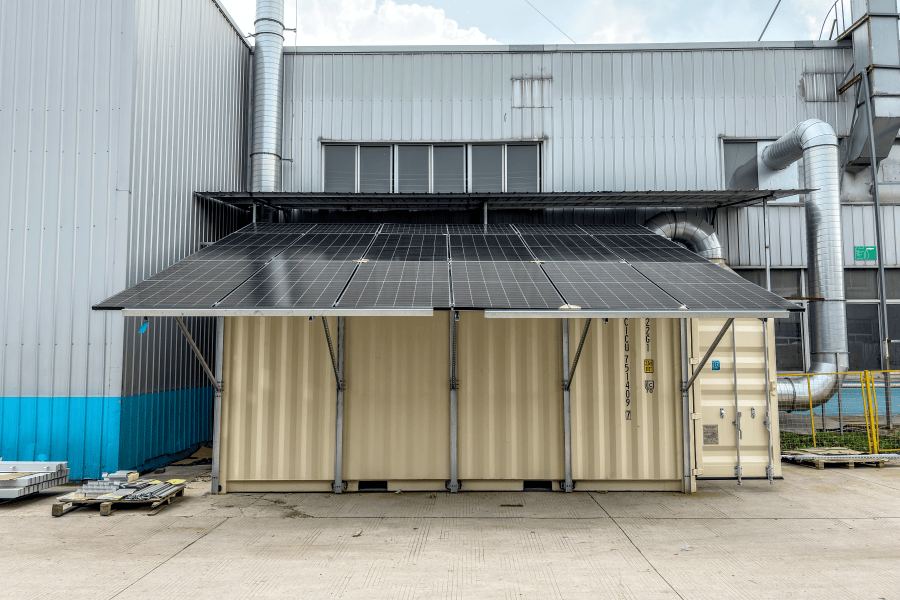
Table of Contents
- The Silent Risk at Your EV Hub
- Why Water Isn't Enough for a BESS Fire
- Novec 1230 Explained: Not Your Average Firefighter
- A Real-World Test: California's Lesson
- Beyond the Chemical: System Integration is Key
- Making the Business Case for Advanced Safety
The Silent Risk at Your EV Hub
Let's be honest. When you're planning an EV charging station, the main focus is on power delivery, user experience, and maybe the sleek design of the chargers. The battery energy storage system (BESS) sitting in the corner? It's often seen as a black box that just needs to work. But here's what I've seen firsthand on site: that BESS is your project's single biggest point of both value and potential risk. A thermal runaway event in one cell can cascade in minutes, releasing flammable gases and intense heat that traditional suppression systems simply can't handle. The result isn't just a damaged asset; it's catastrophic downtime, massive liability, and a headline that can sink a brand. According to a 2023 analysis by the National Renewable Energy Laboratory (NREL), fire safety concerns remain a top barrier to denser BESS deployments in urban and commercial settings.
Why Water Isn't Enough for a BESS Fire
The instinct is to reach for water. It's what's in the pipes, right? But with a lithium-ion battery fire, water can be dangerously ineffective in the early, critical stages. You're dealing with a Class B (flammable liquid) and Class C (electrical) fire simultaneously, buried deep within a sealed battery module. Water cools the exterior but struggles to penetrate and stop the internal chain reaction. Worse, applying water to high-voltage equipment creates a severe electrocution hazard for first responders. I've reviewed incident reports where well-intentioned sprinkler systems simply flooded the site, causing millions in secondary damage to inverters and switchgear, while the core battery fire continued to smolder. The industry learned this the hard way, which is why standards like UL 9540A and NFPA 855 now specifically call for tested and listed clean agent systems for enclosed BESS containers. It's not a suggestion; it's a requirement for insurable, code-compliant projects.

Novec 1230 Explained: Not Your Average Firefighter
This is where Novec 1230 fluid comes in. Think of it not as dousing a fire, but as snuffing it out by removing its heat. It's a clean agent - meaning it leaves no residue, doesn't conduct electricity, and is safe for people at design concentration. Here's the technical bit made simple: when discharged as a vapor, it rapidly absorbs heat energy from the fire plume and the battery surfaces, cooling them below the temperature needed to sustain combustion. It does this within seconds, reaching into hard-to-access areas of the rack. Crucially, it's been extensively tested and validated for lithium-ion battery applications under UL and FM Global standards. For a company like Highjoule, specifying a pre-engineered Novec 1230 system isn't just about ticking a compliance box. It's about designing a safety net that aligns with the physics of the risk. Our BESS enclosures integrate detection and suppression zones that match the thermal management zones, so we can target an incident precisely, potentially saving the majority of the battery pack.
A Real-World Test: California's Lesson
Let me give you a case that changed a lot of minds. A few years back, a large fleet charging depot in Southern California had a BESS supporting their midday fast-charging demand. The system had a standard smoke detection system but lacked a dedicated, integrated clean agent suppression. During a heatwave, a faulty cell interconnector led to a hot spot, which escalated. By the time the thermal sensors tripped the main disconnect, the module was in runaway. The facility's general-purpose foam system activated, but the damage was total. The entire 2 MWh unit was a loss, and the charging hub was offline for 9 weeks during replacement and investigation. The downtime cost in lost revenue and stranded fleet operations dwarfed the initial "savings" on the suppression system. After that, the developer mandated Novec 1230 or equivalent for all future sites. They learned that the Levelized Cost of Storage (LCOS) isn't just about capex and efficiency; it's heavily dependent on risk mitigation and asset longevity. A small upfront investment in proven suppression protects the entire lifetime revenue stream of the asset.
Beyond the Chemical: System Integration is Key
Buying a tank of Novec 1230 isn't a magic bullet. The real expertise lies in the integration. A best-in-class system, like what we engineer at Highjoule, considers three layers:
- Detection: Using a combination of very early smoke detection (VESDA) for warning, and rapid linear heat detection within battery racks for confirmation.
- Control Logic: The brain of the operation. It should first attempt to isolate the affected string, ramp up cooling, and only discharge the agent if the temperature rise is uncontrollable. This staged response can sometimes prevent a full discharge, saving on agent recharge costs.
- Containment: The BESS enclosure itself must be designed to contain the agent at the required concentration for the mandated duration (typically 10+ minutes). This influences door seals, ventilation dampers, and even the pressure relief design.
It's this holistic design philosophy, certified to UL 9540, that gives developers and insurers real confidence.
Making the Business Case for Advanced Safety
So, is it worth it? From a pure numbers perspective, absolutely. The cost of a tailored Novec 1230 system typically adds 3-7% to the overall BESS capex for a charging station project. Weigh that against: the potential total loss of a unit costing hundreds of thousands; the business interruption cost of an offline charging hub (which can be tens of thousands per day for a commercial fleet depot); and the inevitable increase in insurance premiums - or outright denial of coverage - for a system without listed suppression. Furthermore, local authorities having jurisdiction (AHJs) in places like Texas, Germany, and California are now far more likely to fast-track permits for designs that clearly exceed the base standards. It becomes a competitive advantage.
Honestly, after two decades in this field, I view a properly specified fire suppression system not as an expense, but as the core of a resilient asset. It's what allows you to sleep at night, knowing your EV charging investment is protected by the same level of engineering rigor as the batteries themselves. What's the one risk in your current plan that keeps you up?
Tags: UL Standard BESS Novec 1230 Fire Suppression Energy Storage Safety EV Charging Stations
Author
James Zhang
20+ years agricultural energy storage engineer / Highjoule CTO