
Rapid Deployment Guide for 5MWh Utility BESS in Agricultural Irrigation
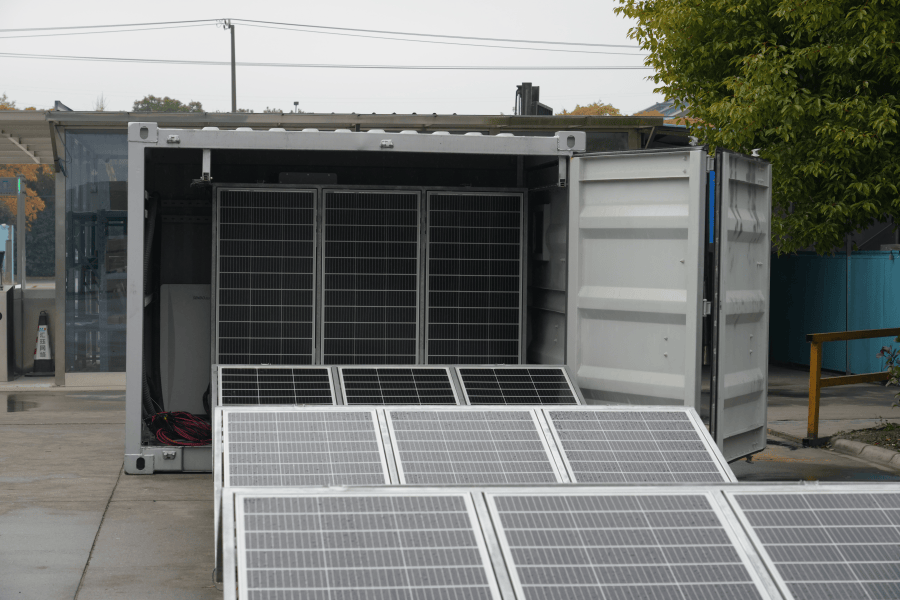
Table of Contents
- The Real Problem: It's Not Just About Power, It's About Timing
- Why It Hurts: The High Cost of "Waiting for the Sun"
- A Better Way: The Rapid-Deployment 5MWh BESS Concept
- Case in Point: Learning from the Field
- Key Specs Decision-Makers Should Understand (Without the Jargon)
- Making It Work: Beyond the Container
The Real Problem: It's Not Just About Power, It's About Timing
Let's be honest. If you're managing a large-scale agricultural operation or a co-op grid, you already know you need reliable power for irrigation. The pumps are massive, the energy demand is huge, and a crop doesn't care if there's a grid congestion issue or a cloudy day. The real, gut-level problem I've seen firsthand from California to Spain isn't a lack of energy sources - it's a brutal mismatch between when you need power and when it's available or affordable.
You might have solar PV to offset costs. But peak irrigation often runs from early morning into the evening, stretching beyond solar peak hours. So you're forced to draw from the grid during high-rate periods, or worse, you're at the mercy of demand charges that can make up 50% of your commercial bill. Or, you're in a remote area where the grid is weak, and starting a large pump motor causes voltage sags that annoy the utility and risk your equipment.
Why It Hurts: The High Cost of "Waiting for the Sun"
This timing mismatch isn't just an inconvenience; it's a direct hit to your operational viability. The International Energy Agency (IEA) has highlighted that agriculture's energy intensity is rising, and water scarcity is pushing for more energy-intensive irrigation solutions. You're caught between rising energy costs and the absolute necessity of water.
Think about the traditional "solution": building a custom substation or upgrading distribution lines. The process is a nightmare - years of permitting, six- or seven-figure capital outlays before you even break ground, and ongoing maintenance headaches. It locks you into a 30-year infrastructure that might not be flexible enough for the evolving energy landscape. I've sat with farm managers who've had viable land go unused because the cost and timeline to get reliable power were just prohibitive. That's lost revenue, every season.
The Agitation: Grid Uncertainty is the New Normal
And let's not forget the growing unreliability. Public safety power shutoffs (PSPS) in fire-prone areas, aging grid infrastructure leading to more outages - your water schedule can't adapt to that. A few days without irrigation during a critical growth period can devastate yield. The financial risk is enormous.
A Better Way: The Rapid-Deployment 5MWh Utility-Scale BESS Concept
This is where the concept of a pre-engineered, rapidly deployable 5MWh Battery Energy Storage System (BESS) changes the game. It's not a magic bullet, but honestly, it's the closest thing I've seen in my 20+ years for solving this specific set of problems.
The idea is simple: instead of a multi-year construction project, you deploy a containerized power asset in weeks. A 5MWh unit is a sweet spot - it's substantial enough to shift multiple hours of irrigation load for a large operation (think 1-2 MW of pump load for 4-5 hours), but it's also standardized enough to be manufactured efficiently, permitted under known codes, and dropped on a simple concrete pad.

At Highjoule, we view this not just as a battery box, but as a grid-forming asset. It can absorb cheap solar power during the day, release it during peak irrigation and grid peak periods, and provide instantaneous voltage support to start those big pumps smoothly. It turns your irrigation load from a grid problem into a grid solution.
Case in Point: Learning from the Field
Let's talk about a project in the Central Valley of California. A large almond grower had 3 MW of solar but faced crippling demand charges and needed to run pivots overnight. The utility upgrade quote was $2 million with an 18-month timeline.
Their solution? Two 2.5MWh Highjoule Atlas containers deployed in parallel for a 5MWh system. Because our units are pre-certified to UL 9540 and IEEE 1547 standards, the utility interconnection process was vastly simplified - they'd seen the paperwork before. The site work was just a pad and a medium-voltage interconnect. From contract to commissioning: 14 weeks.
The outcome? They now run irrigation largely from stored solar, have nearly eliminated demand charges, and have a critical backup during PSPS events. The payback period was calculated in years, not decades. The key was the speed and predictability of deployment. They didn't have to become energy storage experts; they deployed a known, compliant asset.
Key Specs Decision-Makers Should Understand (Without the Jargon)
When evaluating a "rapid deployment" BESS, don't get lost in data sheets. Focus on these three things that actually matter for your bottom line and safety:
- C-rate (The "Power vs. Endurance" Trade-off): Think of it as the "sprint vs. marathon" setting. A 1C rate means the 5MWh battery can discharge its full energy in 1 hour (delivering 5MW of power). A 0.5C rate means it discharges over 2 hours (2.5MW). For irrigation, you typically need sustained power over several hours, so a moderate C-rate (0.25C to 0.5C) is optimal and much kinder on the battery's lifespan. Highjoule systems are engineered for this duty cycle, not just peak specs.
- Thermal Management (The Silent Lifespan Killer): This is the HVAC system for your battery. In a hot farming environment, poor thermal management will degrade your asset in a few years. You need a robust, liquid-cooled or advanced air-cooled system that maintains even temperature. I've seen projects fail on this single point. Our containers are designed for -30C to 50C ambient, keeping the battery in its 20-25C sweet spot consistently.
- LCOE (Levelized Cost of Energy): This is your true cost metric. It's not just the upfront price. It includes installation, financing, operations, maintenance, and expected lifespan. A rapid-deployment system slashes the "soft costs" (engineering, long construction) that dominate traditional projects. By standardizing and using UL-certified assemblies, we drive down the LCOE, making the economics for irrigation arbitrage and demand charge management unbeatable.

Making It Work: Beyond the Container
The container itself is just 60% of the solution. The real magic - and where the "rapid deployment" promise is kept or broken - is in the wrapper. This means:
- Grid Compliance Out-of-the-Box: The system must have all the built-in protection and grid-interactive functions (like ride-through) required by local codes (UL, IEC, IEEE).
- Intelligent Energy Management System (EMS): It should have simple, preset modes like "Solar Self-Consumption," "Peak Shaving," and "Backup Power." You shouldn't need a PhD to operate it.
- Localized Service & Support: A container from overseas with no local service network is a liability. Part of Highjoule's model is having regional tech hubs for proactive monitoring and rapid dispatch. You're buying an energy solution, not just a box of batteries.
The future of agricultural power isn't about bigger wires from the grid. It's about intelligent, self-sufficient nodes. A 5MWh BESS deployed in months, not years, is the tool that makes this economically possible today. The question isn't really if the technology works - it does. The question is, how much longer can you afford to watch your operational costs and risks climb while waiting for a 20th-century grid solution?
What's the one irrigation power challenge you thought was unsolvable that this approach might change?
Tags: UL Standard BESS Agricultural Irrigation Renewable Energy Utility-Scale Energy Storage
Author
James Zhang
20+ years agricultural energy storage engineer / Highjoule CTO