
The Ultimate Guide to Smart BMS Monitored PV Storage for Telecom Base Stations
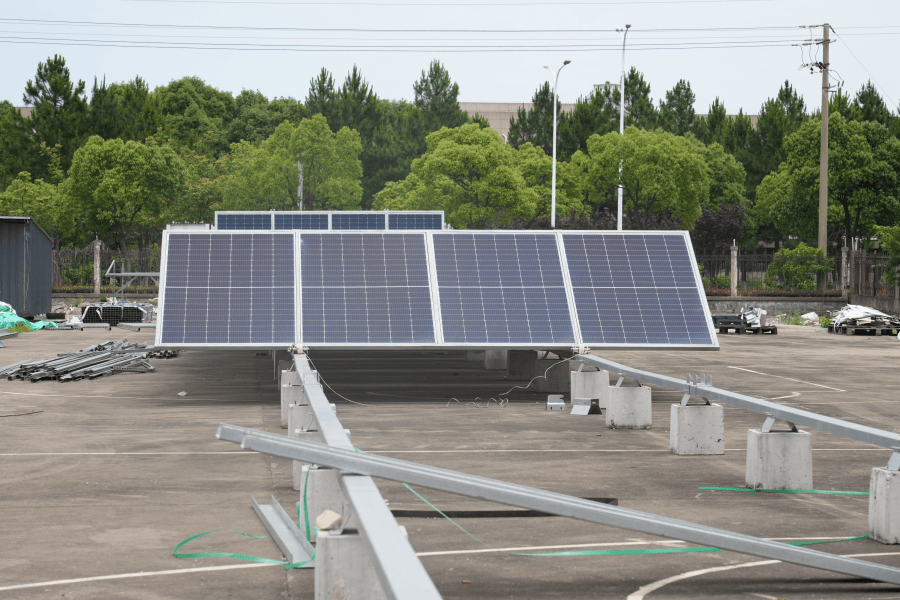
The Ultimate Guide to Smart BMS Monitored Photovoltaic Storage System for Telecom Base Stations
Honestly, if you're managing telecom infrastructure in Europe or North America right now, you're probably feeling the squeeze from two sides. The grid is getting less predictable, and your power bill is only going one way: up. I've been on the ground deploying battery storage for over two decades, from remote sites in Arizona to wind-swept towers in Scotland, and the challenges I see today are more complex than ever. But the solution, in my experience, is becoming crystal clear. It's not just about adding batteries; it's about deploying an intelligent, self-aware energy system. Let's talk about why that matters for your base stations.
Quick Navigation
- The Real Power Problem for Telecom Operators
- Why Old-School Backup Just Doesn't Cut It Anymore
- The Smart BMS: The Brain of Your Modern Energy System
- A Real-World Case: Stability in the California Hills
- Key Tech Insights: What Your BMS Should Really Be Telling You
- Where Do You Go From Here?
The Real Power Problem for Telecom Operators
Let's cut to the chase. The core problem isn't a lack of backup power. Most sites have diesel gensets or simple lead-acid banks. The problem is intelligent, cost-effective, and resilient power continuity. With the push for 5G and network densification, base stations are consuming more power, often in locations where the grid is weak or saturated with intermittent renewables. According to the International Energy Agency (IEA), data centers and telecom networks accounted for about 1-1.5% of global electricity use in 2022, a figure that's steadily rising. Every minute of downtime isn't just a service issue; it's a direct revenue and reputation hit.
Why Old-School Backup Just Doesn't Cut It Anymore
I've seen this firsthand on site. A traditional backup system is a passive asset. It sits there, waiting for a grid failure. Meanwhile, you're paying peak demand charges, you have zero visibility into the health of your battery assets, and you're missing out on potential revenue streams like demand response. The thermal runaway risk in a poorly monitored lithium-ion battery pack? It's a silent threat. A 2023 report from the National Renewable Energy Laboratory (NREL) highlighted that advanced monitoring and controls are critical for both safety and maximizing the economic value of BESS. Without a smart system, you're leaving money on the table and assuming unnecessary risk. It's like flying a plane with no instrument panel.
The Smart BMS: The Brain of Your Modern Energy System
This is where the ultimate guide points to one non-negotiable component: the Smart Battery Management System (BMS). This isn't just a voltage meter. A true smart BMS is the central nervous system of your photovoltaic storage setup. It does three things brilliantly: Protects, Optimizes, and Communicates.
- Protects: It continuously monitors every cell for voltage, temperature, and current, preventing conditions that lead to thermal runaway. For our deployments at Highjoule, this isn't optional - it's built into our UL 9540 and IEC 62619 certified systems from the ground up.
- Optimizes: It actively manages charge/discharge cycles to extend battery life (directly lowering your Levelized Cost of Energy - LCOE) and integrates with solar inverters and the grid to decide the most economical moment to store or release energy.
- Communicates: It gives you a live dashboard. You can see state-of-charge, cell balance, and system health from your office thousands of miles away. This remote visibility is what turns a cost center into a manageable, strategic asset.
A Real-World Case: Stability in the California Hills
Let me give you a concrete example. We worked with a regional telecom provider in Northern California. They had a cluster of critical base stations in a fire-prone area where Public Safety Power Shutoffs (PSPS) were common. Their old gensets were expensive to run and maintain.
Challenge: Ensure 72+ hours of backup during grid outages, reduce diesel dependency, and participate in the local utility's demand response program for additional revenue.
Solution: We deployed a containerized, UL-certified BESS with integrated smart PV and a high-precision smart BMS. The system was designed for seamless transition and could be dispatched remotely by the utility during peak grid stress.
Outcome: The smart BMS didn't just provide backup. It orchestrated the solar charging, managed the battery's depth-of-discharge to guarantee the 72-hour runtime, and even flagged a slight temperature imbalance in one module during routine remote diagnostics - allowing for a scheduled maintenance visit before it became an issue. The client now views the site as a grid asset, not just a liability.

Key Tech Insights: What Your BMS Should Really Be Telling You
As an engineer, I geek out on this stuff, but let me break down two critical terms for any business decision-maker:
1. C-rate Isn't Just a Number
Think of C-rate as the "speed limit" for charging or discharging your battery. A 1C rate means you can use the battery's full capacity in one hour. A 0.5C rate takes two hours. A smart BMS dynamically manages this based on temperature and cell health. Pushing a high C-rate generates heat and stresses the battery, shortening its life. A good system finds the sweet spot for performance and longevity, which is crucial for your total cost of ownership.
2. Thermal Management is Everything
Heat is the enemy. A premium smart BMS doesn't just read temperature; it commands the cooling system. It might slow down charging if a sensor gets warm or redistribute load away from a hot cell. This proactive management is what separates safe, long-lived systems from ticking time bombs. When we design for the Texas heat or the Arizona desert, this is the feature we obsess over.
Where Do You Go From Here?
The landscape has shifted. Your base station's power system needs to be a proactive, intelligent partner. It starts with asking the right questions of your team or vendor: Is the BMS just monitoring, or is it actively managing? Can it communicate with other grid assets? Does its certification (like UL 9540) cover the entire system, not just the cells?
At Highjoule, our focus has always been on building that intelligence and resilience in from day one, because I've spent too many nights on emergency service calls for systems that lacked it. The goal is to give you peace of mind, not just a battery in a box. What's the one power reliability question keeping you up at night?
Tags: UL Standard BESS Europe US Market Photovoltaic Storage Telecom Energy Storage Smart BMS
Author
James Zhang
20+ years agricultural energy storage engineer / Highjoule CTO