
The Ultimate Guide to Tier 1 Battery Cell 5MWh Utility-scale BESS for Industrial Parks
The Ultimate Guide to Tier 1 Battery Cell 5MWh Utility-scale BESS for Industrial Parks
Hey there. If you're reading this, you're likely considering a large-scale battery storage system for your industrial park. It's a smart move, but honestly, I've seen too many projects get bogged down by the same set of headaches. You want reliability, safety, and a clear return on investment, but the path to get there can feel cluttered with jargon and hidden risks. Over my 20+ years on sites from California to North Rhine-Westphalia, the difference between a successful project and a costly headache often boils down to a few critical choices. Let's talk about what really matters when you're looking at a 5MWh system built with Tier 1 battery cells.
Quick Navigation
- The Real Problem: It's Not Just About Capacity
- Why This Hurts Your Bottom Line and Safety
- The Solution: It Starts with Tier 1 Cells
- Beyond the Cell: The System That Makes It Work
- A Real-World Case: How It All Comes Together
- Your Next Steps: Asking the Right Questions
The Real Problem: It's Not Just About Capacity
When most industrial park managers start looking at a Battery Energy Storage System (BESS), the first number they focus on is the megawatt-hours. "We need 5MWh," they say. And that's a great starting point. But here's the thing I've seen firsthand: specifying the capacity is the easiest part. The real challenge lies in ensuring that 5MWh of capacity delivers consistent performance, day in and day out, for 15+ years, without becoming a safety liability or a financial sinkhole.
The market is flooded with options, and cell quality varies dramatically. A system built with uncertified, low-grade cells might look good on the initial capex spreadsheet, but it introduces massive operational risk. We're talking about accelerated degradation, unpredictable performance under high loads, and thermal management issues that keep facility managers up at night.
Why This Hurts Your Bottom Line and Safety
Let's agitate that pain point a bit. Choosing the wrong foundation for your BESS doesn't just mean it might underperform. It has concrete, costly consequences.
- Skyrocketing Levelized Cost of Storage (LCOS): The National Renewable Energy Laboratory (NREL) has shown that battery degradation is the single largest driver of the long-term cost of storage. A system that loses 20% of its capacity in 5 years instead of 10 destroys your ROI model.
- Safety & Insurance Nightmares: Industrial parks have complex insurance and liability requirements. A BESS that isn't built to the highest recognized safety standards (like UL 9540 and IEC 62933) can be impossible to insure or permit, especially here in the US and Europe. I've been on site after a thermal runaway event in a poorly managed system C it's a scenario you absolutely want to design out from the beginning.
- Grid Service Revenue at Risk: Many parks use BESS for demand charge management or grid services like frequency regulation. These applications require rapid, reliable charge/discharge cycles (high C-rates). A weak cell chemistry or poor pack design can't sustain this, leading to failed performance guarantees and lost revenue.
The Solution: It Starts with Tier 1 Cells
This is where the guide gets practical. The core of a reliable 5MWh utility-scale BESS is, unequivocally, the quality of the battery cells. "Tier 1" isn't just a marketing term; it's a shorthand for cells from manufacturers with proven, bankable track records. They have:
- Mass-scale production for automotive or top-tier energy storage projects.
- Publicly available, long-term cycle life data from independent labs.
- Stringent quality control and traceability for every cell batch.
When we at Highjoule Technologies design a system, we source these cells because they give us predictable performance parameters. We know exactly how they'll behave regarding degradation, heat generation (critical for thermal management), and ability to handle those high C-rate bursts for grid services. This predictability lets us engineer everything else C from the battery management system (BMS) to the cooling loops C with precision, not guesswork.

Beyond the Cell: The System That Makes It Work
Okay, so great cells are the foundation. But you're not buying cells; you're buying a system. Here's my insight from commissioning dozens of these: the integration is where the magic (or the misery) happens.
Think about Thermal Management. In a 5MWh container, you're packing a huge amount of energy. Passive air cooling? Forget it for this scale and for demanding cycles. You need a liquid-cooled system that precisely maintains each cell within its ideal temperature window. This isn't just for safety; it's for longevity. A cell consistently 10C too hot can have its life cut in half.
Then there's the Balance of Plant (BOP) C the inverters, transformers, and safety systems. They all need to be sized and selected not just for today's needs, but for the future state of a slightly degraded battery. Our design philosophy is to "over-engineer" the BOP for the cell's entire life, ensuring full power capability isn't compromised years down the line. This directly optimizes your LCOE.
And of course, compliance. For the US market, UL 9540 is non-negotiable. In Europe, you're looking at IEC 62933 and local grid codes. The entire system, not just components, needs certification. At Highjoule, our standard 5MWh BESS platform is designed from the ground up to meet these standards, which dramatically simplifies the permitting and interconnection process for our clients. We've been through it with utilities from Texas to Germany, and that local experience is priceless.
A Real-World Case: How It All Comes Together
Let me give you a concrete example from a project we completed last year for a manufacturing park in Bavaria, Germany.
Scenario: A multi-tenant industrial park with high peak demand charges and an unstable local grid connection. Their goals were peak shaving, backup power for critical processes, and providing grid stability services to the local DSO.
Challenge: They had a tight physical footprint and stringent fire safety regulations from their insurer. They also needed a system that could switch between revenue-generating grid services and self-consumption modes seamlessly.
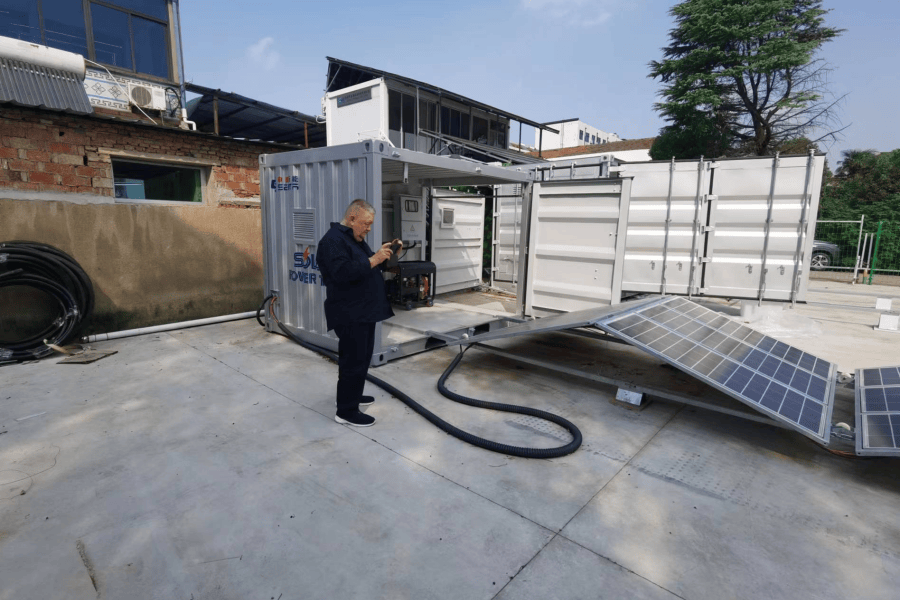
Our Solution & Outcome: We deployed a 5MWh system using Tier 1 NMC cells in a liquid-cooled, UL 9540/IEC-certified container. The advanced BMS was programmed with multiple operational modes. The thermal management system was designed for the specific climate and high-cycling duty. Honestly, the most tense moment was the final inspection by the insurer's engineer. He went through our documentation, safety protocols, and the system's fault tree analysis C and approved it on the spot. The park is now saving over ?200,000 annually on demand charges and generating additional revenue, with the system performing exactly as our degradation models predicted.
Your Next Steps: Asking the Right Questions
So, you're armed with the guide. What now? When you're evaluating proposals for your industrial park's 5MWh BESS, move beyond the price-per-kWh headline. Sit down with your potential provider and ask them:
- "Can you show me the independent test reports for the cycle life of the exact cell model you're using in this system?"
- "Walk me through your thermal management design. How does it handle a worst-case ambient temperature day at full 2C discharge?"
- "Provide the full system certification documents (UL 9540, IEC 62933). Are they for the assembled unit, or just for components?"
- "What is your projected capacity retention at year 10, and what is the financial guarantee behind that projection?"
The right partner won't hesitate with these answers. They'll have the data, the case studies, and the field experience to back it up. They'll talk to you not just as a vendor, but as an engineer who's been in the container at 2 AM during commissioning, who understands that your BESS needs to be an asset, not a experiment.
What's the biggest operational challenge your park is facing that a BESS could solve? Is it the peak demand charges, the need for backup, or something else entirely? Let's think about that.
Tags: UL Standard BESS LCOE Europe US Market Industrial Energy Storage Renewable Energy Tier 1 Battery
Author
James Zhang
20+ years agricultural energy storage engineer / Highjoule CTO