
Top 10 LFP Solar Container Manufacturers for Coastal Salt-Spray Environments
Contents
- The Silent Problem: When Salt and Ambition Clash
- The Real (and High) Cost of Getting It Wrong
- The Solution is in the Box: Purpose-Built for the Coast
- What Makes a "Top Manufacturer" for This Tough Job?
- Beyond the Spec Sheet: Insights from the Field
- Partnering for the Long Haul
The Silent Problem: When Salt and Ambition Clash
Let's be honest. When we talk about deploying battery energy storage systems (BESS) near the coast, the conversation usually starts with the incredible potential: stabilizing grids heavy with offshore wind or coastal solar, providing backup for critical port infrastructure, or enabling microgrids on islands. The "why" is clear. But over my 20+ years on sites from the Gulf Coast to the North Sea, I've seen the "how" get glossed over, and it almost always comes back to one invisible enemy: salt.
That salty, humid air isn't just a mild nuisance. It's a highly conductive, corrosive mist that seeks out every electrical connection, every metal surface, every tiny gap in an enclosure. I've opened up standard industrial containers after just 18 months in a coastal environment and found terminal corrosion that would make any engineer's heart sink. This isn't a theoretical risk. The National Renewable Energy Laboratory (NREL) has documented how harsh environments significantly accelerate performance degradation and increase O&M costs. When you're making a multi-million dollar, 20-year investment, that's a risk you simply cannot afford to ignore.
The Real (and High) Cost of Getting It Wrong
So what happens if the hardware isn't up to the task? The aggravation goes far beyond some surface rust.
- Safety Becomes a Question Mark: Corroded electrical busbars or connections increase resistance, which leads to localized heating. In a high-power battery system, that's a direct path to thermal events and a major safety compromise. Compliance with UL 9540 and IEC 62933 isn't just about passing a test in a lab; it's about maintaining that safety integrity for decades in the real world.
- Your LCOE Skyrockets: The Levelized Cost of Storage (LCOE) is your true north metric. Unplanned downtime for component replacements, constant cleaning of corroded parts, and a system that degrades faster than its warranty all hammer your projected returns. A system that needs major intervention in Year 10 instead of Year 20 can destroy your project economics.
- Operational Headaches: Imagine scheduling unplanned maintenance because a cooling fan seized up from salt buildup, or dealing with communication dropouts from corroded sensor links. It turns a set-and-forget asset into a constant worry.

The Solution is in the Box: Purpose-Built for the Coast
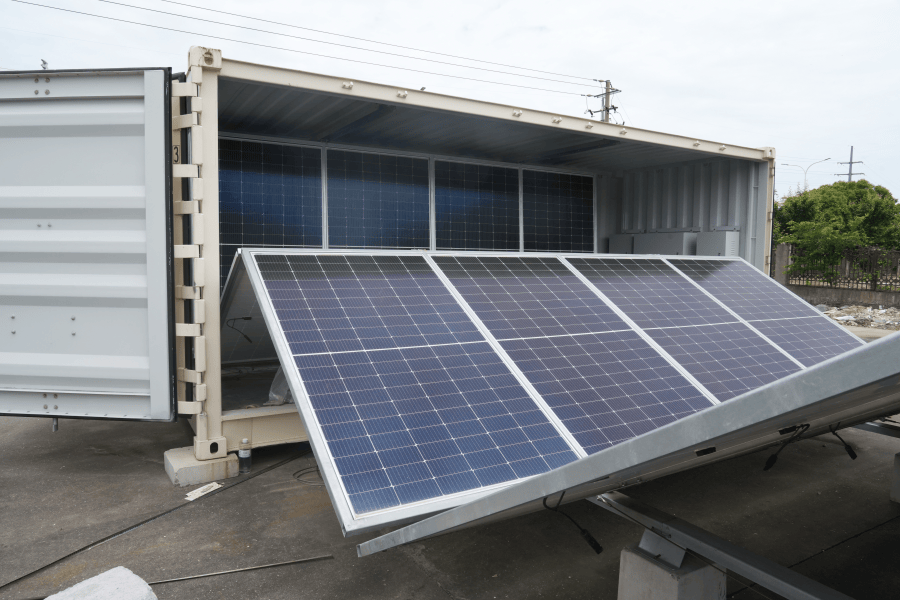
This is where the conversation shifts to the Top 10 Manufacturers of LFP (LiFePO4) Solar Container for Coastal Salt-spray Environments. Notice the specificity. We're not just talking about any containerized BESS. We're talking about manufacturers who have engineered their solutions from the ground up to meet the stringent "C5-M" or "CX" corrosion protection categories defined by ISO 12944 for highly corrosive marine atmospheres.
For these leaders, LFP (LiFePO4) chemistry is the non-negotiable starting point for its superior safety and longevity. But the real magic - and what separates the true top-tier manufacturers - is in the container itself. It's a holistic defensive system.
What Makes a "Top Manufacturer" for This Tough Job?
Based on my site evaluations and technical deep-dives, here's what I look for, beyond the marketing brochures:
- Material Science First: The use of marine-grade aluminum alloys, stainless-steel fasteners, and powder-coat paints specifically rated for salt-spray resistance (tested to ASTM B117 or equivalent). The HVAC system is the lungs of the unit - it must have coated coils and corrosion-resistant housings.
- Sealing as a Core Philosophy: It's not just about gaskets. It's about pressurized enclosures, positive air pressure systems with sophisticated filtration (think IP65 or better), and hermetic sealing for all cable entries. You're keeping the salt out, not just painting over it.
- Standards as a Baseline, Not a Goal: Compliance with UL 9540, IEC 62933, and IEEE 1547 is table stakes. The best go further, designing to UL 1642 for the cells and ensuring the entire system is validated for the environmental class. They can provide the test reports to prove it.
- Thermal Management Mastery: LFP is stable, but heat is still the enemy of lifespan. In a sealed, corrosive environment, the cooling system's reliability is paramount. Top manufacturers use redundant, variable-speed systems with corrosion-resistant fluid coolers, ensuring stable C-rate performance without letting internal humidity condense - a hidden failure point I've seen too often.
Beyond the Spec Sheet: Insights from the Field
Let me share a case that stuck with me. We were brought into a project in Northern Germany, a coastal microgrid supporting a water treatment plant. The initial BESS proposal was a standard unit. We pushed for a salt-spray certified container from one of the manufacturers you'd find on that top 10 list. The upfront cost was maybe 8% higher.
Fast forward three years. A major storm surge brought saltwater spray and flooding perilously close to the site. After cleanup, our container powered up without a hitch. A competing standard unit a few kilometers down the coast wasn't so lucky - corrosion in its auxiliary power system caused a two-week outage. That 8% premium paid for itself in one event by avoiding operational downtime and emergency repair costs. That's the real-world value of proper engineering.
Here's the expert insight: when you evaluate these manufacturers, don't just look at the battery specs. Ask them about their Environmental Stress Screening (ESS) process. How do they test the complete container system - battery, HVAC, fire suppression, controls - as an integrated unit under thermal cycling and corrosive atmosphere simulation? The ones with a rigorous answer are the ones who have seen what can go wrong, just like I have.
Partnering for the Long Haul
At Highjoule, our role isn't just to supply a box. It's to be your technical partner in navigating this critical selection. We've vetted the market leaders in salt-spray environments because our own reputation depends on your system's 20-year performance. Our engineering support focuses on matching the right manufacturer's solution - from that top-tier group - to your specific site conditions, ensuring the integration meets local grid codes (like UL in the US or CE in Europe), and providing the localized service to keep it running optimally.
The right LFP solar container for a coastal salt-spray environment is a capital asset designed for resilience. It turns a major site challenge into a non-issue, letting you focus on the value the storage creates. So, when you look at those top manufacturers, what specific site data from your location will you be asking them to design against?
Tags: Energy Storage Container UL Standard BESS LCOE Europe US Market Renewable Energy LFP Battery Salt-Spray Corrosion
Author
James Zhang
20+ years agricultural energy storage engineer / Highjoule CTO