
Top 10 Novec 1230 Fire Suppression Pre-Integrated PV Containers for Island Microgrids
Contents
- The Remote Island Challenge: More Than Just Power
- Why Fire Safety is Non-Negotiable (And Why Water Isn't the Answer)
- Enter the Pre-Integrated Solution
- The Top 10 "Manufacturers" C A Shift in Perspective
- Beyond the Box: Expert Insights for Your Project
The Remote Island Challenge: More Than Just Power
Let's be honest, when we talk about deploying battery energy storage systems (BESS) for remote island microgrids, we're not just talking about kilowatt-hours. We're talking about community resilience, economic stability, and often, basic quality of life. I've been on-site in places from the Greek islands to communities off the coast of Maine. The challenge is universal: replacing expensive, noisy, and polluting diesel generators with clean solar-plus-storage is a no-brainer on paper. But the reality on the ground - or on the rocky, salt-air-swept coast - is a different beast. Logistics are a nightmare, skilled local technicians are scarce, and a system failure isn't an inconvenience; it's a crisis.
Why Fire Safety is Non-Negotiable (And Why Water Isn't the Answer)
This is where the conversation gets serious. A standard BESS container in a controlled industrial park on the mainland is one thing. The same unit, shipped thousands of miles to a remote location with limited fire response, is a completely different risk profile. The industry knows this. Data from the National Renewable Energy Laboratory (NREL) emphasizes that system-level safety design is paramount for remote and community microgrids. You can't just slap a fire alarm on it and call it a day.
I've seen this firsthand. Traditional water-based suppression systems? They're a liability with lithium-ion batteries. Water can exacerbate certain battery fires, cause catastrophic electrical shorts, and lead to immense collateral damage. For an island project, you're not just damaging the asset; you're potentially contaminating a fragile local environment. The industry standard has decisively moved towards clean agent systems, and Novec? 1230 fluid has emerged as a frontrunner. It's electrically non-conductive, leaves no residue, and is safe for occupied spaces - crucial if your container is near other infrastructure.
The Agitation: What Happens When You Get This Wrong
Imagine this: After months of complex logistics, your solar-plus-storage microgrid is online, cutting diesel costs by 70%. Then, a thermal runaway event occurs. A subpar suppression system fails to contain it. The result? A total loss of the multi-million dollar asset, a blackout for the community, and a reputational disaster that sets back renewable adoption on the island for years. The levelized cost of energy (LCOE) you worked so hard to optimize? It just went through the roof. This isn't fear-mongering; it's risk management. In remote deployments, the integration of safety is as critical as the batteries themselves.
Enter the Pre-Integrated Solution
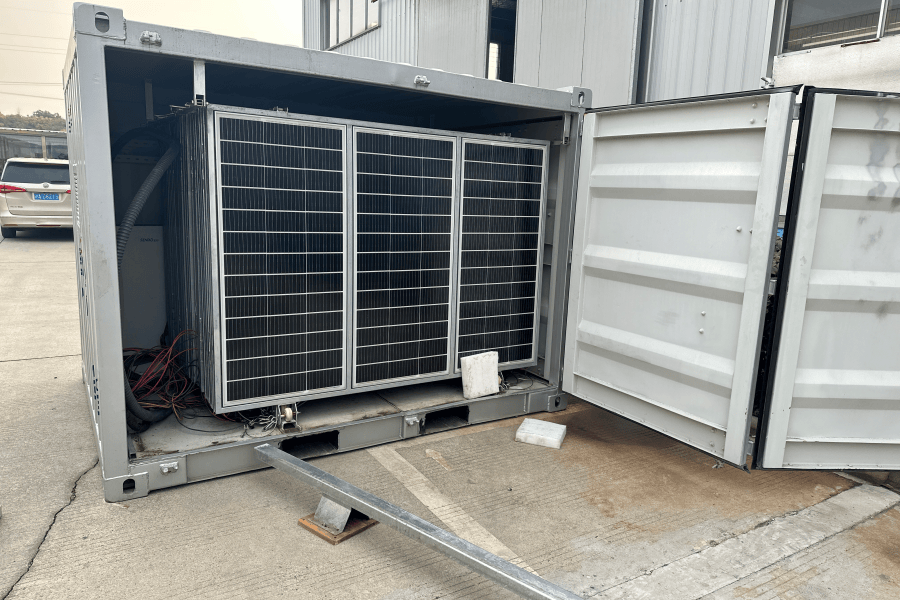
This brings us to the core of modern best practice: the pre-integrated PV container with Novec 1230 fire suppression. This isn't a "container with a fire system added." It's a system engineered from the ground up. The fire suppression is designed in tandem with the thermal management system (which, let's be clear, is your first and most important line of defense), the battery rack layout, and the electrical buswork.
At Highjoule, our approach for island projects is exactly this. We don't view the suppression system as a separate checkbox. It's part of a holistic safety philosophy that includes passive fire protection, advanced gas detection that triggers before temperatures spike, and integration logic that safely shuts down systems. All this is pre-tested, pre-commissioned in a controlled factory environment - not figured out on a windy dock. This slashes deployment time and eliminates a huge variable of on-site integration error.

The Top 10 "Manufacturers" C A Shift in Perspective
You searched for "Top 10 Manufacturers." Honestly, a simple list of company names would do you a disservice. In this niche, the "manufacturer" is often a systems integrator who sources the container shell, the battery racks, the PCS, and the suppression system, then engineers them into a cohesive unit. The key is their engineering capability and certification pedigree. So, here are the top 10 considerations you should evaluate, which will lead you to the right partner:
- UL 9540A Tested Design: This is the gold standard for fire safety evaluation. Has their specific container design (with your chosen battery cells) passed this rigorous test?
- NFPA 855 & Local AHJ Compliance: Can they navigate the codes for remote installations? Experience with island authorities is a huge plus.
- True Pre-Integration Depth: Do they engineer the suppression system's nozzle placement and discharge calculations for the specific internal layout?
- Novec 1230 System Provider: Do they partner with a leading clean agent system manufacturer (like Kidde, Fike, or Chemetron)? The quality of the cylinders, valves, and controls matters.
- Container-Specific Expertise: Experience with maritime-grade, corrosion-resistant containers suitable for harsh coastal environments.
- Thermal Management Synergy: How does the HVAC/thermal runaway venting system interface with the suppression system activation? They must work in a defined sequence.
- Global Logistics & Local Support: Can they handle shipping to a remote port and provide remote diagnostics and support? Look for partners with a network.
- Battery Agnostic or Optimized? Some integrators are locked to one battery vendor; others can optimize for different chemistries (like LFP, which is dominant for islands due to its safety profile).
- Proven Island Microgrid Track Record: Ask for specific case studies. Not just "we shipped a container," but "here's how we solved the grounding challenge on a coral bedrock site."
- Full IEC/IEEE Standard Compliance: For projects outside North America, ensure designs meet IEC 62933 and IEEE 2030 series standards for grid interconnection.
Companies that excel in these areas range from global energy storage specialists (like Fluence, W?rtsil?) to dedicated containerized BESS integrators and forward-thinking engineering firms. Your due diligence should audit their capabilities against this list.
Beyond the Box: Expert Insights for Your Project
Having deployed these systems, here's my blunt advice. First, understand the C-rate. For an island microgrid, you're likely looking for more of a "marathon runner" than a "sprinter" - a system optimized for longer duration, steady discharge (a lower C-rate) rather than ultra-fast grid services. This directly influences the heat generation and the sizing of your thermal and suppression systems.
Second, think about the total LCOE, not just the capex. A cheaper container with a less robust safety system might save 5% upfront. But if it increases insurance premiums by 20% or risks a total loss, the math falls apart. Insurers are becoming incredibly savvy about BESS risks, especially in remote areas. A UL 9540A-tested, pre-integrated Novec 1230 system is your best argument for favorable insurance terms.
Finally, the relationship with your provider is everything. You need a partner like Highjoule who acts as your technical advocate, who understands that "remote" means you need clearer documentation, more robust remote monitoring, and maybe even containerized spares. The goal is to hand the local operator a system that is not just safe and efficient, but also intelligible and maintainable.
So, what's the first question you're going to ask your shortlisted "manufacturers" about their Novec 1230 integration strategy?
Tags: Energy Storage Container UL Standard BESS Renewable Energy Novec 1230 Fire Suppression Island Microgrid
Author
James Zhang
20+ years agricultural energy storage engineer / Highjoule CTO