
Top 10 Scalable Modular BESS Manufacturers for Remote Island Microgrids
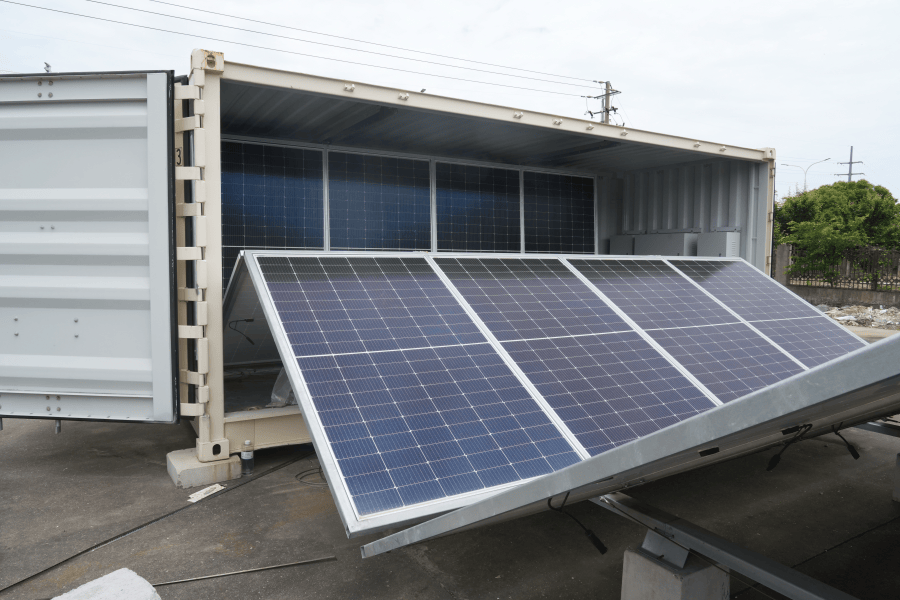
Table of Contents
- The Island Energy Dilemma: More Than Just Sun and Wind
- Why "Scalable" and "Modular" Aren't Just Buzzwords
- The Real-World Checklist: What Makes a Top-Tier BESS for Islands
- Navigating the Landscape: Key Considerations for Your Project
- From Blueprint to Reality: The Human and Technical Side of Deployment
The Island Energy Dilemma: More Than Just Sun and Wind
Let's be honest. If you're managing energy for a remote island community or an industrial operation off the main grid, you're not just an energy manager - you're the lifeline. The dream of 100% renewables is compelling, but the reality I've seen firsthand from the Caribbean to the Scottish Isles is a constant tug-of-war. You have abundant solar during the day, maybe some wind, but then dusk falls, or a week of calm weather sets in. That diesel generator, as expensive and polluting as it is, becomes a reluctant security blanket.
The problem isn't the renewable resources; it's time-shifting them. According to the International Renewable Energy Agency (IRENA), islands often pay two to three times more for electricity than mainland counterparts, with fossil fuel imports sucking up precious capital. The volatility is a direct hit to economic development and quality of life. Deploying a battery energy storage system (BESS) is no longer a "nice-to-have"; it's the critical enabler. But here's the rub: not just any BESS will do. You need a system built for harsh, remote, and evolving conditions. That's where the conversation about scalable, modular architecture truly begins.
Why "Scalable" and "Modular" Aren't Just Buzzwords
I remember walking a site in Hawaii years ago where a well-intentioned storage system was essentially a monolithic, custom-built behemoth. When they needed to expand capacity? It was a major construction project. A component failed? Downtime was measured in weeks, waiting for specialized parts and technicians.
This is the pain that scalable, modular BESS solves. Think of it like building with high-tech, intelligent Lego blocks.
- Scalability means you can start with what your budget allows and your immediate needs demand - say, a 500 kWh system to smooth solar output. Next year, as you add more hotel rooms or a desalination plant, you can seamlessly add more "blocks" to reach 2 MWh. This dramatically improves your project's financial viability by matching capital expenditure to revenue growth.
- Modularity is about the design of those blocks. Each module is a self-contained unit with its own battery management, thermal control, and safety systems. If one module has an issue, it can be isolated and replaced without taking the entire system offline. Honestly, for remote locations, this isn't a feature; it's a survival trait. It turns a potential crisis into a manageable, quick swap.
This approach directly attacks the high Levelized Cost of Storage (LCOS) for islands. By standardizing components and simplifying maintenance, you drive down the total cost of ownership over the system's 15+ year life.
The Core Tech That Makes It Work: C-Rate and Thermal Management
When evaluating manufacturers, you'll hear terms like "C-rate." Simply put, it's how fast a battery can charge or discharge relative to its size. A 1C rate means a 100 kWh battery can output 100 kW for one hour. For islands, you often need a high C-rate (like 1C or more) to handle big, sudden loads - think a ferry plugging into shore power or a microgrid stabilizing after a cloud passes over the solar farm.
But here's the insider detail: a high C-rate generates heat. And heat is the enemy of battery life and safety. This is where top manufacturers separate themselves. Their modular design incorporates advanced, independent thermal management within each unit - often liquid cooling for larger systems. It's not just about having a fan; it's about precise, cell-level temperature control that ensures performance in a tropical noon or allows for a high-power demand response event without breaking a sweat. At Highjoule, for instance, our modular pods are designed with this exact scenario in mind, ensuring stable performance whether it's deployed in Arizona or the Azores, all while meeting the stringent safety benchmarks of UL 9540 and IEC 62619.
The Real-World Checklist: What Makes a Top-Tier BESS for Islands
So, who are the players building these resilient systems? While I won't give a rigid, numbered list (because the "best" depends entirely on your specific project constraints), the leading manufacturers in the scalable, modular BESS space for remote microgrids consistently excel in a few critical areas. Look for companies that demonstrate:
- Proven Island or Off-Grid Track Record: Ask for case studies not from a sunny California grid-tied farm, but from a real, isolated community. Did the system perform during a typhoon season?
- Containerized, Plug-and-Play Design: The system should arrive in standardized ISO containers, pre-assembled and pre-tested. This slashes on-site installation time and cost - a huge factor when skilled labor is scarce and expensive to fly in.
- Robust Grid-Forming Capability: Many islands have weak or non-existent grids. The BESS must be able to "form" a stable voltage and frequency waveform from scratch, acting as the backbone of the microgrid, not just a follower.
- Cybersecurity & Remote Monitoring: You need full visibility and control from thousands of miles away. The system's software must be secure, intuitive, and provide predictive analytics to head off issues before they cause downtime.
- Local Support & Service Ecosystem: This might be the most important one. Does the manufacturer have trained partners or service teams within your region? What's the guaranteed response time for critical spare parts? A perfect box with no local support is a liability.

Navigating the Landscape: Key Considerations for Your Project
Choosing a manufacturer is a strategic partnership. Beyond the spec sheet, have frank conversations about these points:
| Consideration | Question to Ask Manufacturers | Why It Matters for Islands |
|---|---|---|
| Certification & Standards | "Are your modules UL 9540A tested for fire propagation? Is the full system certified to IEEE 1547 for islanded operation?" | Ensures insurance compliance, personnel safety, and seamless integration with other distributed energy resources. |
| Supply Chain & Logistics | "What is your lead time for a replacement power conversion system (PCS) module, and how is it shipped?" | Minimizes operational risk. Local warehousing of key spares can be a game-changer. |
| Software & Controls | "Can your energy management system (EMS) optimize for diesel fuel savings specifically, and can it be customized for our unique tariffs?" | The intelligence layer that maximizes ROI. It should speak the language of island economics. |
| Warranty & Degradation | "What is the guaranteed end-of-warranty capacity, and how is performance validated remotely?" | Protects your long-term asset value. Look for warranties that acknowledge the challenging cycling profiles of island microgrids. |
Our experience at Highjoule has been that success hinges on treating the BESS not as a commodity, but as the intelligent core of a living ecosystem. We've spent two decades refining not just the hardware for salt-air corrosion resistance or wide temperature ranges, but also the software and service protocols that keep systems running optimally from a distance.
From Blueprint to Reality: The Human and Technical Side of Deployment
Let me share a slice of a project we were involved with in the Canadian Atlantic. A fishing community was reliant on a single, aging submarine cable. The goal was to add solar and storage for resilience. The challenge wasn't the technology per se; it was the 8-month shipping window, the need for local tradespeople to handle final connections, and the community's understandable skepticism.
The solution was a modular, scalable BESS. We started with a base configuration to stabilize the existing grid. The modular design meant the system could be commissioned by our team with minimal specialized local labor. The scalability meant that when the community secured more funding two years later to add a large solar array, the storage expansion was a straightforward addition of more pre-fabricated blocks, with minimal disruption. The system's remote monitoring allowed us to train a local technician on basic operations and troubleshooting, building in-country capacity.
That's the ultimate insight. The top manufacturers understand that they are selling energy independence and peace of mind. The technology - the modular architecture, the high C-rate cells, the sophisticated cooling - is all in service of that goal. It has to work when the last flight out has left, when the seas are rough, and when the community's needs grow.
So, as you evaluate your options for that critical island microgrid project, look beyond the marketing. Look for the depth of understanding in the engineers' eyes when you describe your site's unique challenges. Ask them about their worst-field failure and what they learned from it. The right partner won't just sell you a battery; they'll help you build a more resilient, affordable, and clean energy future, one modular block at a time. What's the one site condition you're most concerned about for your upcoming project?
Tags: BESS Remote Island Microgrid Energy Storage Manufacturers Scalable Energy Storage Modular BESS
Author
James Zhang
20+ years agricultural energy storage engineer / Highjoule CTO