
Wholesale Price of Rapid Deployment Hybrid Solar-Diesel System for Coastal Salt-spray Environments
Navigating the Real Cost of Power at the Coast: It's More Than Just a Price Tag
Hey there. If you're reading this, chances are you're managing a remote site, a telecom tower, a small processing plant, or maybe a coastal resort that's utterly dependent on diesel. And you're probably looking at that monthly fuel bill, feeling the pinch of price volatility, all while knowing you need to be greener. You've heard about hybrid solar-diesel systems, maybe even got a quote. But when you see the upfront cost, especially for a rapid deployment hybrid solar-diesel system built to survive a coastal salt-spray environment, it can give anyone pause.
Honestly, I've been on those sites. I've felt the gritty salt on my hands checking equipment in the Florida Keys and on North Sea platforms. The financial pain point isn't just the wholesale price of the system. It's the hidden cost of getting it wrong. Let's talk about what that really means.
What We'll Cover
- The Real Problem: Corrosion, Downtime, and False Economy
- The Numbers Don't Lie: Salt-Spray's Impact on Capex & Opex
- Decoding the Wholesale Price: What You're Actually Paying For
- A Quick Win: Case Study from the Gulf Coast
- Key Specs Your Engineer Cares About (And You Should Too)
The Real Problem: Corrosion, Downtime, and False Economy
The core challenge for coastal and offshore deployments isn't just generating power. It's about survival. Standard industrial equipment fails fast here. I've seen first-hand control boards corrode in 18 months, steel enclosures pit, and connector failures cause entire systems to trip offline. A standard system might have a lower initial wholesale price, but its effective lifespan near the coast can be halved.
This creates a brutal cycle: more frequent replacements, unplanned maintenance visits (which are expensive and logistically tough), and worst of all, operational downtime. For a critical site, downtime isn't just an inconvenience; it's a direct revenue loss or a safety risk. So, when you evaluate a rapid deployment hybrid solar-diesel system, you're not just buying hardware. You're buying uptime insurance for a harsh environment.
The Numbers Don't Lie: Salt-Spray's Impact on Capex & Opex
Let's ground this in data. The International Renewable Energy Agency (IRENA) notes that balance-of-system costs and long-term Opex are the make-or-break factors for distributed renewable projects in harsh climates. More concretely, a NREL study on offshore wind O&M highlights that corrosion-related failures account for a significant portion of unscheduled maintenance - costs that are 3-5x higher than planned maintenance.
Now, translate that to your hybrid system. A non-hardened battery enclosure might need a full swap-out in 5-7 years in a salt-spray zone, versus 10-15 years inland. That's a potential doubling of your battery capex over the project's life. The wholesale price needs to absorb the cost of premium materials - marine-grade aluminum alloys, stainless-steel fasteners, IP66 or higher sealing, and conformal-coated electronics - to avoid these repetitive costs. It's the classic "buy cheap, buy twice" scenario, but with much higher stakes.
Decoding the Wholesale Price: What You're Actually Paying For
So, when Highjoule Technologies provides a quote for a rapid deployment hybrid solar-diesel system for coastal salt-spray environments, that price is built on three pillars:
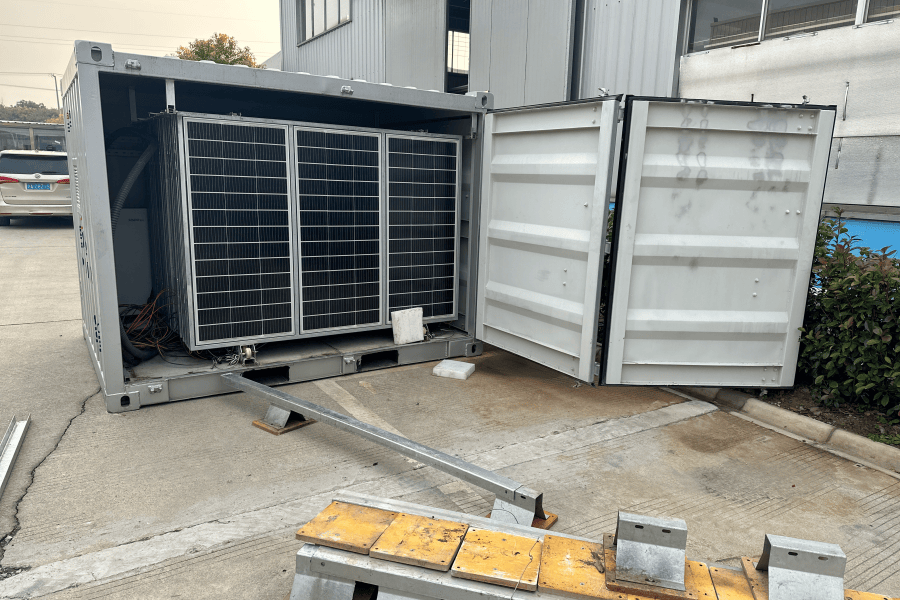
- Rapid Deployment Design: This means pre-integrated, containerized or skid-mounted systems. We do 90% of the wiring and testing in our controlled factory, under UL 9540 and IEC 62485 standards. On-site, it's mostly about placement and connection. This slashes installation time and cost, getting you to ROI faster. The "wholesale" aspect comes from standardized, volume-produced core modules.
- Coastal Hardening as Standard: There's no "optional" corrosion package. Our standard build includes:
- HVAC systems with corrosion-resistant coils and salt-fog filters.
- Enclosures rated to IEC 60068-2-52 (Salt Mist Corrosion testing).
- Electrical components with protective finishes.
- Intelligent Hybrid Controller: The brain of the operation. It doesn't just switch between solar and diesel; it optimizes for fuel savings, battery health, and load demand in real-time. This is where the long-term Levelized Cost of Energy (LCOE) is truly minimized.

A Quick Win: Case Study from the Gulf Coast
Let me give you a real example. We worked with a water desalination pilot plant on the Texas Gulf Coast. Their challenge: unreliable grid, exorbitant demand charges, and a constant battle with rust on every piece of equipment. They needed resilient power to run pumps and controls 24/7.
Challenge: Deploy a reliable system within 8 weeks before peak season, ensure 10+ year lifespan in salt air, and cut diesel use by over 60%.
Solution: We supplied a 250kW/500kWh containerized hybrid system. The wholesale price was higher than a basic solar-plus-generator setup, but it included all the coastal hardening and a sophisticated controller.
Outcome: Deployed in 6 weeks. In the first year, diesel consumption dropped by 72%. The system automatically runs on solar/battery during the day, uses the generator only for peak loads or prolonged cloudy weather, and has had zero corrosion-related issues in three years. The plant manager's feedback? "The peace of mind is worth the initial investment. We're not fighting the equipment anymore."
Key Specs Your Engineer Cares About (And You Should Too)
When you're comparing quotes, look beyond the price per kW/kWh. Ask these questions:
- C-rate of the Battery: This is how fast you can charge or discharge it. For a hybrid system that needs to handle sudden load spikes when a cloud passes or a large pump kicks on, you need a battery that can discharge quickly (a higher C-rate, like 1C or more) without degrading. A cheaper battery with a low C-rate might be larger to compensate, affecting the overall system footprint and cost.
- Thermal Management: This is critical in coastal heat. Passive air-cooling? Forget it. You need a closed-loop liquid cooling or precision air conditioning system. It keeps the battery at its ideal temperature range (usually 20-25C), which triples its cycle life compared to a battery operating at 35C+. This is a massive LCOE driver.
- Compliance Footprint: For the US, insist on UL 9540 for the overall energy storage system. For Europe, look for IEC 62619 for the battery and relevant parts of IEC 62485. This isn't bureaucracy; it's your safety and insurance policy baked into the hardware.

At Highjoule, we bake these considerations into every system we design for harsh environments. The goal isn't to sell you the cheapest box. It's to deliver the lowest total cost of ownership over a decade or more, with reliability you can bank on.
So, the next time you look at a wholesale price for a rapid deployment hybrid solar-diesel system for coastal salt-spray environments, see it as a capital allocation. Are you paying for a short-term capex line item, or are you investing in long-term, predictable, and resilient power? The right choice changes the entire financial model of your remote operation.
What's the one reliability issue at your coastal site that's keeping you up at night?
Tags: UL Standard BESS LCOE Rapid Deployment Hybrid Solar-Diesel Salt-Spray Environment Coastal Energy
Author
James Zhang
20+ years agricultural energy storage engineer / Highjoule CTO