
Environmental Impact of C5-M Anti-corrosion BESS for Sustainable Eco-resorts
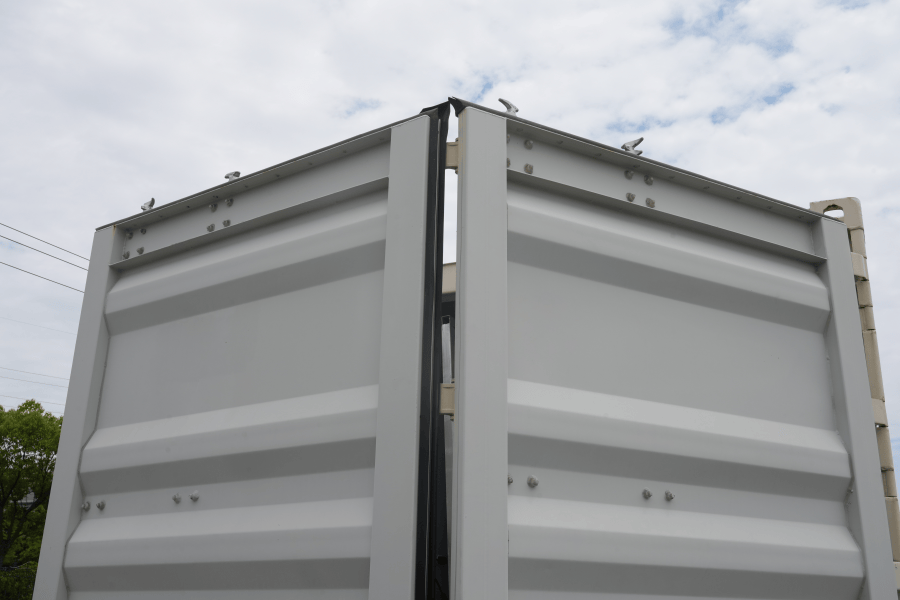
Table of Contents
- The Quiet Problem: When "Green" Infrastructure Isn't So Green
- Why Standard BESS Can Be a Liability in Paradise
- C5-M Anti-Corrosion: More Than Just a Coating
- A Real-World Test: Coastal California Eco-Lodge Case Study
- The Math That Matters: LCOE and Long-Term Stewardship
- Your Next Step: Questions to Ask Before You Deploy
The Quiet Problem: When "Green" Infrastructure Isn't So Green
Let's be honest. When you're planning an eco-resort, your focus is on the visible sustainability wins: the solar canopy over the parking lot, the rainwater harvesting system, the locally sourced materials. The battery storage system? That's often treated as a necessary black box in the corner, chosen mostly for upfront cost and kilowatt-hour rating. But here's what I've seen firsthand on site after 20 years: that "black box" can quietly become the weakest link in your environmental promise. A standard Battery Energy Storage System (BESS) deployed in a coastal, tropical, or high-humidity environment - exactly where most beautiful eco-resorts are located - faces a relentless, invisible enemy: corrosion.
Why Standard BESS Can Be a Liability in Paradise
Corrosion isn't just a cosmetic issue. It's a systemic failure that accelerates from the inside out. In a C5-M environment (that's the ISO 12944 classification for highly corrosive atmospheres like coastal and industrial areas), salt mist, high humidity, and temperature swings work 24/7. They attack electrical connections, busbars, and even the battery cell terminals themselves. The result?
- Increased Downtime & Maintenance: You're not just running a resort; you're managing a microgrid. Corroded connections lead to increased electrical resistance, heat generation, and ultimately, faults. I've been called to sites where maintenance crews are constantly cleaning terminals, a frustrating and costly cycle.
- Safety Compromises: Thermal runaway is the nightmare scenario for any BESS operator. Corrosion-induced hot spots are a potential ignition source. A system that doesn't meet the rigorous environmental durability tests within UL 9540 and IEC 62933 for such conditions isn't just a financial risk - it's a safety one.
- Shortened Lifespan & E-Waste: This is the core environmental impact. The International Renewable Energy Agency (IRENA) estimates the global waste from lithium-ion batteries could reach 11 million tonnes by 2030 if we don't prioritize longevity. A BESS that corrodes and fails in 5-7 years instead of its projected 15-year lifecycle doubles its environmental footprint from manufacturing and creates premature, hard-to-recycle waste. For an eco-resort, that's a direct contradiction of your brand ethos.
C5-M Anti-Corrosion: More Than Just a Coating
So, what's the solution? It's designing the BESS from the ground up for its environment. A true C5-M anti-corrosion BESS isn't just about slapping on some extra paint. At Highjoule, we approach it as a holistic system integrity challenge. It starts with the enclosure - hot-dip galvanized steel with a specialized multi-layer polymer coating. But the real devil is in the details: all internal structural steel gets the same treatment; we use stainless steel fasteners and copper busbars with anti-oxidation coating; and critical components like the Battery Management System (BMS) are housed in sealed, climate-controlled compartments.
Honestly, the thermal management system is key here. In a corrosive environment, you can't have aggressive, moisture-laden air circulating freely inside. Our design uses a closed-loop liquid cooling system. It precisely controls cell temperature (optimizing performance and life), but it also isolates the internal air, keeping it dry and inert. This dramatically reduces the corrosive agents that ever reach the sensitive electronics. It's about creating a stable, protected micro-climate for the batteries, which directly translates to a stable, reliable energy supply for your resort.

A Real-World Test: Coastal California Eco-Lodge Case Study
Let me give you a concrete example. We worked with a high-end eco-lodge north of Big Sur, California. Stunning cliffs, Pacific Ocean views, and a relentless salt spray. Their initial, non-specified BESS started showing communication errors and voltage imbalances within 18 months. The cost of frequent technician visits and the looming threat of a full failure was eroding their operational savings.
We replaced it with our C5-M engineered solution. The deployment had to be minimally invasive - no heavy, disruptive construction. We delivered a pre-integrated, containerized system that was essentially "plug and play." The real proof is in the data. Three years on, their system availability is consistently above 99%, and the internal environmental sensors show corrosion-related parameters are well within the design envelope. The resort manager told me his peace of mind was the biggest ROI. He's not worried about his power failing during a guest yoga retreat or a critical water pumping cycle.
The Math That Matters: LCOE and Long-Term Stewardship
For a business decision, it all comes down to Levelized Cost of Energy (LCOE). This is the total lifetime cost of your storage system divided by the total energy it will store and discharge. A cheaper, standard BESS in a C5-M environment has a disastrous LCOE. Why? Because the denominator (total lifetime energy) collapses due to early failure, while the numerator (cost) balloons with unplanned maintenance and premature replacement.
Investing in a properly engineered C5-M BESS flips this equation. You maximize the denominator by ensuring the system reaches its full 15+ year design life. You minimize the numerator by eliminating corrosion-related OpEx. Over a decade, the savings are substantial, making it the truly economical - and truly ecological - choice. It aligns your financial logic with your environmental ethics, which, in my experience, is exactly what a successful eco-resort is built on.
Your Next Step: Questions to Ask Before You Deploy
So, when you're evaluating storage for your project, move beyond the basic specs. Ask your provider these questions:
- "Can you provide third-party certification that this BESS is designed and tested for ISO 12944 C5-M environments?"
- "What is the specific anti-corrosion strategy for the internal busbars, connectors, and structural components, not just the enclosure?"
- "How does the thermal management system prevent the introduction of corrosive external air into the battery compartment?"
The right partner won't just sell you a battery; they'll engineer a solution for your specific slice of paradise. Because in the end, sustainability isn't just about the energy you source, but the infrastructure you trust to hold it. What's the one environmental risk to your resort's power that keeps you up at night?
Tags: UL Standard Renewable Energy Integration LCOE C5-M Anti-Corrosion Battery Energy Storage System Eco-resort Sustainability
Author
James Zhang
20+ years agricultural energy storage engineer / Highjoule CTO