
Scalable Modular BESS for Rural Electrification: Cost & Safety Insights for US/EU
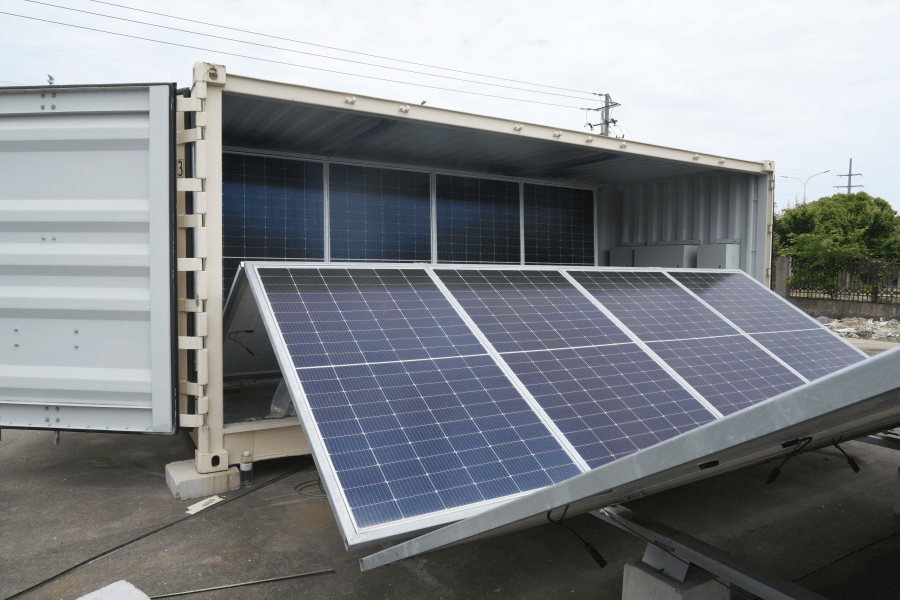
Table of Contents
- The Real Cost Problem Isn't Just the Price Tag
- Why "Philippines-Proven" Doesn't Mean "US/EU-Ready" (And Why It Should)
- The Modular Advantage: From Island Grids to Industrial Parks
- Looking Beyond the Battery Cell: What Drives Real LCOE Down
- Making It Work for Your Project: The On-Site Checklist
The Real Cost Problem Isn't Just the Price Tag
Let's be honest. When you hear "wholesale price for scalable modular energy storage containers," your mind probably jumps straight to that per-kWh number. I get it. I've sat in those budget meetings. But after two decades of deploying BESS from remote villages to Fortune 500 facilities, I've learned the hard way: the cheapest upfront cost often leads to the most expensive total bill.
The real pain point for commercial and industrial players in the US and Europe isn't just procurement. It's predictable lifetime cost and unforeseen risk. You're dealing with complex rate structures, demand charges, and maybe even capacity markets. A system that degrades faster than modeled, or requires constant babysitting, erases any initial savings. The International Energy Agency (IEA) has highlighted that system integration and long-term reliability are now bigger hurdles than pure battery cost for widespread adoption. That "scalable modular" concept proven for rural electrification in the Philippines? Its real value is operational flexibility, but only if the core engineering is rock-solid.
Why "Philippines-Proven" Doesn't Mean "US/EU-Ready" (And Why It Should)
I've seen this firsthand on site. A container that works perfectly in a tropical climate might have a thermal management system totally unsuited for a snowy German winter or a dusty Texas summer. The "scalable" design must be built around more than just stacking units. It has to consider the local grid codes, fire safety regulations, and the absolute non-negotiable standards like UL 9540 in North America or IEC 62933 in Europe.
This is where the experience from challenging environments like the Philippines becomes a strength, not a weakness. Deploying in off-grid or weak-grid rural areas stresses a BESS like nothing else. Frequent cycling, voltage fluctuations, and minimal maintenance access - if a system can handle that, the core architecture is robust. But here's the critical add-on for our markets: that robust core must then be wrapped in certified, localizable safety and grid-compliance packages. At Highjoule, when we look at a container design, we're not just looking at the cell chemistry. We're auditing the busbar design for fault tolerance, the HVAC's redundancy, and the control system's ability to talk to a local utility's SCADA system. That's what transforms a low wholesale price into a sound investment.

The Modular Advantage: From Island Grids to Industrial Parks
Think about the project case in a rural electrification context. You start with a 2 MWh container to power a village. A year later, you add another identical unit as demand grows. The scalability is linear and (theoretically) painless. Now, translate that to a commercial setting in, say, California.
A manufacturing plant installs a 1 MW/2 MWh system for demand charge management and backup. Later, they add solar carports and need to increase storage to capture excess generation. A truly modular, containerized approach means they can add another 1 MW block without re-engineering the entire site plan, re-doing major electrical studies, or taking the existing system offline for weeks. The savings in engineering, procurement, and downtime are massive. We supported a similar phased rollout for a logistics hub in North Rhine-Westphalia, Germany, where space was tight and operational continuity was critical. Using pre-fabricated, UL-compliant modular containers cut their deployment time for the second phase by nearly 60%.
Looking Beyond the Battery Cell: What Drives Real LCOE Down
Everyone talks about Levelized Cost of Storage (LCOS or LCOE for storage). But let's break it down like we would on a whiteboard with a client. The formula has two main parts: CapEx (your wholesale price) and OpEx (everything after).
CapEx is the container, cells, PCS, cooling, etc. Sure, you want a competitive price.
OpEx is where you win or lose. This includes:
- Efficiency Losses: A poor thermal management system forces the system to cool/heat itself aggressively, eating into your round-trip efficiency. A few percentage points lost here directly hits your ROI.
- Degradation: This is huge. A system with superior thermal and state-of-charge (SOC) management will have a slower degradation rate. Honestly, I've seen systems with similar cells have a 20% difference in remaining capacity after 5 years based purely on system design.
- Serviceability: Can a technician safely and quickly replace a faulty module? Or does it require a full system shutdown and a complex disassembly? Modular design should apply to maintenance too. Our containers use a slide-out rack design for any component, minimizing downtime to hours, not days.
So, when you evaluate that "wholesale price," you have to ask: What is the designed lifetime LCOE this system enables? A slightly higher initial cost for a design that slashes OpEx is the only smart business decision.
Making It Work for Your Project: The On-Site Checklist
Based on what I've seen work (and fail), here's my blunt, from-the-field advice for integrating a scalable modular solution into a US or EU project:
| Focus Area | Key Question to Ask Your Supplier | What "Good" Looks Like |
|---|---|---|
| Certification & Compliance | "Can you provide the full UL 9540/9540A test report or IEC 62933 certification for the entire container unit, not just components?" | Full system certification, not just component listings. Documentation ready for AHJ submission. |
| Thermal System Design | "What is the guaranteed temperature uniformity across all cells at the system's maximum C-rate in my local climate?" | Detailed CFD analysis showing <3C variance. Redundant cooling loops and independent zone control. |
| Scalability Proof | "Show me the electrical and control architecture diagram for paralleling 3+ units. What's the synchronization lag?" | Plug-and-play parallel capability with masterless control logic. No single point of failure for comms. |
| Local Support | "Who in my region does the commissioning and holds the 10-year performance guarantee?" | The manufacturer has trained, local partner engineers or own staff, not just a third-party contractor. |
The philosophy behind successful rural electrification - simplicity, durability, and modular growth - is directly applicable to our more regulated grids. The difference is the execution layer of extreme safety and grid integration. That's the engineering bridge Highjoule builds for every container we're involved with: taking that proven, cost-effective core and making it bulletproof for the world's most demanding markets.
So, what's the one operational risk in your upcoming project that keeps you up at night? Is it the long-term performance guarantee, or the integration complexity with your existing infrastructure?
Tags: UL Standard BESS LCOE Renewable Energy US EU Market Scalable Energy Storage Modular Container
Author
James Zhang
20+ years agricultural energy storage engineer / Highjoule CTO