
Wholesale Price of Tier 1 Battery Cell Solar Container for Remote Island Microgrids: A Real-World Cost & Performance Guide
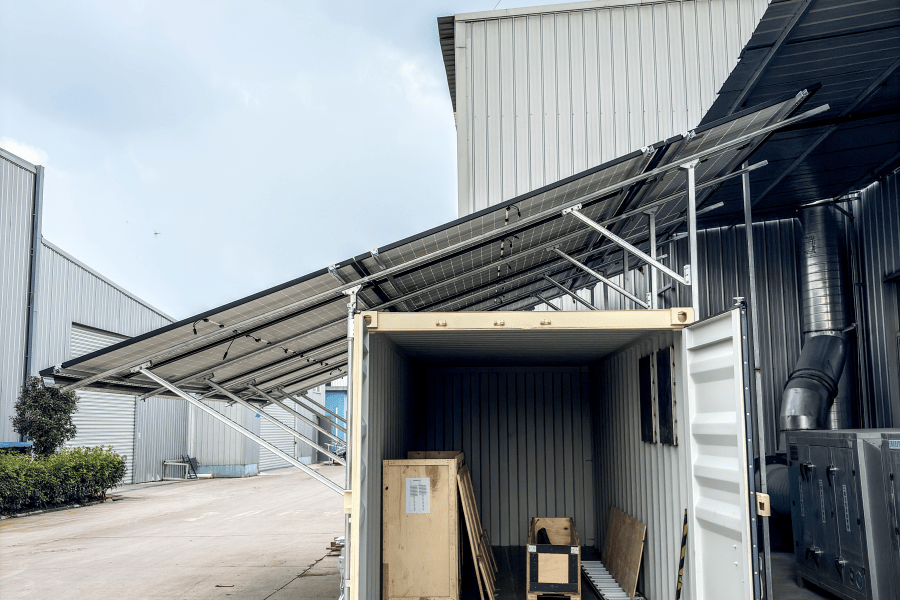
Table of Contents
- The Real Cost Puzzle: It's Never Just the Price Tag
- Why "Tier 1 Cell" Isn't Just a Marketing Term for Islands
- The Solar Container Advantage: More Than a Metal Box
- A Coffee Chat About Alaska: When the "Cheap" Option Got Expensive
- Breaking Down the "Wholesale Price": What You're Actually Paying For
- The Only Metric That Truly Matters for Your Island: LCOE
- Your Next Step: Asking the Right Questions
The Real Cost Puzzle: It's Never Just the Price Tag
Honestly, if I had a dollar for every time a client showed me a "competitive" wholesale quote for a battery container and asked, "Can you match this?" I'd probably be retired on my own private island by now. The initial price per kWh for a solar-ready BESS container is the easiest number to compare, but it's also the most dangerous one to focus on alone. For remote island microgrids - where a failure isn't just an inconvenience, it's a full-blown crisis - the real cost is buried in the details of performance, safety, and longevity.
Over two decades, from the Caribbean to the Scottish Isles, I've seen this firsthand. The market pressure is real. A recent IEA report highlights the massive growth in global energy storage, which is fantastic. But it also creates a whirlwind of suppliers promising the moon at rock-bottom prices. The problem? For off-grid and island communities, that low upfront Wholesale Price of Tier 1 Battery Cell Solar Container for Remote Island Microgrids can evaporate quickly if the system can't handle real-world thermal stress, has poor cycle life, or worse, doesn't meet the rigorous safety standards we take for granted on the mainland.
Why "Tier 1 Cell" Isn't Just a Marketing Term for Islands
Let's chat about the heart of the container: the battery cells. "Tier 1" gets thrown around a lot. In our world, it doesn't just mean a brand name. It's a shorthand for cells with proven, publicly available due diligence reports, consistent quality across millions of units, and a long-term financial and operational track record. Why does this matter for your island project?
Think about it. You're in a salt-air environment, with limited on-site technical expertise. You need cells that degrade predictably. Off-brand cells might save 15% on the initial wholesale price, but their performance can be a lottery. I've monitored systems where the actual capacity faded 30% faster than the data sheet promised because the cell chemistry wasn't stable. Suddenly, your microgrid's reliability - and your long-term cost of energy - is in jeopardy. Tier 1 cells are your insurance policy. They come with the confidence that the C-rate (the speed of charge/discharge) is accurately rated, and the thermal behavior is well-understood and manageable.
The Solar Container Advantage: More Than a Metal Box
Now, why a container? It's not just for shipping. A properly engineered solar container is a plug-and-play power plant. The value isn't in the steel; it's in what's integrated inside. We're talking about:
- Thermal Management System: This is the unsung hero. Batteries generate heat, and heat is the enemy of longevity. A top-tier container has an HVAC system designed for the specific chemistry of its Tier 1 cells, not an off-the-shelf unit. In Arizona or Greece, it has to cool. In Alaska or Norway, it might need to heat. This system is a major part of the non-cell cost.
- Safety Architecture: This goes beyond a simple smoke detector. It's a multi-layered approach: cell-level fusing, module-level disconnects, a dedicated gas detection and ventilation system, and fire suppression that's compatible with lithium-ion fires. All this needs to be designed to UL 9540 and IEC 62933 standards. Skipping here to cut the wholesale price is, frankly, irresponsible for a remote location.
- Grid-Forming Inverters: For an island microgrid, the battery doesn't just store energy; it must create a stable grid. The inverter's ability to form voltage and frequency (black start capability) is critical. Not all containers have this as standard.
A Coffee Chat About Alaska: When the "Cheap" Option Got Expensive
Let me tell you about a project in a remote Alaskan community. They went with a low-cost, non-integrated solution - bargain cells, separate inverter skid, basic enclosure. The initial savings were significant. But within 18 months, the thermal management couldn't handle the extreme cold snaps. Battery performance plummeted during critical winter peaks. They were facing constant diesel generator run-time, skyrocketing O&M costs, and a community rightfully losing faith.
When Highjoule was brought in, we didn't just swap a container. We did a full audit. The fix involved a pre-integrated, arctic-rated Tier 1 Battery Cell Solar Container with a climate-controlled environment and inverters certified to IEEE 1547 for island mode. The upfront cost was higher, yes. But the Levelized Cost of Energy (LCOE) - the total cost over the system's life - plunged. The community now has predictable power and predictable costs. The "cheap" option nearly cost them their entire energy transition.

Breaking Down the "Wholesale Price": What You're Actually Paying For
So, when you see a number for the Wholesale Price of Tier 1 Battery Cell Solar Container for Remote Island Microgrids, you should mentally break it down. A reputable provider's quote includes layers of value that protect your investment:
| Cost Component | What It Delivers | Risk if Compromised |
|---|---|---|
| Tier 1 Cells (NMC or LFP) | Predictable degradation, proven safety data, warranty backing | Rapid capacity fade, higher replacement costs, safety incidents |
| UL 9540 / IEC 62933 Certified Enclosure & Safety Systems | Insurance approval, fire safety, regulatory compliance | Project delays, liability, catastrophic failure |
| Advanced Thermal Management | Consistent performance in extreme temps, 20%+ longer lifespan | Reduced output, premature failure, increased LCOE |
| Grid-Forming Power Conversion (IEEE 1547) | Stable microgrid without diesel baseload | Unreliable power, dependency on fossil fuels |
| Pre-Integration & Factory Testing | Faster deployment, single point of warranty/contact | Costly on-site integration headaches, finger-pointing between vendors |
At Highjoule, our engineering focus is on optimizing the total system for your site's specific conditions, not just winning on a single-line item. That might mean specifying LFP (Lithium Iron Phosphate) chemistry for its superior safety and cycle life in high-ambient temperatures, even if its energy density is slightly lower. It's all about the right tool for the job.
The Only Metric That Truly Matters for Your Island: LCOE
This brings us to LCOE. Let's ditch the jargon. LCOE is the total lifetime cost of your energy storage system (capex + all opex + replacement costs) divided by the total energy it will dispatch over its life. It's the ultimate reality check.
A lower initial wholesale price can lead to a higher LCOE if the system fails early or requires constant maintenance. I've run these models a hundred times. Using Tier 1 cells with a lower degradation rate, paired with robust thermal management, almost always wins on a 10-year LCOE basis for 24/7 island duty cycles. You're buying energy resilience, not just a battery box.

Your Next Step: Asking the Right Questions
So, next time you're evaluating a quote for a solar container for remote island microgrids, move beyond the price per kWh. Grab a coffee with your team and ask your potential supplier:
- "Can you show me the UL 9540 certification for the entire assembled system, not just the components?"
- "What is the guaranteed end-of-life capacity after 10 years in a [your climate] environment, and how is the thermal system designed to achieve that?"
- "Walk me through the black-start and grid-forming capabilities for a 100% renewable scenario."
- "What does your local commissioning and long-term remote monitoring look like?"
The right partner won't just send you a datasheet. They'll have the field experience to discuss these questions over a virtual coffee, because they've lived the consequences of getting them wrong - and right. What's the one operational headache in your current microgrid that a truly resilient battery system could solve?
Tags: UL Standard BESS LCOE Tier 1 Battery Cells Remote Microgrids Wholesale Solar Container
Author
James Zhang
20+ years agricultural energy storage engineer / Highjoule CTO