
Benefits and Drawbacks of 20ft High Cube Hybrid Solar-Diesel Systems for Remote Island Microgrids
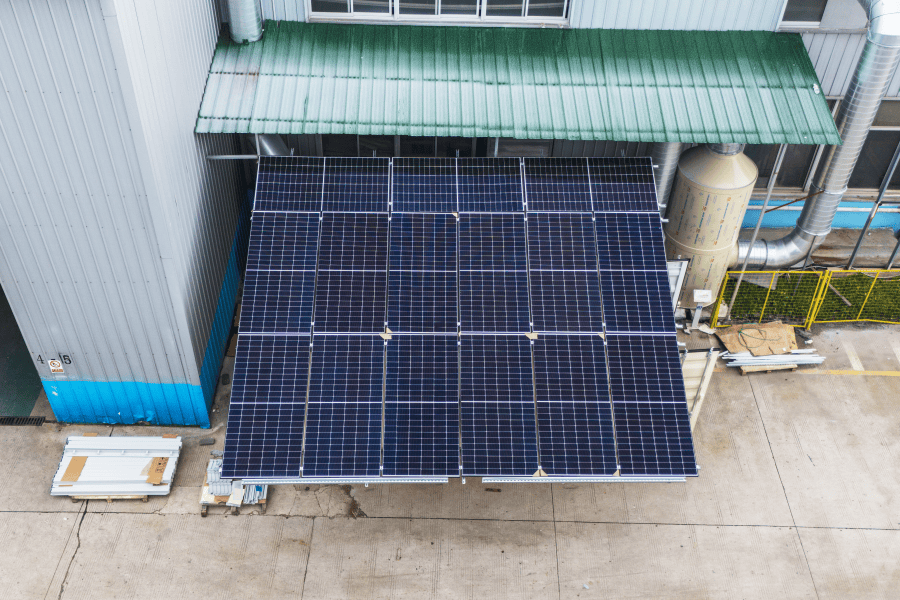
Table of Contents
- The Island Energy Dilemma: More Than Just a Power Problem
- Why 20ft Containers, and Why Now?
- The Benefits, Unpacked
- The Drawbacks: An Honest, On-the-Ground Look
- A Real Project Perspective: What the Spec Sheets Don't Tell You
- Making the Right Call for Your Island Community
The Island Energy Dilemma: More Than Just a Power Problem
If you're managing power for a remote island community, you know the drill. The constant hum of diesel generators is more than background noise; it's the sound of your biggest operational cost and a major source of anxiety. I've sat across the table from dozens of island utility managers, and the story is painfully similar. You're locked into volatile fuel prices, facing steep logistics costs for every liter of diesel shipped in, and under growing pressure to reduce your environmental footprint. The International Energy Agency (IEA) notes that electricity costs in small island states can be up to 10 times higher than in mainland regions, primarily due to this diesel dependency. It's a triple bind: economic, logistical, and environmental.
And honestly, slapping some solar panels onto the grid isn't the simple fix it seems. I've seen firsthand on site how high levels of variable solar can destabilize small, isolated grids. Without a way to store and manage that energy, you end up having to curtail (waste) solar power during the day to protect the generators, which is just throwing money away. The real pain point isn't just adding renewables; it's integrating them reliably and profitably into a system that can't afford to fail.
Why 20ft Containers, and Why Now?
This is where the concept of the 20ft High Cube hybrid solar-diesel system has gained serious traction. It's not a random choice. The 20ft shipping container is a global standard. It's rugged, stackable, and designed for the toughest transport logistics - exactly what you need for a remote island delivery. The "High Cube" gives you that extra foot of vertical space, which is critical for proper thermal management system layout and safe maintenance access inside. We're talking about a pre-integrated solution: solar inverters, a significant battery bank (BESS), power conversion systems, and sophisticated control brains all housed in one secure, weatherproof unit that plugs in between your solar farm and your existing diesel gensets.

The Benefits, Unpacked
Let's break down the real advantages, the ones that matter when you're months into a project and things get real.
- Drastically Lower Fuel Bills & LCOE: This is the headline. The battery stores excess solar to dispatch during peak evening hours or when clouds roll in. This lets you turn off, or significantly throttle back, the most expensive diesel generators. Over time, this slashes your Levelized Cost of Energy (LCOE) - the total lifetime cost of your power system. The battery does the heavy lifting, allowing the diesel gensets to run only at their most efficient, optimal load points when needed.
- Plug-and-Play Deployment: Speed and simplicity are huge. Because the system is factory-tested and pre-integrated, site work is massively reduced. You're not building a power plant from scratch. You prepare a foundation slab, connect AC and DC cabling, and integrate the control system with your gensets. I've seen projects go from delivery to commissioning in weeks, not months.
- Grid Stability and Reliability: A modern BESS does more than store energy. Its advanced inverter can provide instantaneous frequency response and voltage support. If a large load suddenly kicks on or a generator stutters, the battery reacts in milliseconds to stabilize the grid. This inertia is priceless for a small microgrid and allows you to safely integrate a much higher percentage of solar PV.
- Compliance and Safety Built-In: For the US and EU markets, this is non-negotiable. A reputable provider will deliver a system built to UL 9540/9540A, IEC 62933, and IEEE 1547 standards. This means the safety - from cell to system - has been rigorously validated. At Highjoule, for instance, our container design includes passive fire suppression, dedicated thermal runaway venting, and NEMA 3R enclosures as standard, because we know these units operate in harsh, salty, and unsupervised environments.
The Drawbacks: An Honest, On-the-Ground Look
No solution is perfect, and it's crucial to go in with eyes wide open. Here are the challenges we consistently navigate.
- High Upfront Capital Cost: The initial investment is substantial. You're buying a miniaturized, ultra-robust power plant. While the ROI through fuel savings is clear, securing that capital can be a hurdle for smaller communities. Creative financing and PPA models are often part of the conversation from day one.
- Space and Sizing Constraints: A 20ft container has finite space. There's a practical limit to the battery capacity (kWh) and power rating (kW) you can fit while maintaining safe clearances and proper thermal management. If your energy needs are vast, you may need multiple units, which changes the logistics and footprint. Getting the C-rate (the speed at which the battery charges/discharges relative to its capacity) right for your specific duty cycle is an art - too conservative and you overspend, too aggressive and you risk shortening battery life.
- Technical Expertise for O&M: This isn't a "set it and forget it" asset. While the system is highly automated, it requires a new skillset for local technicians. Understanding battery management systems, DC electrical safety, and performance analytics is key. The lack of local expertise is a real risk if not addressed through strong training and a clear remote-support partnership with your provider.
- Logistics of a "Big Box": Getting a 20ft container to a remote island is a project in itself. You need port access, heavy-lift equipment, and a suitable transport route from the dock to the site. I've been involved in projects where we had to survey and reinforce a bridge before we could even think about delivery.
A Real Project Perspective: What the Spec Sheets Don't Tell You
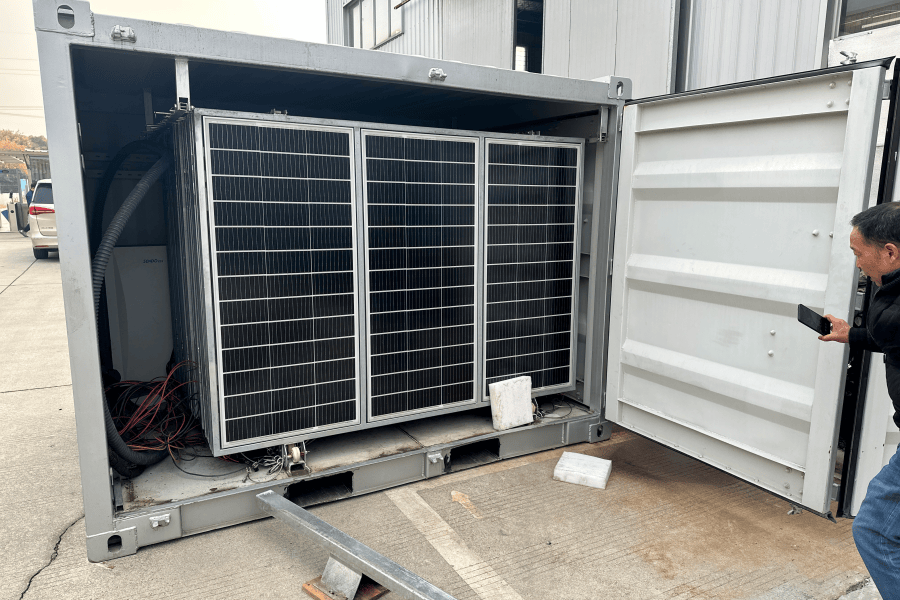
Let me share a slice of a project we completed for a community in the Caribbean. The goal was to reduce diesel use by over 50% with a new solar farm and a 20ft High Cube BESS. The technical specs were straightforward, but the real challenge was integration. The existing diesel generators were old, and their control systems weren't designed to talk to a modern battery.
The solution wasn't just in our container; it was in the system-level engineering. We developed a custom controller that acted as the "conductor," issuing precise setpoints to both the BESS and the legacy gensets, prioritizing battery power and using the generators only as necessary backup. The commissioning phase was critical - slowly testing each mode of operation, from pure solar charging to a simulated grid outage. The result? They're hitting their fuel targets, but more importantly, the grid is more stable now than when it ran on diesel alone. The battery provides the "cushion" that the old mechanical generators never could.
Making the Right Call for Your Island Community
So, is a 20ft hybrid container system the right move? It's a powerful tool, but it's not magic. The benefits - transformative fuel savings, rapid deployment, and enhanced grid stability - are very real and can be game-changing. The drawbacks - capex, logistics, and skills gap - are manageable but require careful planning and the right partner.
The key is to view it not as a commodity purchase, but as a long-term energy partnership. You need a provider who doesn't just drop off a box, but understands microgrid dynamics, has the field experience to troubleshoot integration gremlins, and offers the support to keep your asset healthy for 15+ years. Ask them about their thermal management design philosophy. Discuss how they model LCOE for your specific fuel costs and solar profile. Demand proof of compliance with the standards that matter to your region.
What's the one question you wish you had asked your last energy provider before you signed the contract?
Tags: UL Standard BESS LCOE Island Energy Remote Microgrids Hybrid Power Systems Solar-Diesel
Author
James Zhang
20+ years agricultural energy storage engineer / Highjoule CTO