
On-Site Power Revolution: How Tier 1 Battery Container ESS Cuts Construction Costs & Emissions
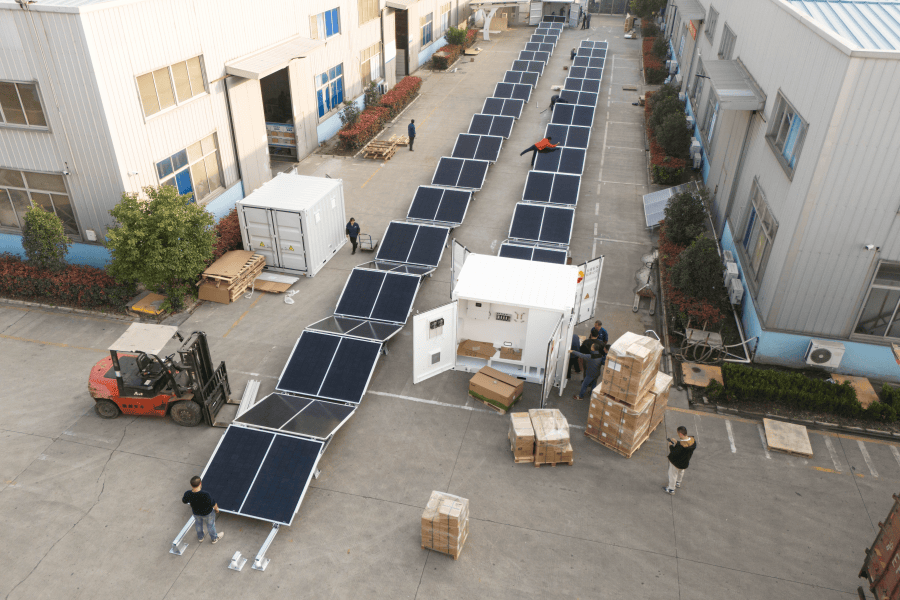
Table of Contents
- The Diesel Hangover on Modern Job Sites
- Beyond the Generator: The Real Cost of "Reliable" Power
- The Containerized Solution: More Than Just a Big Battery
- Case in Point: A 12-Month Project in California's Central Valley
- Key Specs Decoded for the Non-Engineer
- Making the Switch: What to Look For
The Diesel Hangover on Modern Job Sites
Let's be honest. If you're managing a large-scale construction project in the US or Europe right now, your relationship with diesel generators is probably... complicated. You rely on them, but boy, do you resent the noise, the smell, the constant refueling logistics, and that ever-growing line item for fuel. I've been on sites from Texas to North Rhine-Westphalia where the generator is the loud, expensive heartbeat of the operation. And with more projects aiming for LEED certification or facing strict local emissions regulations - like those in California or many EU cities - that diesel heartbeat is becoming a major liability.
It's not just about being green. It's about continuity, cost predictability, and pure operational simplicity. I've seen firsthand on site a 2-day delay because a grid connection permit got held up. The entire crew, the cranes, the everything - just waiting. Or worse, the frantic scramble to source more temporary generators when the project scope expands. The traditional model is reactive, noisy, and frankly, a bit archaic.
Beyond the Generator: The Real Cost of "Reliable" Power
We often just look at the diesel bill. But the real pain points run deeper. Let's agitate that a bit:
- Fuel Price Volatility: Remember the spikes? Your project's bottom line shouldn't be a bet on geopolitical stability.
- Noise & Community Relations: In suburban or urban infill projects, generator noise can trigger complaints, fines, or even work curfews. It's a social license to operate.
- Emissions & Compliance: Tightening regulations are a fact. The International Energy Agency (IEA) notes a global push for cleaner industrial processes. Sticking with diesel means navigating an ever-more-complex web of air quality permits.
- The Hidden Labor of Fuel Management: Security, refueling schedules, spill risks - it's an entire sub-logistics chain you're managing.
The core problem isn't a lack of power. It's a lack of intelligent, flexible, and clean power that can be deployed as quickly as your groundbreaking ceremony.
The Containerized Solution: More Than Just a Big Battery
This is where the conversation gets practical. The solution we're seeing transform sites isn't a futuristic concept; it's a drop-in replacement: the Industrial ESS Container built with Tier 1 battery cells. Think of it as a silent, self-contained power plant on a standard shipping container skid. It's delivered to your site, connected to your main distribution panel (often alongside a smaller backup gen-set for ultimate redundancy), and you're live within days, not months.
At Highjoule, when we design these for construction power, we're not just slapping cells in a box. We're engineering for the harsh, dirty, dynamic environment of a job site. That means ingress protection against dust, robust thermal management for summer heat and winter cold, and safety systems that exceed base standards because, honestly, a construction yard is no place for compromises.

Case in Point: A 12-Month Project in California's Central Valley
Let me give you a real example. We deployed a 1 MWh container system for a large logistics warehouse construction in California. The challenge: The grid connection was 9 months out, the developer had sustainability targets, and diesel was budgeted at a painful $0.38/kWh (fuel + generator rental + maintenance).
The solution was a Highjoule container paired with a 300 kW onsite solar canopy over the temporary site offices. The system was designed to:
- Carry the base load for site offices, tool charging, and overnight security.
- Peak-shave the demand from heavy equipment, minimizing generator runtime.
- Store excess solar during the day to power lights and cameras at night.
The outcome? Diesel usage dropped by over 70%. The project manager told me the biggest win wasn't just the fuel savings - it was the elimination of daily refueling headaches and the ability to work extended hours in noise-sensitive periods without complaints. The system paid for itself in under 2 years on fuel savings alone, not counting the soft-cost benefits.
Key Specs Decoded for the Non-Engineer
When you look at a Technical Specification of Tier 1 Battery Cell Industrial ESS Container for Construction Site Power, don't get lost in the jargon. Focus on what it means for your site:
- Tier 1 Battery Cells: This is your foundation. It means cells from manufacturers with proven, bankable track records in automotive or utility-scale storage. It's about cycle life and safety pedigree. You're buying a 10-15 year asset; the cell chemistry must be trustworthy.
- C-rate (Charge/Discharge Rate): Simply put, how fast can the battery absorb or release energy? A higher C-rate (like 1C) means it can handle the sudden, large demand from a crane or pile driver without breaking a sweat. A low C-rate battery might struggle.
- Thermal Management: This is the unsung hero. A liquid-cooled system (which we standardize on) keeps cells at an optimal temperature year-round. In Arizona heat or Norwegian winter, performance stays consistent, and lifespan is maximized. Air-cooled systems can be overwhelmed in extreme conditions.
- LCOE (Levelized Cost of Energy): This is the key financial metric. It's the total lifetime cost of your power (capex + opex + fuel) divided by the total energy produced. A well-designed container ESS, especially when paired with onsite solar, can achieve an LCOE significantly lower than diesel. The National Renewable Energy Lab (NREL) has shown how storage LCOE has plummeted, making it competitive with traditional fuels.
- UL 9540 / IEC 62933 Standards: This is non-negotiable for the US and EU markets. It's the comprehensive safety standard for the entire ESS unit. It's your assurance that the system's electrical, thermal, and battery management systems have been rigorously tested. Don't consider anything without it.
Making the Switch: What to Look For
So, you're considering a switch from diesel gensets to a battery container system. Here's my advice from the field:
Look for a provider that understands your site's rhythm. At Highjoule, our service model is built around temporary power. We handle transport, commissioning, and remote monitoring. Our containers come with pre-configured options for quick interconnection. And because we use a modular design, if your power needs grow, we can scale up quickly.
Demand transparency on the safety systems. Ask about the fire suppression specifics, the containment design, and the cybersecurity of the monitoring platform. A reputable provider will be eager to walk you through this.
The question is no longer if battery storage makes sense for temporary power, but when and how to integrate it. With the right partner and the right Technical Specification of Tier 1 Battery Cell Industrial ESS Container for Construction Site Power, you can turn your site's power from a cost center and a headache into a model of efficiency and quiet reliability.
What's the single biggest power-related delay you've faced on your last project? Could a predictable, silent power source have changed the outcome?
Tags: UL Standard BESS LCOE Europe US Market Renewable Energy Construction Temporary Power
Author
James Zhang
20+ years agricultural energy storage engineer / Highjoule CTO