
Benefits and Drawbacks of All-in-one Integrated 1MWh Solar Storage for Military Bases
Contents
- The Quiet Revolution in Military Energy Security
- The All-in-One 1MWh Promise: A Game Changer?
- The Real Benefits: More Than Just Kilowatt-Hours
- The Hidden Drawbacks: What They Don't Tell You On the Brochure
- Making It Work: An Engineer's Field Guide
- A Final Thought from the Field
The Quiet Revolution in Military Energy Security
Let's be honest. For over two decades, when we talked about energy on military bases, the conversation was pretty straightforward: connect to the grid, have a diesel generator on standby, and hope nothing major fails. But I've been on-site at enough bases, from the dusty heat of the American Southwest to remote European outposts, to see that script has flipped. The vulnerability of a centralized grid is no longer a theoretical risk - it's a daily operational headache for base commanders. A single weather event, or worse, a deliberate act, can cripple mission-critical operations in seconds. The Problem isn't just about cost anymore; it's about energy sovereignty and tactical resilience.
This vulnerability is expensive. The U.S. Department of Defense, for instance, has identified energy resilience as a critical priority, with initiatives pushing for significant renewable and storage integration. The old model of relying solely on diesel gensets means sky-high Levelized Cost of Energy (LCOE) when you factor in fuel transport, maintenance, and their, frankly, poor efficiency at partial load. It's a noisy, logistically heavy, and costly way to keep the lights on.
The All-in-One 1MWh Promise: A Game Changer?
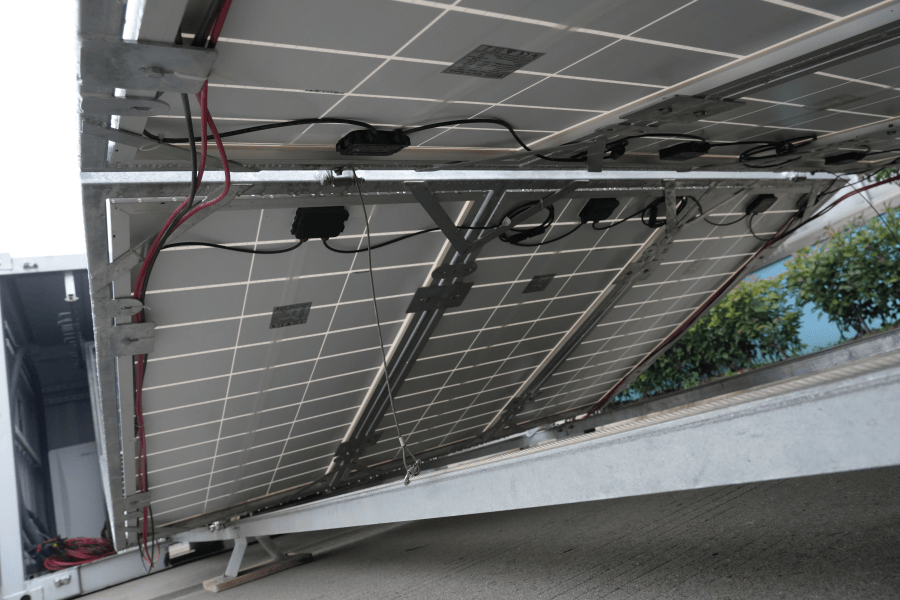
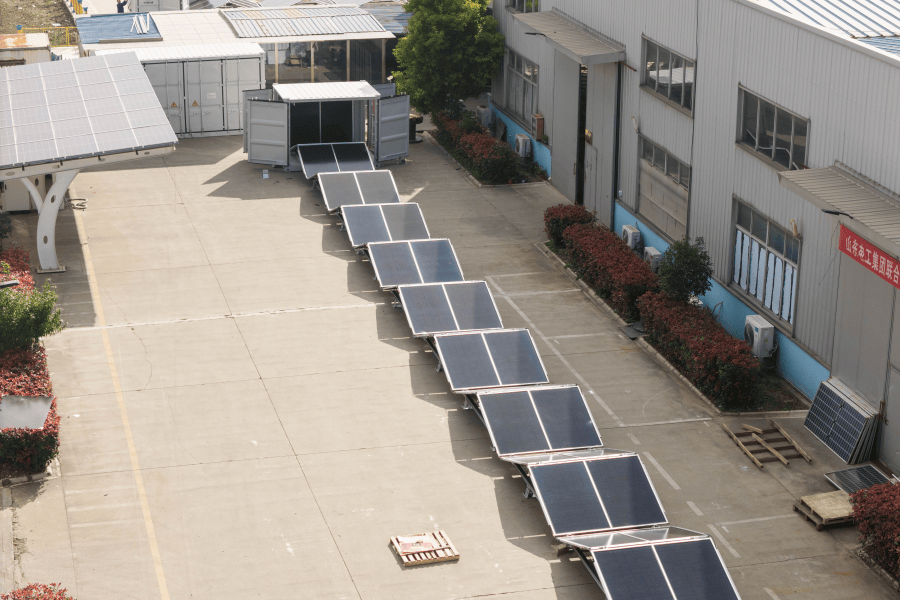
This is where the idea of an all-in-one, containerized 1MWh Solar + Storage system starts to look incredibly attractive. Imagine a solution that arrives on a flatbed truck: solar panels, inverters, battery racks, and a sophisticated energy management system (EMS), all pre-integrated and tested in a single, ruggedized enclosure. Plug it into your base's microgrid, connect the solar field, and you've got a self-contained power plant. The Agitation of vulnerability and cost meets its potential Solution. For a military procurement officer looking for a fast, compliant, and seemingly simple fix, it's a compelling vision.

The Real Benefits: More Than Just Kilowatt-Hours
So, what are the real, tangible benefits? From my hands-on experience deploying these systems in critical infrastructure, they go far beyond the spec sheet.
- Rapid Deployment & Standardization: This is the biggest sell. A pre-engineered, all-in-one unit slashes months off design and commissioning timelines. It's a known quantity that simplifies bidding and compliance, especially with strict standards like UL 9540 for energy storage and IEEE 1547 for grid interconnection. For bases under tight deadlines, this speed is a strategic advantage.
- Enhanced Resilience & Security: A 1MWh system can keep critical loads - command centers, comms, medical facilities - running for hours during an outage. Paired with on-site solar, it creates a "black-start" capable island, reducing the base's signature from fuel convoys and increasing its ability to operate independently. Honestly, I've seen firsthand how this capability changes the security calculus for base commanders.
- Predictable LCOE & Operational Savings: By storing cheap solar energy or off-peak grid power, you directly offset expensive diesel generation. The financials become predictable. You're not at the mercy of fuel price spikes. The International Renewable Energy Agency (IRENA) consistently shows renewables-plus-storage LCOE beating fossil fuels in more and more scenarios, and military bases are a prime example.
- Simplified Logistics & Maintenance: One vendor, one contract, one point of responsibility for the core system. This reduces the "finger-pointing" that can happen with multi-vendor setups. For the military's maintenance corps, having a standardized, containerized asset makes training and spare parts management simpler.
The Hidden Drawbacks: What They Don't Tell You On the Brochure
Now, let's have that coffee-chat reality check. No solution is perfect, and glossing over the drawbacks is how projects fail. Here's what you need to watch for.
- The "Black Box" Conundrum: That beautiful pre-integration can become a barrier. If the EMS or a proprietary inverter fails, you might be entirely dependent on the original vendor for service. I've been on sites where a simple firmware bug halted a system for weeks, waiting for a specialist. This can conflict with the military's desire for maintainability and control.
- Scalability & Flexibility Limits: A 1MWh container is a fixed block. What if your needs grow to 2.5MWh? You can't easily "add a module" to most all-in-one designs. You're adding another whole container, which may not be space or grid-connection efficient. A modular, purpose-built system can sometimes offer better long-term expansion pathways.
- Site Integration is Never "Plug-and-Play": The unit might be integrated, but your site isn't. You still need major civil works: a massive concrete pad, high-voltage trenching to your distribution network, cybersecurity integration with base SCADA systems, and environmental permits. The container solves the technology integration, not the site integration. This is where budgets often get strained.
- Thermal Management in Extreme Climates: A sealed container in the Arizona desert or a Norwegian winter is a tough environment. The thermal management system - the HVAC keeping those lithium-ion batteries at their happy 25C - is a single point of failure. If it fails, the entire system derates or shuts down. In a distributed, modular design, a failure might only affect one segment.
Making It Work: An Engineer's Field Guide
So, is it the right choice? It depends. At Highjoule, we've deployed both all-in-one and modular systems. The key is asking the right questions upfront.
For the all-in-one 1MWh to be a win, you need:
- A Clear, Fixed Requirement: Your load profile and resilience goals align neatly with ~1MWh of storage and a matching solar array. It's a tactical solution for a specific set of critical loads, not the base's entire master plan.
- Vendor Due Diligence: Choose a provider like us with a proven track record, open communication protocols for your SCADA, and a robust, local service network. Ask about mean time to repair (MTTR) and what on-site training they provide for your personnel.
- Total Site Cost Analysis: Budget not just for the container, but for all the "outside the fence" costs: pad, wiring, grid interconnection studies, and ongoing maintenance. The lowest unit cost can lead to the highest total cost of ownership if site integration is poorly planned.
- Focus on Safety & Standards: Never compromise. Ensure every component, from the cell level up, is certified to the relevant UL and IEC standards. The safety design - from gas detection to fire suppression - must be military-grade, not just commercial. Our designs, for instance, go beyond code with segregated battery compartments and passive fire barriers, because on a base, a fire isn't just an asset loss; it's a security event.
A Final Thought from the Field
The move towards all-in-one 1MWh solar storage for military bases isn't a trend; it's a logical response to a real need for speed and resilience. The benefits are substantial and real - when the solution is matched perfectly to the problem. But it's not a magic bullet. The drawbacks are all about long-term flexibility, control, and total cost.
The most successful projects I've been part of treated the all-in-one unit not as a final answer, but as a high-value, rapid-response building block within a broader, smarter base energy architecture. It's a powerful tool, but you still need a skilled architect and a thoughtful blueprint.
Is your team looking at this technology for a specific resilience gap, or as a cornerstone of a larger microgrid strategy? The answer to that question will tell you which path to take.
Tags: UL Standard BESS LCOE Microgrid Military Energy Security All-in-one ESS US Military Europe Defense
Author
James Zhang
20+ years agricultural energy storage engineer / Highjoule CTO