
Black Start PV Storage in Coastal Zones: Salt-Spray Challenges & Solutions
Navigation
- The Silent Killer: Salt Spray & Your Coastal BESS
- Black Start: A Beacon for Coastal Grid Resilience?
- Field Notes: Seeing Salt Spray Damage Firsthand
- Key Tech Specs You Can't Ignore Near the Ocean
- Building Reliable Coastal Energy Futures
The Silent Killer: Salt Spray & Your Coastal BESS
Honestly, if you're deploying batteries or solar along the coast in the US or Europe, you've likely seen that white, crusty residue on anything metal after a few months. That's salt spray doing its slow, relentless work. Now, imagine that inside your multi-million dollar Battery Energy Storage System (BESS) container. I've been on sites from California to the North Sea, and corrosion isn't just a cosmetic issue C it's a safety hazard and a major hit to your project's bottom line. A study by the National Renewable Energy Lab (NREL) highlights how corrosive environments can accelerate BESS component failure by up to 20%, leading to costly downtime and replacements. The dream of resilient, off-grid power via solar + storage? For coastal sites, salt turns that dream into a significant technical headache fast.
Black Start: A Beacon for Coastal Grid Resilience?
So, enter the hero concept: Black Start Capable PV + Storage. Imagine a storm knocks out the main grid. A standard BESS needs external power to wake up. A Black Start system? It uses its own PV generation to self-energize and restart, acting like an islanded power plant. For critical coastal infrastructure C ports, water treatment, microgrids C this is gold. The benefit screams "energy independence." But (and it's a big but), making this work reliably where salt hangs thick in the air is another ball game entirely. The salt compromises components faster, potentially derailing that critical Black Start sequence when you need it most. Suddenly, the benefit feels fragile.
Field Notes: Seeing Salt Spray Damage Firsthand
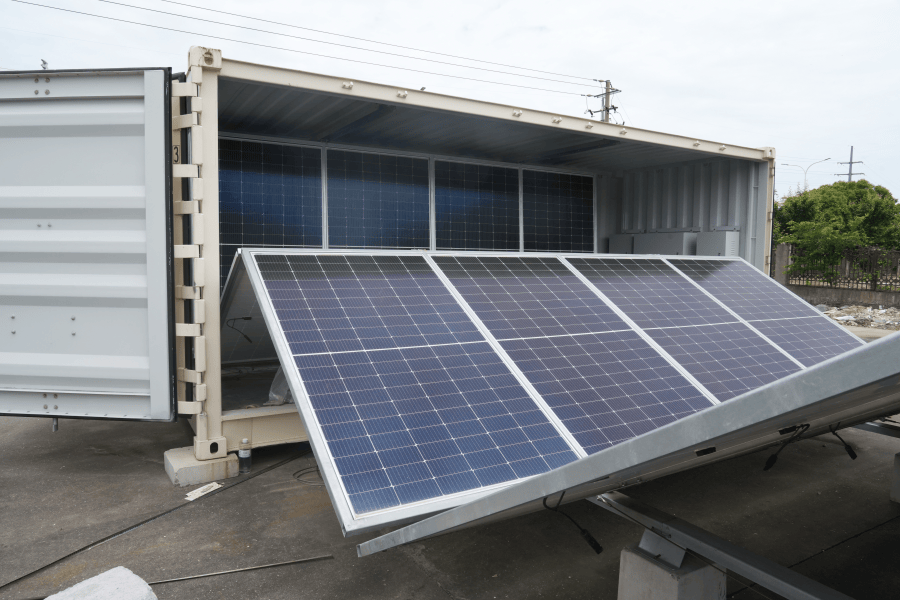
Let me paint a picture from a project up in Northern Germany, right on the coast. A 5MW solar + 2.5MWh storage setup designed for grid support and backup. The BESS enclosure was'standard industrial grade.' Within 18 months? We found significant corrosion on busbars, sensor connections, and cooling system fittings. The humidity combined with salt created a perfect storm. Performance degradation was measurable, and honestly, the fear of a failed Black Start during a real North Sea gale kept the operator awake. It wasn't a failure of the core technology, but a failure to adapt it to the specific environment. Contrast this with a retrofit we did later using Highjoule's HJ-G0 series containers specifically built for maritime zones. Think IP66-rated seals, stainless-steel fixings where it counts, and conformal coating on critical PCBs. Two years in, inspections show minimal ingress C proof that specialised design makes all the difference. 
Key Takeaways from the Coast
- Corrosion is Sneaky: It starts small (connectors, sensors) but impacts critical safety and control systems.
- Cooling is Critical: Salt clogs air filters fast; liquid cooling with marine-grade coolant loops becomes almost essential for thermal management, not just peak performance.
- Seals Degrade: Standard gaskets dry out and crack under salt+UV exposure. Double-sealing and specific material choices are non-negotiable.
Key Tech Specs You Can't Ignore Near the Ocean
Talking shop for a minute C here's what truly matters in a salty Black Start system:
- C-rate (Charge/Discharge Rate): Think of it as the'speed' of the battery. For reliable Black Start, you need a battery that can discharge its power quickly enough to kick-start connected loads and potentially other generators. Don't just look at peak C-rate; sustained high C-rates in heat (which corrosion can worsen) accelerate wear. Oversizing slightly can help longevity.
- Thermal Management: This is huge. Salt spray blocking air intakes leads to overheating, reducing battery life and increasing fire risk. Robust liquid cooling systems, preferably with sealed, corrosion-resistant cold plates directly on the battery modules (like our approach), are far superior to forced air in these environments. They maintain stable temps even when external conditions are harsh, directly protecting your investment.
- LCOE (Levelized Cost of Energy): The sticker price is only part of the story. A cheaper system that needs major component replacements every 3-5 years due to salt damage will have a much higher LCOE than a corrosion-optimized system designed for 15+ years. Factor in maintenance costs, potential downtime, and replacement parts. Protecting against salt pays off long-term.
- Standards Are Your Shield: UL 9540A (fire safety), UL 1973 (battery standards), IEC 61439 (low-voltage switchgear), and crucially, specific IP ratings (like IP54 minimum, better IP56) for the entire enclosure are not just paperwork. They mandate the testing and build quality needed to withstand coastal assault.
Choosing cells is one thing, but the real magic (and challenge) is in the integration and protection. High-density cells packed tight need that advanced thermal management even more, especially when salt could impair cooling efficiency.
Building Reliable Coastal Energy Futures
Look, the benefits of a Black Start capable PV + Storage system in vulnerable coastal regions are undeniable: resilience, reduced diesel reliance, carbon savings. But the drawbacks in salt-spray zones are equally real C corrosion risks driving up maintenance costs and potentially compromising reliability. The key isn't avoiding the technology; it's demanding systems engineered for the environment, not just placed in it. That means rigorous specs, proven corrosion protection (like Highjoule's maritime-grade sealing and coatings verified through accelerated testing), and a partner who understands that salt water requires a fundamentally different approach than an inland industrial park. Frankly, I've seen too many projects cut corners on environmental hardening to save upfront cost, only to pay dearly later. Don't let salt be the Achilles' heel of your coastal energy resilience. What's the one corrosion challenge keeping you up at night for your next project? Let's discuss real solutions.
Tags: LCOE Coastal Energy Storage Grid Resilience Salt-Spray Corrosion Black Start BESS PV Plus Storage UL 9540A Maritime Microgrid C-rate
Author
James Zhang
20+ years agricultural energy storage engineer / Highjoule CTO