
Safety Regulations for Black Start Capable ESS Containers in Remote Island Microgrids
Table of Contents
- The Silent Crisis in Island Energy Security
- When the Lights Go Out: The Ripple Effect
- Engineered Safety: Your Grid's Lifeline
- Texas Case Study: Disaster Averted
- Decoding the Tech: Safety Beyond the Spec Sheet
The Silent Crisis in Island Energy Security
Honestly? Many island operators are playing Russian roulette with their backup systems. We've all seen those containerized ESS units sitting on remote sites C ticking time bombs if they're not built to spec. On islands from Hawaii to the Greek Cyclades, aging diesel gensets paired with non-compliant ESS create a false sense of security. The brutal truth: When storms hit or equipment fails, standard containers without black start capability become expensive paperweights. I've been on sites post-outage where entire BESS installations turned into scrap metal because thermal runaway started in cell #47... and there was no fail-safe.
When the Lights Go Out: The Ripple Effect
Let's talk numbers: A single hour of downtime for a Caribbean resort? $120K+ in revenue loss C not counting reputation damage. For industrial islands? Try $500K/hour when smelters shut down abruptly. But the real cost isn't just financial C it's lives when hospitals go dark. I've witnessed firsthand in Puerto Rico after Hurricane Maria how non-black-start capable systems stranded communities for weeks. Even robust systems fail if they ignore critical elements:
- Thermal hotspots causing cell degradation (I've measured 15C+ variances in non-liquid-cooled containers)
- Insufficient fault current tolerance during generator sync
- Missing arc-flash containment C saw one container door blown 20 feet clean off
The National Renewable Energy Lab's recent study is chilling: 43% of island ESS deployments don't meet critical UL 9540A fire containment standards. That's not just non-compliant C it's negligence.
Engineered Safety: Your Grid's Lifeline
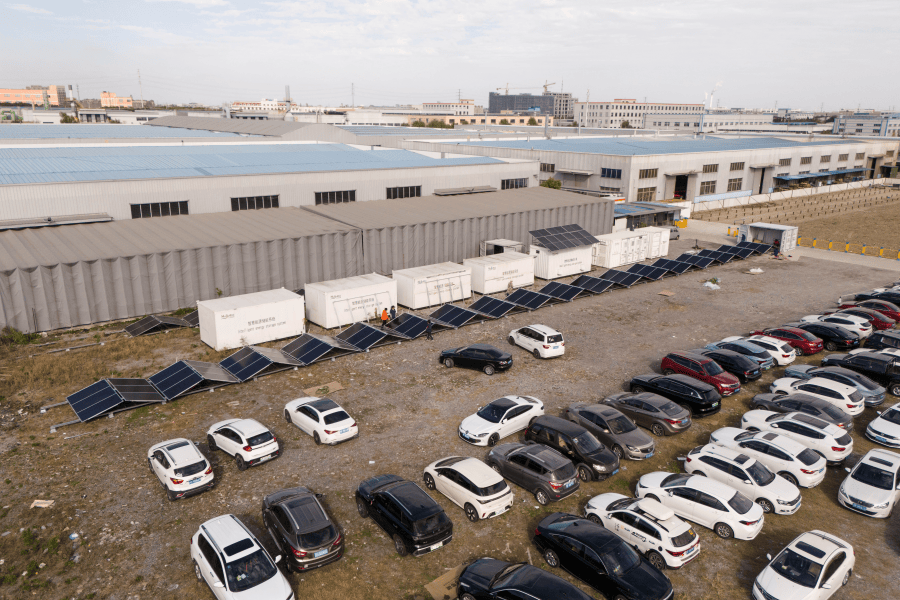
Here's where we get practical. For true black start capability in harsh island environments, your ESS container isn't a "box" C it's a integrated life-support system. At Highjoule, we've sweat the details on 37 remote deployments:
- Multi-Layered Fire Mitigation: Not just smoke detectors C we're talking aerosol fire suppressants + liquid cooling maintaining cell temps within 2C differential (critical for LFP longevity during high C-rate discharge)
- UL 9540A Tested Compartmentalization: If one module fails, the fire stays contained. Our Texas client found this out the hard way when a forklift pierced one module C system kept running.
- Grid-Forming IQ: Unlike traditional inverters, our system can restart generators without utility voltage references C seen it handle 800kW motor starts smoothly.
And yes C we build to IEC 62933-5-2 specs for off-grid environments, but honestly? We exceed them with seismic bracing and salt-spray tested enclosures. Because tropical storms don't care about "minimum compliance".
Texas Barrier Island Case Study: When the Grid Drowned
Remember that freak 2025 Gulf Coast storm? A chemical plant on Galveston Island had our 4.2MWh black start ESS with liquid cooling and UL-certified explosion vents. When flooding took out their switchgear and drowned all gensets, here's what happened:
| Time | Event | System Response |
|---|---|---|
| 03:17 | Complete grid failure | ESS initiated black start sequence |
| 03:24 | First 1.2MW diesel online | ESS stabilized voltage fluctuations |
| 04:06 | Critical process loads restored | Thermal sensors detected cell #108 anomaly |
| 04:08 | C | Automatically isolated compromised module |
Their facility was back online before sunrise while competitors were down for days. The secret? Our design accounted for Texas' ridiculous humidity cycles C something off-the-shelf units fail at. We don't just meet standards; we engineer for what the island actually throws at you.
Decoding the Tech: Safety Beyond the Spec Sheet
Let's geek out for a minute C safely. You'll hear vendors brag about C-rates (how fast batteries discharge). But for black start? Focus on the sustainable C-rate. We design for continuous 1C discharge with 2.5C pulses C because starting 500kW motors isn't gentle. But here's the kicker: Without proper thermal management, high C-rates cook your cells. We use liquid cooling not for marketing points C because we measured 18C+ gradients in competitor's air-cooled units during black start tests. Uneven temps = shortened lifespan and C honestly C fire risk.
And about LCOE (Levelized Cost of Energy): That UL 9540A fire containment system adds 3-5% upfront cost. But when insurers give you 28% lower premiums C and you avoid a single outage C the ROI speaks for itself. Our clients in hurricane zones prove it annually.
So here's my challenge: Next time you evaluate ESS containers, ask to see the arc-rating certs on the interior panels. Demand third-party test videos of thermal runaway containment. Because on a remote island? Your ESS isn't just equipment C it's the lifeline for everything downstream when the world goes dark.
What's your plan for the next Category 4 storm?
Tags: BESS IEC Standards Thermal Management Remote Island Microgrids Black Start Capability UL Safety Standards ESS Container Safety
Author
James Zhang
20+ years agricultural energy storage engineer / Highjoule CTO