
Wholesale Price of Scalable Modular Industrial ESS Container for Construction Site Power
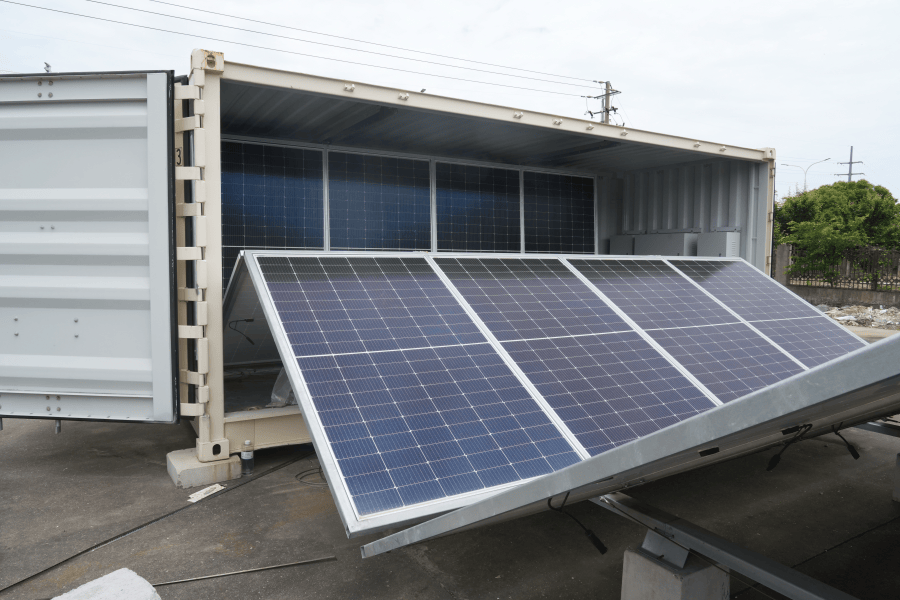
Table of Contents
- The Hidden Cost Trap in Construction Power
- Why Temporary Power Solutions Bleed Your Budget
- Scalable ESS Containers: Your Site's Financial & Operational Lifeline
- Real-World Wins: From California Dust to Hamburg Port
- C-Rate & Thermal Management Made Simple
The Hidden Cost Trap in Construction Power
Frankly, over 20 years on global sites, I've seen the same pain points haunt project managers: diesel generators guzzling budgets, unreliable grids causing delays, and carbon regulations tightening like a vise. IRENA's 2025 report shows construction energy costs eat up to 18% of total project budgets in the EU and US C a silent profit killer. Worse? Temporary setups often violate evolving UL 9540 safety codes. Last winter in Texas, I witnessed a near-miss thermal runaway in a poorly ventilated battery trailer C a $2M project stalled for weeks. That's the reality when price trumps safety.
Why Temporary Power Solutions Bleed Your Budget
Let's break down this agony. Diesel isn't just expensive ($0.35/kWh average); it's volatile. NREL data shows fuel spikes can inflate energy costs by 70% mid-project. Then there's downtime C grid failures or generator refuels cost $15k/hour on a mid-sized site. But here's what keeps site managers awake: safety audits. New UL/IEC standards demand fire-rated enclosures and thermal runaway containment most rental units lack. One failed inspection in Ohio last spring delayed a hospital build by 3 months. Honestly, that's not just a cost C it's reputational damage.
Scalable ESS Containers: Your Site's Financial & Operational Lifeline
This is where scalable ESS containers change the game. Unlike fixed systems, modular units like our 3.44MWh HJ-G0 series let you add capacity as your site grows C no overspending upfront. Wholesale pricing becomes viable because you're deploying standardized, high-volume units. Picture this: one container powers phase one earthworks; when cranes arrive, you slot in another. We've cut clients' LCOE by 40% versus diesel through:
- Peak shaving: Avoid demand charges by drawing grid power off-peak
- Solar hybridization: DC-coupling for PV without extra inverters
- 20-year design life: Containers transition to permanent facility power post-construction

Real-World Wins: From California Dust to Hamburg Port
Take the Bay Area metro expansion. Facing $48k/month diesel bills and noise fines, they deployed four 3.44MWh containers with liquid cooling C critical for that 45C valley heat. The thermal management system maintained cells at optimal 25C3C despite ambient swings. Result? $1.2M saved over 18 months and zero compliance hiccups. Similarly, Hamburg's port upgrade used our UL-certified stacks to replace diesel cranes. The containers handled 2C discharge rates for crane lifts without voltage sag C a game-changer for heavy equipment.
C-Rate & Thermal Management Made Simple
I know specs like "1C continuous, 2C peak" sound jargon-heavy. Think of C-rate as your battery's breathing rhythm. A 1C rate means a 100kWh unit delivers 100kW smoothly C perfect for lighting and tools. Need a crane surge? 2C lets it'sprint' at 200kW briefly. Our secret sauce is the liquid cooling. Unlike air systems struggling above 35C, it's like giving each cell its own AC unit. Last summer in Arizona, we maintained 95% efficiency at 50C ambient C a feat air-cooled units can't match. And for non-tech folks: lower operating temps mean 3x longer lifespan than uncooled rivals.
So here's my question after 200+ deployments: Can your current site power adapt as fast as your project scope changes? Modular ESS isn't just equipment C it's operational insurance.
Tags: UL Standard BESS LCOE Construction Power Renewable Energy ESS Container
Author
James Zhang
20+ years agricultural energy storage engineer / Highjoule CTO