
Grid-Forming Mobile Power Container for EV Charging: Benefits and Drawbacks Explained
Contents
- The EV Charging Grid Problem Everyone's Talking About
- Why This Isn't Just a Power Issue
- Enter the Mobile Grid-Forming Container
- The Benefits, As I've Seen Them On Site
- The Drawbacks: Some Honest Talk
- A Real-World Case Study: California's Lesson
- Making the Right Choice for Your Project
The EV Charging Grid Problem Everyone's Talking About
Let's be honest. If you're planning a high-power EV charging hub in the US or Europe right now, your number one headache isn't which charger brand to pick. It's the grid connection. I've sat in dozens of meetings from Stuttgart to San Jose where the conversation hits the same wall: the local utility says a 2 MW connection will take 18-36 months and cost a fortune in upgrade fees. The IEA reports that global EV sales jumped 35% in 2023 alone. The grid infrastructure, frankly, hasn't kept pace. You're left with a fantastic location and a business plan that's stuck in neutral because the electrons can't get there.
Why This Isn't Just a Power Issue
This delay isn't just a timeline problem. It's a massive financial sinkhole. Every month of delay is lost revenue. But there's another, more technical layer. Fast EV chargers, especially the 350 kW+ units, don't just draw power steadily. They create huge, instantaneous spikes in demand. This can cause voltage dips that annoy the utility and might even trip protection equipment. On weak or rural grids, this isn't just an inconvenience - it can make the project unfeasible. You're not just asking for power; you're asking for a stable, resilient grid node, and that's a much bigger ask.
The Hidden Cost of Waiting
Beyond the capital, there's the Levelized Cost of Energy (LCOE) for your charging site. LCOE isn't just for power plants; it's the total lifetime cost of the energy you'll use, divided by the total energy supplied. A long grid delay inflates your project's "soft costs" massively, driving up that effective LCOE before you even plug in your first car. You're paying for land, permits, and overhead while getting zero return.
Enter the Mobile Grid-Forming Container
This is where the mobile power container with grid-forming capabilities has become a game-changer. It's not just a big battery on wheels. Think of it as a plug-and-play mini-grid in a box. A standard battery stores energy. A grid-forming battery actually creates a stable voltage and frequency waveform, just like the traditional grid does. It can start up a "black site" (one with no grid reference) and, crucially, it can support weak grids by providing instantaneous power and stability services.
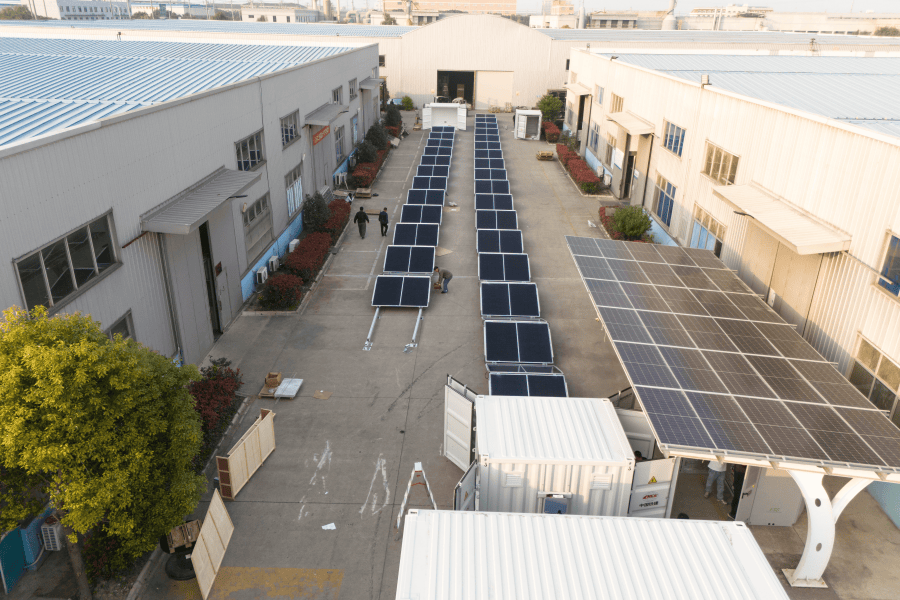
Honestly, the first time I saw one of these units deployed at a remote logistics depot in Germany, it clicked. They needed fast charging for their electric fleet, but the local transformer was at capacity. Instead of a 2-year wait, they had a 40-ft container delivered, connected it to their existing medium-voltage line and a solar canopy, and were charging trucks in under 12 weeks.
The Benefits, As I've Seen Them On Site
So, what are the real, tangible benefits? Let's break it down:
- Speed to Market: This is the biggest one. You can deploy a temporary or permanent solution in months, not years. It de-risks your entire project timeline.
- Grid Independence & Support: The grid-forming inverter is the key. It allows the system to operate as a microgrid if the main grid fails, keeping your chargers online. It also smooths out those violent power spikes from chargers, making you a "good citizen" on the local network.
- Financial Flexibility: You can lease or rent these units, turning a large CapEx into a more manageable OpEx. It also allows for a modular approach - start with one container, add more as demand grows.
- Energy Arbitrage & Sustainability: Charge the container from the grid at night when rates are low, or from on-site solar, and discharge during peak charging hours. This cuts your energy costs (improving your LCOE) and boosts your green credentials.
At Highjoule, when we design our mobile GridHub units, we bake these benefits into the core. It's not just about the battery cells; it's about the integrated power conversion system (PCS) with advanced grid-forming logic that's pre-certified to UL 1741 SB and IEC 62109 standards, so we know it'll play nice with utilities on both sides of the Atlantic.
The Drawbacks: Some Honest Talk
No technology is a silver bullet. I've seen projects where a mobile container was the wrong fit, and it's crucial to understand why.
- Higher Upfront Cost per kWh: Compared to a fixed, large-scale BESS, the containerized, mobile solution comes with a premium. You're paying for the enclosure, the mobility, and the sophisticated, compact thermal management system that keeps everything safe in a confined space.
- Footprint and Logistics: A 40-ft container needs space for placement, access, and safety clearances. You also need a suitable pad and correct interconnection points. It's not as simple as parking a truck.
- Ongoing Operational Expertise: This isn't a "set it and forget it" asset. To maximize its value in energy arbitrage and grid services, you need some level of active management or a service partner. The battery's health, defined partly by its C-rate (how fast it charges/discharges), needs monitoring.
- Long-term Durability vs. Permanent Install: While built tough, a mobile unit that gets moved around faces more vibration and environmental stress than a fixed installation. Your supplier must have a robust design - like our focus on welded, seismic-rated racks and liquid cooling for even thermal management - to ensure a 15+ year life.
A Real-World Case Study: California's Lesson
Let me give you a concrete example. A developer in California wanted to build a 12-stall EV charging plaza near a major highway. The utility quote for a grid upgrade was $1.2M and a 24-month lead time. They opted for a temporary mobile grid-forming BESS from a competitor to launch early.

The good: They launched revenue-generating operations in 5 months. The bad: The unit's air-cooled thermal system struggled in the 40C+ valley heat, leading to derating (reduced power output) during peak afternoon charging times. They also underestimated the maintenance needed for the frequent cycling.
This is where the expert insight matters. We learned from that. Our solution for a similar project in Arizona used a liquid-cooled system, which maintains optimal cell temperature far more effectively in extreme heat, preventing performance loss. We also provided a full-service maintenance wrap, taking the operational burden off the owner. The right technology and the right support model are critical.
Making the Right Choice for Your Project
So, is a grid-forming mobile power container right for you? Ask these questions:
The landscape is evolving fast. What we at Highjoule are focusing on is making these systems not just mobile, but smarter and more resilient. It's about providing a complete solution that includes the software and services to manage the asset's life, ensuring it delivers on its financial and operational promises year after year.
What's the biggest hurdle you're facing with your EV charging site deployment right now? Is it the grid wait time, the cost, or the technical complexity of integrating storage?
Tags: UL Standard BESS Europe US Market Grid-forming EV Charging Mobile Power Container
Author
James Zhang
20+ years agricultural energy storage engineer / Highjoule CTO