
ROI Analysis of Liquid-cooled Solar Container for Industrial Parks | Highjoule
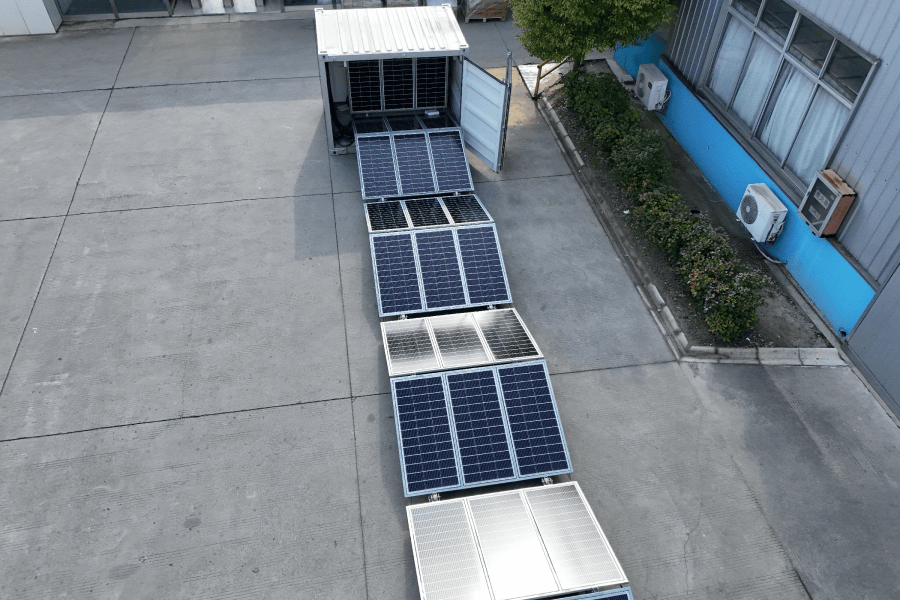
Beyond the Spreadsheet: A Practical ROI Look at Liquid-Cooled Energy Storage for Your Industrial Park
Hey there. If you're reading this, you're probably past the "why" of energy storage for your industrial facility and deep into the "how" C specifically, how to make the numbers work. Honestly, I've been in those meetings, staring at CAPEX figures and five-year payback projections that feel more like hopeful guesses than solid plans. Over two decades of deploying BESS globally, I've seen a common theme: the standard ROI model often misses the hidden costs and critical performance factors that make or break a project's real-world financial success. Let's talk about that, over a (virtual) coffee.
Quick Navigation
- The Hidden Cost Everyone Misses
- Why Data-Center Tech is the Game Changer
- Crunching the Real Numbers
- A Case in Point: From Theory to Factory Floor
- Your Next Steps
The Hidden Cost Everyone Misses: It's Not Just the Batteries
When most folks run an ROI Analysis of Liquid-cooled Solar Container for Industrial Parks, they focus on hardware costs and peak shaving savings. That's a good start. But on site, the real story unfolds in the thermal management system. I've seen too many air-cooled container systems, especially in places like Arizona or Southern Spain, where the ambient temperature soars. They promise a certain cycle life and power output, but the fans are screaming all summer long, fighting a losing battle against heat.
This isn't just an engineering detail. It directly hits your ROI in three brutal ways:
- Degradation Acceleration: Every degree above optimal operating temperature accelerates battery degradation. The National Renewable Energy Laboratory (NREL) has shown that sustained high temperatures can slash cycle life by up to 30% or more. That means your asset might need replacement years earlier than your financial model predicted.
- Efficiency Loss: Those massive fans and ductworks consume power C sometimes a significant chunk of the system's own output. This "parasitic load" quietly eats into your daily energy arbitrage or demand charge savings.
- Space & Complexity: Air-cooling requires more internal space for airflow, limiting energy density. It also means more points of failure (filters, vents) and stricter site placement requirements to avoid recirculating hot air.
Why Data-Center Tech is the Game Changer
So, where's the solution? Look at the tech that powers the cloud. Liquid cooling, direct-to-cell or cold plate technology, is the leap we needed. It's not just "better" cooling; it fundamentally changes the ROI equation for an industrial-scale container.
Think of it like this: instead of blowing cool air around a hot room (the container), you're placing a cold, precise hand directly on the source of the heat (each cell). The result is a uniform temperature distribution, typically within 2-3C across the entire rack. From my experience, this consistency is magic for longevity and performance.
For a decision-maker, this translates into tangible financial advantages:
- Higher C-Rates, Safely: You can consistently discharge at higher power (C-rate) without overheating. Need to slam the grid with 2C for 30 minutes to catch a peak demand window? A liquid-cooled system handles it calmly, unlocking more revenue from frequency regulation or capacity markets.
- Dramatically Lower LCOE: Levelized Cost of Energy (LCOE) is the true north star. By extending cycle life and ensuring higher round-trip efficiency over the system's lifetime, liquid cooling pushes the LCOE down significantly. You're getting more usable energy out of the same initial investment.
- Inherent Safety & Compliance: A tightly controlled thermal environment is a safer one. It minimizes thermal runaway risks. At Highjoule, our liquid-cooled containers are engineered from the ground up to meet and exceed UL 9540 and IEC 62933 standards, which is non-negotiable for insurance and permitting in North America and Europe. That's not a checkbox; it's risk mitigation that saves you from future headaches and costs.

Crunching the Real Numbers: An Honest Comparison
Let's move past concepts. Here's a simplified side-by-side look at how the cooling choice impacts key ROI drivers over a 10-year horizon.
| ROI Factor | Typical Air-Cooled Container | Liquid-Cooled Solar Container |
|---|---|---|
| Cycle Life (to 80% capacity) | ~4,500 - 5,500 cycles (highly temp-dependent) | ~7,000+ cycles (stable temp ensures spec) |
| Round-Trip Efficiency | 88% - 92% (parasitic loads included) | 94% - 96% (minimal parasitic load) |
| Useable Energy Density | Lower (more space for airflow) | Up to 30% higher (compact cooling) |
| O&M Complexity / Cost | Higher (filter changes, fan maintenance) | Lower (sealed, low-maintenance system) | Projected 10-yr LCOE | Higher (faster degradation, lower efficiency) | Substantially Lower (core ROI driver) |
The data from the International Energy Agency (IEA) backs this up, highlighting that advancing thermal management is key to reducing BESS costs and improving value. The higher initial capex for liquid cooling? It's often absorbed and surpassed by the longer life, higher revenue potential, and lower operational costs.
A Case in Point: From Theory to Factory Floor
Let me give you a real example, though I'll keep the client name confidential. We deployed a 2.5 MWh Highjoule liquid-cooled container for a manufacturing plant in Germany's industrial heartland, North Rhine-Westphalia.
The Challenge: They had volatile energy costs, a tight physical footprint, and strict internal safety protocols. Their initial ROI analysis on a standard system was "meh" C a 7-year payback that finance wasn't excited about.
The Highjoule Solution: We worked with their team to model a scenario using our liquid-cooled platform. Because of the higher density, we fit the required capacity in a smaller footprint. The guaranteed performance in their non-climate-controlled yard meant they could confidently stack multiple revenue streams: peak shaving, intraday trading on the EPEX spot market, and primary control reserve.
The Outcome: The stable temperature management extended the projected cycle life, moving the financial model from 7 to just under 5 years for a full payback. The plant manager told me later, "The peace of mind on safety and the fact it just runs quietly in the corner were the unsung heroes of the project." That's real ROI C financial, spatial, and operational.
Your Next Steps: Asking the Right Questions
So, when you're evaluating vendors and running your own ROI Analysis of Liquid-cooled Solar Container for Industrial Parks, dig deeper than the brochure. Ask them:
- "What is the guaranteed cycle life at my site's specific average and peak ambient temperatures?"
- "Can you show me the parasitic load calculations for the cooling system at full power?"
- "How does the thermal design specifically comply with UL 9540A test criteria for fire safety?"
At Highjoule, we build our containers to answer these questions confidently, because we've seen what happens on site when they're not addressed. We provide localized deployment support and long-term performance monitoring because the ROI story doesn't end at commissioning; it's proven every day the system operates at its peak.
What's the one operational constraint in your facility that most worries you when thinking about adding a BESS? Is it space, ongoing maintenance, or maybe the local utility's interconnection requirements? Let's start there.
Tags: UL Standard BESS LCOE Europe US Market Liquid Cooling Renewable Energy
Author
James Zhang
20+ years agricultural energy storage engineer / Highjoule CTO