
Reducing Environmental Impact with Scalable Modular PV Container for Eco-Resorts
Contents
- The Green Paradox of Going Off-Grid
- The Hidden Environmental Cost of "Custom"
- A Better Way: The Pre-Integrated, Modular Container
- Beyond the Basics: Thermal Management & LCOE in the Real World
- Case in Point: A Mountain Retreat's Journey
- Your Next Step: Asking the Right Questions
The Green Paradox of Going Off-Grid
Let's be honest. When you're developing an eco-resort, your environmental commitment is at the core of your brand. You source local materials, design for minimal disturbance, and promise guests a pristine, low-impact experience. The energy system? It has to be renewable, often solar. But here's the paradox I've seen firsthand on site: the very process of deploying a bespoke, on-site solar-plus-storage system can create a significant environmental footprint before it even generates its first clean kilowatt-hour. We're talking about months of heavy machinery, multiple contractor teams, concrete pours for foundations, and a complex web of deliveries. It feels a bit like using a diesel bulldozer to plant a sapling.
The Hidden Environmental Cost of "Custom"
The traditional approach amplifies this problem. A project in a sensitive Alpine region I consulted on faced massive challenges. Every component - the inverters, the battery racks, the HVAC, the switchgear - arrived on different trucks from different continents. The on-site assembly was a marathon, exposed to the elements, with a high risk of delays and, frankly, errors. The local environmental agency was on us constantly about soil compaction and habitat disruption. The Environmental Impact wasn't just about carbon; it was about noise, waste, local ecosystem stress, and sheer physical footprint during construction.
This isn't an isolated case. The National Renewable Energy Laboratory (NREL) has highlighted that balance-of-system costs and "soft costs" like extended installation labor are major hurdles for distributed energy. Every extra day of construction is another day of local impact and higher lifetime cost of energy (LCOE). For a remote eco-resort, these costs - both ecological and financial - are magnified.
Why This Hurts Your Bottom Line and Your Brand
It boils down to three things:
- Predictability: Unforeseen site work delays your opening season.
- Performance Risk: Field-assembled systems have more potential points of failure, affecting long-term reliability.
- Lifecycle Footprint: A less efficient, harder-to-maintain system has a higher overall environmental cost per kWh over its 15-20 year life.
A Better Way: The Pre-Integrated, Modular Container
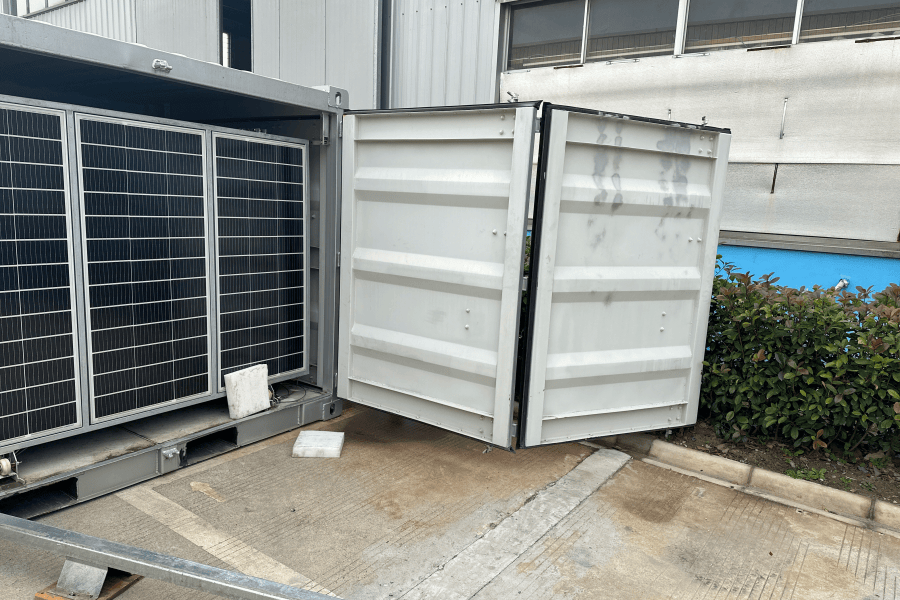
This is where the concept of a Scalable Modular Pre-integrated PV Container changes the game. Think of it not as a pile of parts, but as a power plant in a box - designed, wired, tested, and safety-certified in a controlled factory environment. For an eco-resort, the Environmental Impact benefits are immediate and profound.
At Highjoule, our approach is to ship a unit that's essentially "plug-and-play." The container itself is the foundation. Site work is drastically reduced: you need a level, compacted pad - no extensive concrete bases. I've supervised deployments where the site crew went from months of work to days. Fewer truck deliveries, less on-site activity, minimal disturbance. That's a direct win for the local environment you're trying to preserve.

But the real magic is in the modularity. You start with what you need for Phase 1 of your resort. When you expand, you don't rip and replace; you add another identical, pre-integrated module. This scalability means you're not overbuilding and tying up capital and resources in unused capacity. Your system grows with your guest capacity, keeping both your financial and carbon efficiency optimized from day one.
Beyond the Basics: Thermal Management & LCOE in the Real World
Okay, let's get a bit technical - but I promise it matters. Two specs you should care about are C-rate and Thermal Management.
C-rate basically tells you how fast a battery can charge or discharge. A 1C battery can be fully drained in one hour. For a resort, you don't usually need super-high C-rates; you need steady, reliable power over long periods (like all night). A moderate C-rate, paired with smart energy management, often gives you the best balance of performance, battery longevity, and cost. It directly impacts your Levelized Cost of Energy (LCOE) - the total lifetime cost per kWh. A longer-lasting, optimally used system has a lower LCOE.
Thermal Management is the unsung hero. I've opened field-assembled cabinets where hot spots were already forming because of poor airflow design. In a factory-integrated container, the cooling system - whether liquid or advanced air - is engineered as a unified system with the batteries and electronics. It runs more efficiently, uses less energy itself (parasitic load), and is the single biggest factor in ensuring your system hits its 20-year lifespan. A stable battery is a happy, long-lived battery. This engineering rigor is baked into standards like UL 9540 and IEC 62933, which our containers are designed to meet from the outset, not validated as an afterthought.
Case in Point: A Mountain Retreat's Journey
Let me share a project in the Canadian Rockies. A high-end fishing lodge wanted to go fully solar, replacing diesel generators. The challenge: a short 3-month summer construction window and extremely strict watershed protection rules.
The solution was two of our pre-integrated containers. They were assembled and tested at our facility. On site, the groundwork was minimal. The containers were craned into place over two days. Electrical connection was essentially to the main distribution point and the existing solar array. Because the units were pre-certified to North American standards (UL, IEEE 1547), the utility interconnection process was smoother.
The Environmental Impact difference was stark. No fuel spills risk from constant generator refueling. Dramatically reduced noise pollution for wildlife and guests. And the construction footprint was contained to a tiny fraction of the site. The owner's quote stuck with me: "We didn't build a power plant; we delivered one. And our guests can't tell it's there, which is the highest compliment."
Your Next Step: Asking the Right Questions
So, when you're evaluating the energy system for your next sustainable project, move beyond just "solar and storage capacity." Ask your potential suppliers:
- "What is the on-site construction footprint and timeline for your solution?"
- "How is thermal management engineered to ensure lifespan in my climate?"
- "Can you show me the LCOE modeling for a scalable vs. a one-time build?"
- "Are your modules pre-certified to UL/IEC standards as complete systems?"
The goal isn't just to be green on paper. It's to minimize impact at every stage - from the first delivery to the last kilowatt-hour decades from now. Honestly, that's the only standard that truly matters for an eco-resort. Is your current plan meeting it?
Tags: UL Standard BESS LCOE PV Container Modular Energy Storage IEC Standard Eco-Resort North America Europe Sustainable Energy
Author
James Zhang
20+ years agricultural energy storage engineer / Highjoule CTO