
Grid-Forming Pre-Integrated PV Containers for Construction Sites: Benefits & Drawbacks
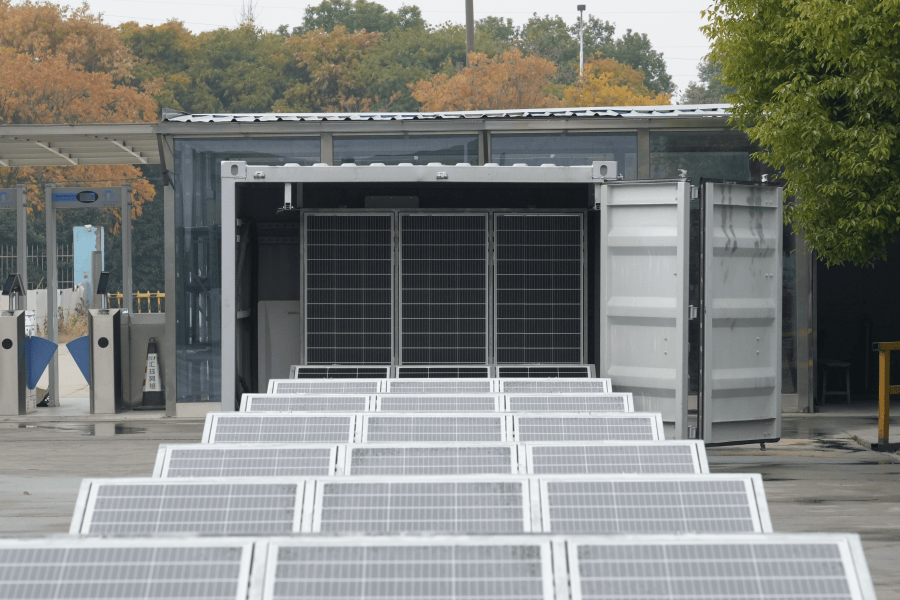
Table of Contents
- The Silent Power Problem on Your Construction Site
- Why Traditional Solutions Fall Short (And Cost More)
- The All-in-One Arrives: What is a Grid-Forming Pre-Integrated PV Container?
- The Benefits: Real Talk from the Field
- The Drawbacks: An Honest Look
- Making the Right Call for Your Project
The Silent Power Problem on Your Construction Site
Let's be honest. When you're managing a construction site, temporary power is often an afterthought - a necessary evil you deal with by renting loud, fume-spewing diesel generators. You know the drill: the fuel deliveries, the noise complaints from neighbors, the carbon footprint, and the sheer operational headache of keeping those machines running. But here's the real, often unspoken, problem I've seen firsthand on sites from California to North Rhine-Westphalia: you're not just paying for fuel, you're paying for uncertainty. Grid connection can be delayed, diesel prices are volatile, and your project's timeline (and budget) is held hostage by a simple lack of reliable, predictable power.
Why Traditional Solutions Fall Short (And Cost More)
So, the natural thought is, "Let's go green and add some solar panels and a battery." That's the right direction, but the traditional approach - sourcing PV panels, a separate battery system, inverters, and balance-of-system components, then having an integrator piece it all together on-site - is a project in itself. The aggravation is real: multiple vendors, complex permitting (especially under UL 9540 for energy storage in the US or IEC 62933 standards in Europe), lengthy commissioning, and a significant footprint on your already cramped site. According to the National Renewable Energy Laboratory (NREL), soft costs like engineering, permitting, and installation can account for a huge chunk of a distributed energy system's total cost. On a construction site, time is the ultimate cost. A week of delays for system integration can dwarf the equipment price.

The All-in-One Arrives: What is a Grid-Forming Pre-Integrated PV Container?
This is where the concept of the grid-forming pre-integrated PV container changes the game. Picture this: a shipping container arrives on your site. Inside, the battery racks, the grid-forming inverters, the thermal management system, and the safety controls are all factory-assembled, wired, and tested. The solar array is designed to plug directly into it. It's a power plant in a box. The "grid-forming" part is key - unlike traditional grid-following inverters that need a stable grid signal to operate, these can create their own stable voltage and frequency, essentially forming a mini-grid (or microgrid) for your site. This means they can start up a "black site" (one with no grid power) and power critical loads immediately, just like a diesel generator can, but silently and cleanly.
The Benefits: Real Talk from the Field
From my two decades of deploying BESS, the advantages of this approach for construction are compelling:
- Plug-and-Play Speed: This is the biggest win. Deployment shrinks from months to weeks or even days. The unit is pre-certified to relevant standards (UL 9540, IEC 62477), so site commissioning is vastly simplified. I've seen projects where power was up and running 48 hours after the container was set on its pad.
- Diesel Fuel and Cost Elimination: You're locking in your "fuel" cost at zero. The sun is your fuel. The International Renewable Energy Agency (IRENA) notes that solar PV costs have fallen by over 80% in the last decade, making this a financially sound decision. You also eliminate all the logistics and security risks of diesel storage.
- Zero-Emission & Community Relations: No fumes, minimal noise. This is huge for urban sites or projects with strict environmental mandates. It's a tangible ESG win that makes life easier for your crew and your neighbors.
- Inherently Safer Design: A quality pre-integrated unit, like the ones we engineer at Highjoule, has safety baked in at the factory. The thermal management system is designed for the specific battery chemistry (managing C-rate - a measure of charge/discharge speed - to prevent stress), and fire suppression is integrated. It's a controlled environment, which is always safer than a field-wired solution.
- Future-Proof Asset: When your construction project ends, the container doesn't. It can be relocated to the next site, used as backup power for the finished building, or even participate in grid services. This dramatically improves its Levelized Cost of Energy (LCOE) - the total lifetime cost per kWh - turning a cost center into a potential asset.
The Drawbacks: An Honest Look
No solution is perfect, and a good engineer tells you the whole story. Here are the challenges you need to plan for:
- Higher Upfront Capital Cost: The pre-integration, testing, and robust enclosure come at a premium compared to buying disparate components. You're paying for convenience, safety, and speed. The business case hinges on total cost of ownership, not just initial outlay.
- Site Suitability & Logistics: You need a clear, level pad strong enough to hold a heavy container. Access roads for a truck and crane are mandatory. For a tightly packed urban site, this can be a real puzzle.
- Energy Density vs. Diesel: While battery energy density is improving, diesel gensets still pack more potential energy into a smaller physical space for very long, high-power runs. If your site has a massive, continuous load (like a giant dewatering pump running 24/7), you need to size your solar+storage system very carefully, and sometimes a hybrid approach is still needed.
- Sunlight Dependency: It's a PV container. Cloudy days, short winter days, and site orientation affect output. The grid-forming battery can cover gaps, but for multi-day bad weather, you need to oversize the battery or have a backup plan. This is where our design team at Highjoule spends a lot of time - modeling site-specific weather data to right-size the system so you're never left in the dark.

Making the Right Call for Your Project
So, is a grid-forming PV container right for you? Honestly, it's not magic, but it's the closest thing to it for temporary power. The decision matrix is pretty clear. If your project has: 1) A stable, defined load profile (office trailers, tools, lighting), 2) A site with decent solar access and space for a container, and 3) A goal to reduce emissions, noise, and long-term energy costs, then it's a fantastic fit.
The key is partnering with a provider that understands the construction lifecycle. At Highjoule, our containers aren't just off-the-shelf units. We design with the end-user in mind: serviceable components are accessible, our monitoring software gives your team simple visibility into power flows, and our local service network understands that a site down is money lost. We've done this for a highway infrastructure project in Texas and a commercial development in Germany, navigating the local codes and utility requirements to make the switch seamless.
The industry is moving this way. The question isn't really if you'll move away from diesel, but when and how. Have you calculated the true total cost - including carbon, community impact, and risk - of your current temporary power setup?
Tags: Construction Site Power UL Standard BESS LCOE Microgrid Grid-Forming Inverter
Author
James Zhang
20+ years agricultural energy storage engineer / Highjoule CTO