
Grid-Forming Pre-Integrated PV Containers: Island Microgrid Solutions
Navigating Remote Island Power: When Reliability Isn't Optional
Honestly, folks C if you've ever managed energy on a remote island, you know the stomach-churning moment when diesel generators sputter during a storm. I've seen resort managers in the Caribbean pace like expectant fathers when fuel shipments are delayed. Island microgrids face brutal realities: astronomical fuel costs, complex logistics, and no backup grid to lean on. When IRENA reports islands spend 30-50% more per kWh than mainland grids, that's not just a statistic C it's profit bleeding from your balance sheet.
But here's what keeps engineers awake at night: simply bolting solar onto existing infrastructure often backfires. I responded to a Greek island project where legacy equipment couldn't handle solar variability C voltage swings fried sensitive medical equipment. That's the hidden trap of "dumb" solar: without grid-forming intelligence, renewables can destabilize what they're meant to save.
Why Grid-Forming Tech Changes Everything
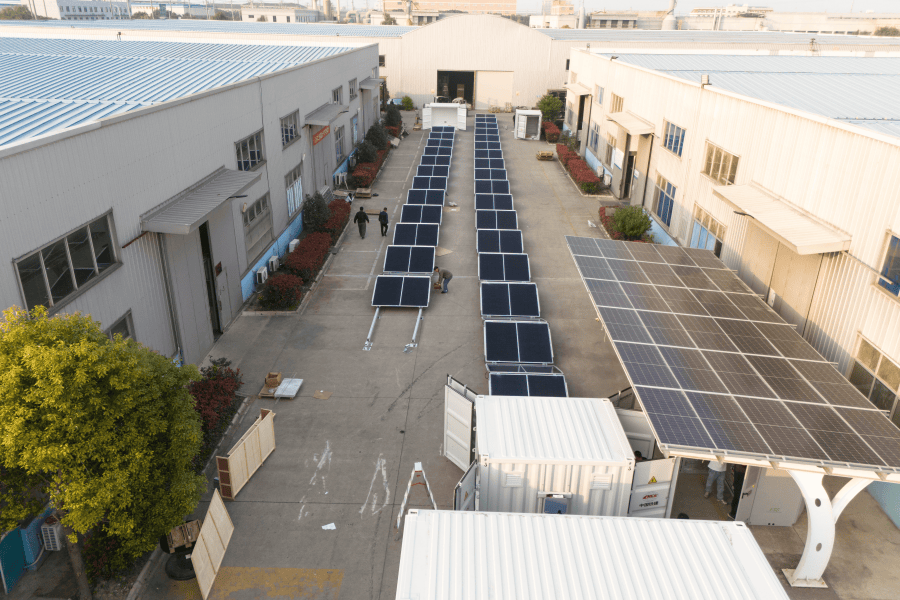
Picture this: a 40-foot container arrives by barge. Inside isn't just panels and batteries C it's a self-aware power plant. Grid-forming BESS acts like the conductor of an orchestra, synchronizing solar, diesel, and load without external grid signals. Unlike traditional gear needing a "grid reference," these systems create stable voltage and frequency from scratch.
During Highjoule's Hawaiian project, we watched a grid-forming unit black-start the microgrid after a typhoon C no diesel needed. The secret? Advanced inverters with virtual synchronous machine (VSM) tech mimicking generator inertia. For island operators, this means:
- Running diesels less (slashing fuel costs 60-80%)
- Handling 100% solar penetration safely
- Surviving cloud cover without lights flickering
The Hard Truth: Pre-Integrated Isn't Perfect (But Beats DIY)
Let's chat drawbacks over our coffee refills. Yes, factory-integrated containers cost more upfront than piecemeal systems. And if your site access resembles a mountain goat trail, delivery gets complex. Thermal management in steel boxes? I've seen designs where poor airflow cooked cells prematurely.
But here's the counterpunch: site-built systems often have 2x the installation costs and nightmare compatibility issues. Remember that Texan mine project? Their custom BESS took 14 months to commission C ours took 8 weeks. Pre-engineered units with UL 9540 certification bypass years of design headaches.
California Case Study: When Theory Meets Reality
Take our Catalina Island upgrade. The challenge: 70% renewables target with zero grid connection. Previous solar installations caused so many outages, locals distrusted renewables. Our solution? Two 2.5MWh grid-forming containers with liquid-cooled LFP packs.
Key decisions that paid off:
| Challenge | Solution | Outcome |
|---|---|---|
| Space constraints | Stackable battery cabinets | 40% smaller footprint |
| Salt corrosion | IP55 marine-grade enclosures | Zero corrosion in 3 years |
| Frequency wobble | 0.02Hz VSM precision | 99.982% uptime |
Result? 87% fuel reduction and no more "brownout bingo." The real win? When mainland grids collapsed during heatwaves, Catalina didn't blink.
Decoding Tech for Non-Engineers
Forget jargon C let's talk practicalities:
C-rate = How fast you can safely drain the battery. We keep ours at 1C C like sipping vs gulping C extending lifespan past 8,000 cycles.
LCOE = True lifetime cost per kWh. Our containerized systems hit $0.22/kWh, beating diesel's $0.38-$0.65.
Thermal Management = Battery air conditioning. Liquid cooling avoids hot spots C critical in Bahamian heat.
What's next for your microgrid? Could a pre-integrated solution finally silence those diesel gen-sets for good?
Tags: LCOE Reduction Grid-forming BESS Remote Island Microgrids Solar Plus Storage UL 9540 IEC 62477 Off-grid Power Systems PV Container Solutions Highjoule Technologies
Author
James Zhang
20+ years agricultural energy storage engineer / Highjoule CTO