
IP54 Outdoor ESS Container for Remote Island Microgrids: Pros, Cons & Real-World Insights
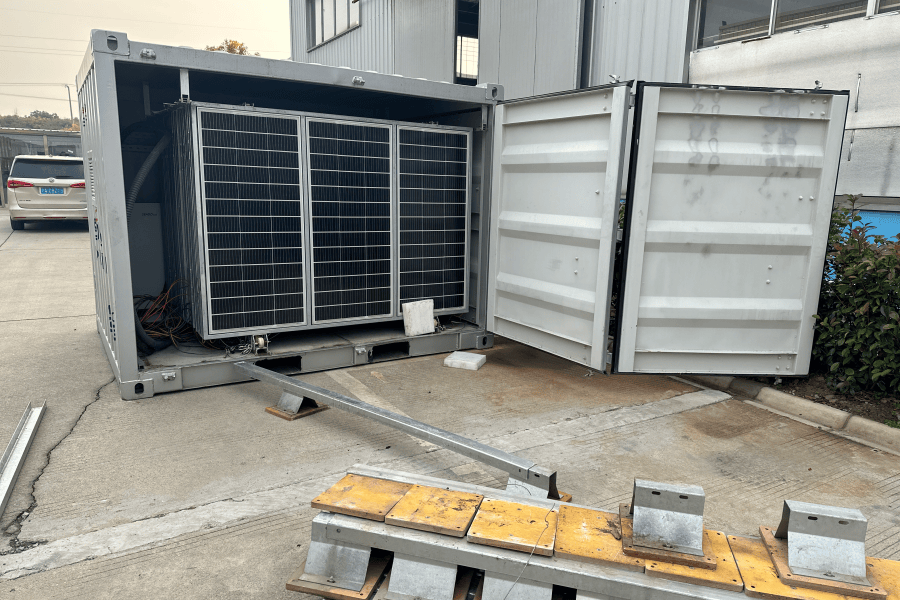
The Nuts and Bolts of Outdoor BESS Containers for Islands: An Engineer's Take
Let's be honest, when you're planning an energy storage system for a remote island or off-grid community, the conversation quickly moves from spreadsheets to survival. I've been on those sites C salt spray in the air, limited space, and a crew that needs a system they can trust without a data center down the hall. Over the years, the pre-fabricated, outdoor-rated industrial ESS container has become the go-to workhorse. But is it always the right fit? Today, I want to walk you through the real, on-the-ground benefits and the often-underestimated drawbacks of the IP54-rated outdoor container, especially for tough environments like island microgrids. This isn't just theory; it's what I've seen firsthand when the commissioning tools come out.
Quick Navigation
- The Island Power Dilemma: More Than Just Keeping the Lights On
- Enter the Outdoor Container: A Sealed Fortress for Energy
- The Compelling Benefits of an IP54 Outdoor ESS Container
- The Flip Side: Honest Drawbacks & Site Realities
- Case in Point: A German North Sea Island Project
- Making the Call: Is an Outdoor Container Right for Your Project?
The Island Power Dilemma: More Than Just Keeping the Lights On
Forget the mainland grid. Island and remote microgrids face a unique trifecta of challenges: punishing environmental conditions, astronomical fuel costs, and razor-thin margins for error. According to the International Energy Agency (IEA), islands often pay 3 to 10 times more for electricity than continental grids, primarily due to diesel generation. The push for renewables is urgent, but solar and wind are intermittent. You need storage C a lot of it C to shift that energy and provide grid stability.
The real headache? Where do you put it. Building a dedicated storage facility is often a non-starter due to cost, permitting, and space. The system has to live outside, fully exposed to marine-grade corrosion, hurricane-force winds, blowing sand, and relentless humidity. An indoor facility with perfect HVAC is a fantasy. The solution must be tough, self-contained, and arrive ready to work.
Enter the Outdoor Container: A Sealed Fortress for Energy
This is where the industrial outdoor ESS container shines. Think of it as a battleship-grade metal box, purpose-built to house racks of battery modules, power conversion systems (PCS), and climate control. The "IP54" rating isn't just a marketing term. It's an IEC standard that means the enclosure is protected against dust ingress (not totally dust-tight, but enough to not interfere with operation) and, crucially, water sprayed from any direction. It's a baseline for outdoor survivability.
Honestly, in the US and EU, you're not getting past the local authority having jurisdiction (AHJ) without this kind of certified protection. It's the foundation.
The Compelling Benefits of an IP54 Outdoor ESS Container
So, why does this model dominate remote deployments? The benefits are tangible from day one.
- Plug-and-Play Deployment: The biggest win. The system is factory-integrated and tested. I've seen sites where the container is delivered, placed on a simple concrete pad, connected to the medium-voltage transformer and data lines, and is generating dispatch schedules in under a week. This slashes on-site labor costs and commissioning time dramatically.
- Built-in Environmental Hardening: The container is the first line of defense. The structure handles wind and seismic loads. The IP54 seal keeps out the bulk of moisture and particulate. At Highjoule, for instance, we go a step further with standard corrosion-resistant coatings on all external fittings, something we learned was non-negotiable after our early projects in Caribbean coastal sites.
- Integrated Thermal Management: This is the silent hero. Lithium-ion batteries are fussy about temperature. A self-contained N+1 redundant HVAC system within the container maintains the optimal 20-25C operating range, regardless of whether it's -10C or 40C outside. This precise control is critical for cycle life and safety C something you can't reliably achieve with a makeshift shelter.
- Regulatory Compliance by Design: For the North American market, the entire container system can be designed and tested to UL 9540 (ESS Standard) and UL 9540A (fire test). In Europe, IEC 62933 series applies. Having a single, certified unit simplifies permitting immensely. The AHJ inspector sees one approved asset, not a hundred individual components they have to vet.
- Space and Security Efficiency: It's a compact footprint with a lockable door. For a crowded island utility yard or an industrial site, that's a major advantage.

The Flip Side: Honest Drawbacks & Site Realities
Now, let's have the coffee-chat reality check. No solution is perfect, and glossing over the drawbacks leads to costly change orders.
- Upfront Capital Cost: Yes, the all-in-one unit commands a premium over a bare-bones, component-level purchase. You're paying for the integration, testing, and the robust enclosure. The business case has to be made on Levelized Cost of Storage (LCOS) C factoring in longer lifespan from better thermal management and lower O&M C not just the initial sticker price.
- Thermal Management Energy Drain: That internal HVAC system? It's power-hungry. In a hot climate, it can consume 3-7% of the system's total energy throughput. This directly hits your round-trip efficiency. It's a necessary trade-off, but one you must model accurately in your energy yield forecasts.
- Limited On-Site Flexibility & Scalability: What you buy is what you get. Need to expand capacity by 20% next year? You're likely looking at a whole new container, not just adding a few more battery racks. The internal layout is fixed. Careful capacity planning is essential.
- Access and Serviceability Challenges: This is a big one from a maintenance perspective. Working inside a densely packed, operating container on a hot day is... challenging. Service space is tight. At Highjoule, our design philosophy mandates maintenance aisles and easy-access service disconnects for every major component, because I've spent too many hours contorting myself in poorly designed units.
- Single Point of Failure (The HVAC): If the container's cooling fails, the entire system may need to shut down within hours to prevent dangerous overheating. That's why redundancy (N+1 fans, compressors) and remote monitoring are not optional features; they're core to reliability.
Case in Point: A German North Sea Island Project
Let me ground this with a recent project. We deployed a 2.5 MWh Highjoule GridMax container for a community microgrid on a small North Sea island. The goal: integrate more local wind power and reduce diesel runtime.
The Challenge: Extreme salt fog, constant 60+ km/h winds, and strict German BImSchG (emissions control) regulations requiring nearly silent operation. A standard container wouldn't cut it.
The Execution: We used an IP54 container as the base but specified an enhanced marine-grade coating. The bigger tweak was the thermal system. We installed a liquid-cooled battery system paired with a low-noise, corrosion-resistant dry cooler on the container roof, rather than standard noisy condenser units. This met the noise limits and was more resilient to salt than finned coils.
The Takeaway: The container was the right platform, but it had to be adapted. The "drawbacks" of standard HVAC were averted by choosing a different cooling topology at the design phase. The benefit of rapid deployment was fully realized C we were online before the high-wind season.
Making the Call: Is an Outdoor Container Right for Your Project?
So, how do you decide? Ask these questions:
- Is your site truly space-constrained with no existing building? If yes, container leans favorable.
- Is your climate extreme (hot, cold, corrosive)? If yes, the integrated, protected thermal management of a container is likely worth its energy penalty.
- Is speed of deployment critical to your ROI or grant funding timeline? The container is your fastest path to operation.
- Is your future capacity need predictable, or will it grow in small, uncertain increments? Predictable growth favors containers; uncertain, modular growth might point to a different approach.
The IP54 outdoor container isn't a one-size-fits-all, but for the specific, tough use case of remote island microgrids, its benefits in speed, protection, and compliance often decisively outweigh its drawbacks. The key is going in with eyes wide open, designing for the specific environment, and never, ever treating that thermal system as an afterthought.
What's the single biggest environmental challenge your next remote project is facing? Is it salt, sand, heat, or something else entirely? Getting that detail right changes everything.
Tags: UL Standard BESS Energy Storage IP54 Island Microgrid IEEE Remote Power Outdoor ESS Container
Author
James Zhang
20+ years agricultural energy storage engineer / Highjoule CTO