
LFP (LiFePO4) 1MWh Solar Storage for Construction Sites: Real-World Benefits & Drawbacks
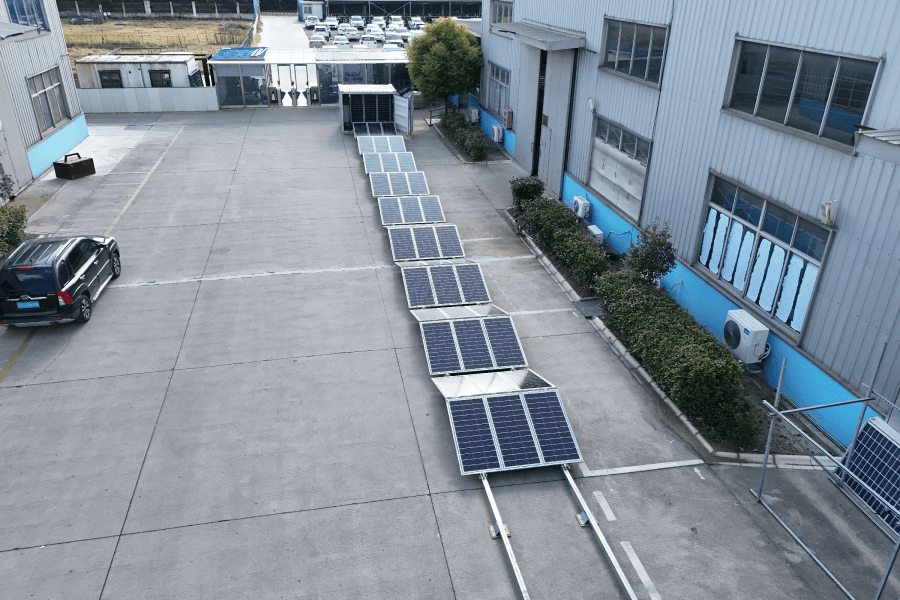
Table of Contents
- The Diesel Hangover on Your Job Site
- Why 1MWh LFP Enters the Chat
- The Good Stuff: Benefits in Boots
- The Real Talk: Drawbacks We Can't Ignore
- A Tale from the Field: A California Case
- Making the Call: Is It Right for You?
The Diesel Hangover on Your Job Site
Let's be honest. If you're managing a mid-to-large scale construction project in the US or Europe right now, your relationship with diesel generators is... complicated. You rely on them, but boy, do they make you pay. I've been on sites from Texas to Bavaria, and the story is eerily similar: the relentless hum, the fuel truck schedules, the noise complaints from neighbors, and that ever-present smell. But beyond the nuisance, the real pain points are hitting the bottom line harder than ever. Fuel price volatility is a killer for project budgeting. And honestly, with more and more cities enacting strict emissions and noise ordinances - look at California's CARB rules or many EU Green Deal directives - running a 24/7 diesel fleet is becoming a regulatory tightrope walk.
The problem isn't just cost or compliance, it's predictability. A delayed fuel delivery can halt critical path work. That's lost time and money you never get back. We're seeing a clear shift where project developers and general contractors are actively seeking not just an alternative, but a strategic upgrade to site power. That's where the conversation around solar-coupled battery storage, specifically in the 1MWh range using Lithium Iron Phosphate (LFP) chemistry, is getting very real, very fast.
Why 1MWh LFP Enters the Chat
So why 1MWh, and why LFP? It's a bit of a Goldilocks zone for construction. A 1MWh system is substantial enough to power a significant portion of a site's base load - think site offices, lighting, tool charging, and some equipment - either by itself or paired with a smaller, optimized generator in a hybrid setup. It's not a tiny residential unit, and it's not a utility-scale behemoth. It's a containerized or skid-mounted asset that can be delivered, commissioned, and later relocated with a degree of practicality we engineers appreciate.
And LFP? Over my 20+ years, I've seen battery chemistries come and go. For the tough, unpredictable, and safety-critical environment of a construction site, LFP has emerged as the workhorse. Its inherent stability is a game-changer. Unlike some other lithium-ion chemistries, LFP batteries are far more resistant to thermal runaway. That's not just a datasheet claim; I've seen the difference in third-party test reports against standards like UL 9540A. This intrinsic safety directly translates to lower insurance premiums and, more importantly, peace of mind when that battery is sitting next to your multi-million dollar project.

The Good Stuff: Benefits in Boots
Let's break down the benefits, not as bullet points on a brochure, but as I've witnessed them on the ground.
- Silence is Golden (and Productive): Swapping generator din for near-silent operation isn't just about neighborly love. It improves on-site communication and reduces worker fatigue. You can also work extended hours in noise-sensitive areas without violating permits.
- Predictable Power, Predictable Budgets: Once your solar + storage system is in, a huge chunk of your energy cost becomes fixed. You're hedging against diesel price spikes. The National Renewable Energy Lab (NREL) has shown how pairing solar with storage can significantly reduce the Levelized Cost of Energy (LCOE) for off-grid and microgrid applications. For a 12-24 month project, this budget certainty is a financial controller's dream.
- Zero Emissions on Site: This is your ticket to meeting ambitious sustainability goals (like achieving LEED points) and complying with local "clean construction" mandates. It's a powerful marketing point for the finished asset, too.
- Hybrid Flexibility: The smart play isn't always "battery only." A 1MWh LFP system can be integrated with a single, efficient diesel gen-set. The battery handles the highly variable loads and base power, while the generator runs at its optimal, fuel-efficient point to recharge the battery when solar isn't enough. This cuts fuel use by 40-70% in my experience, and drastically reduces generator runtime and maintenance.
At Highjoule, when we design these systems, we obsess over the thermal management and the C-rate (charge/discharge rate). For construction, you need a battery that can handle uneven, high-power draws (like a big crane lift) without stressing the cells. A robust, liquid-cooled LFP system manages this heat efficiently, ensuring longevity and performance even on a dusty, hot Texas site or a cold German winter morning.
The Real Talk: Drawbacks We Can't Ignore
Now, let's have the full, transparent chat over coffee. LFP 1MWh storage isn't a magic wand. Here are the hurdles you must plan for.
- Higher Upfront Capital Cost (CapEx): This is the big one. You're paying for the diesel generator's fuel for the next two years today. The ROI comes from slashing those operational fuel costs. You need a project timeline and local energy costs where the math works. Financing models like Equipment-as-a-Service are emerging to help with this.
- Energy Density & Footprint: LFP is safer, but it's slightly less energy-dense than some NMC batteries. A 1MWh LFP system might need a bit more space. On a tight urban site, every square meter counts. Proper site logistics planning for the container placement and solar array is critical from day one.
- The Sun is a Partner, Not a Slave: If your site has heavy, consistent power needs 24/7 and poor solar insolation (e.g., deep winter in Northern Europe), a 1MWh battery alone might not cut it. It's a solar storage system. The solar component is vital for recharging and realizing the economic benefit. Hybridization with a generator is often the answer here.
- Deployment & Expertise: This isn't plug-and-play. You need a vendor that understands construction sequencing, temporary power permits, and can provide local commissioning and support. The system must be designed for the specific load profile of your site phases - excavation has different needs than fit-out.
A Tale from the Field: A California Case
Let me give you a real example. We worked on a multi-phase residential development in Southern California. The GC was facing diesel costs soaring past budget and pushback from new homeowners in earlier phases about noise and fumes. Their challenge was to power the final two phases cleanly and quietly.
The solution was a 1MWh Highjoule LFP battery system, paired with a 300kW solar canopy over the future parking lot. We integrated it with one of their existing 500kW generators. The system was programmed to use solar and battery first, only kicking on the generator to top up the battery during prolonged cloudy periods or extreme load events. The outcome? They cut diesel consumption by over 65% across 18 months, eliminated noise complaints, and used the "clean construction" angle as a sales tool. The system was UL 9540 certified, which streamlined the local permitting process with the fire department - a non-negotiable step many overlook.

Making the Call: Is It Right for You?
So, is a 1MWh LFP solar storage system the right move for your next site? Honestly, ask yourself these questions: Is your project long enough (typically 12+ months) to realize the fuel savings? Are you facing high fuel costs, strict emissions rules, or noise constraints? Do you have space for some solar panels (even temporary ones)?
The trend is clear. What was once a niche technology is becoming a standard tool for savvy, forward-thinking contractors. The drawbacks are primarily financial and logistical - challenges that can be engineered around with the right partner. The benefits - cost predictability, silent zero-emission power, and regulatory compliance - are strategic advantages in an increasingly competitive industry.
The key is to engage early. Don't think of it as a "power system," think of it as a strategic site asset that affects your budget, schedule, and community relations. What's the one pain point on your current site that a silent, fume-free power source would solve tomorrow?
Tags: Construction Site Power UL Standard BESS Energy Storage LFP Battery Solar Storage Project Finance
Author
James Zhang
20+ years agricultural energy storage engineer / Highjoule CTO