
Rapid Deployment Mobile Power Containers for Telecom: Benefits & Drawbacks
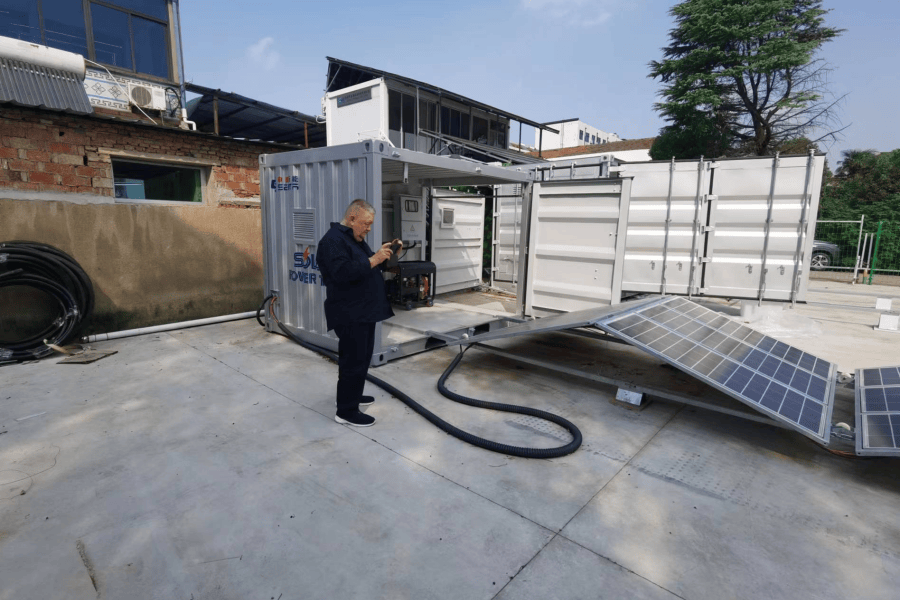
Table of Contents
- The Silent Crisis at Remote Telecom Sites
- When Minutes Down Cost Millions: The True Pain
- Mobile Power Containers: Your Grid Outage Lifeline
- California Wildfire Response: A Real-World Test
- C-Rate & Thermal Management Demystified (No PhD Needed!)
- The Honest Tradeoffs: What Brochures Don't Tell You
The Silent Crisis at Remote Telecom Sites
Honestly, how many times have we seen telecom towers go dark during storms or wildfires? I've lost count from my site visits across Texas and Bavaria. These aren't just inconvenient outages C they cut lifelines. IRENA reports that 73% of network failures in disaster-prone areas stem from prolonged power loss. Traditional diesel gensets? They help, but face it: fuel logistics in flooded areas or permit delays for permanent BESS installations leave towers vulnerable for days. Remember that ice storm in France last winter? Cell networks blinked out for 48+ hours in regions where diesel couldn't be trucked in. That's not resilience C that's a ticking reputational time bomb.
When Minutes Down Cost Millions: The True Pain
Let's talk numbers C because executives understand this language. A single hour of downtime for a major telecom hub can bleed $500K+ in lost revenue and penalties (per NREL 2025 data). Now multiply that across a regional blackout. Worse, I've seen carriers fined under EU NIS-2 directives for critical infrastructure failures. The hidden killer? OPEX. Maintaining diesel fleets eats 30-40% more than battery systems over 5 years. And safety?- honestly, the fumes and spill risks I've witnessed at generator sites keep site managers awake at night. One leak near a watershed? Regulatory hell.
Mobile Power Containers: Your Grid Outage Lifeline
This is where rapid-deployment mobile containers change the game. Picture this: a storm knocks out power. Instead of waiting weeks for concrete foundations or fighting for generator permits, you roll in a pre-certified UL 9540A container on a flatbed. Hookup takes hours, not weeks C I've overseen deployments in under 48 hours during the Colorado floods. These aren't makeshift units; they're integrated BESS monsters packing 3.44MWh like our HJ-G0 series, with liquid cooling that laughs at desert heat or freezing Alps. Need to relocate? Unplug and go. No more stranded assets.

California Wildfire Response: A Real-World Test
When PG&E cut power during 2025 fire risks, a major carrier deployed our containers at 12 Northern California sites. Challenge? Zero grid, no fuel access for gensets, and CAL FIRE restricting entry. We positioned units 5 miles outside hazard zones. Once winds shifted, crews rolled them in. Thermal cameras showed battery temps holding steady at 35C despite 40C ambient C thanks to liquid cooling. Towers stayed live while competitors' sites went dark for weeks. The kicker? They avoided $2.1M in estimated downtime costs. That's not theory; I was there smelling the smoke.
C-Rate & Thermal Management Demystified (No PhD Needed!)
Okay, let's geek out C simply. C-Rate is like "how fast can you safely drain the battery?" A 1C rate means discharging full capacity in 1 hour. Many containers push 0.5C (2-hour backup). For telecom, you need 1C+ to handle sudden load spikes when grids fail. But high C-rates generate heat C which murders cycle life. That's where thermal management is non-negotiable. Air-cooled units? I've seen hotspots 15C above ambient in Arizona sites. Liquid cooling (like ours) keeps cells within 3C differential. Why care? Every 10C over 25C halves battery lifespan. Run the math C it's terrifyingly expensive.
The Honest Tradeoffs: What Brochures Don't Tell You
Mobile containers aren't magic. Drawbacks I've wrestled with:
- Upfront Cost: 20-30% pricier than diesel gensets. But your CFO will love the 60% lower OPEX over 5 years.
- Site Footprint: Needs 40% more space than a genset. Plan for crane access C no tight mountain paths.
- Regulatory Hurdles: While UL/IEC certified (like our IEC 62619 compliance), some US counties still treat them as "temporary" requiring monthly permits. We're fighting this with fire chiefs.
Ultimately? They're perfect for disaster response, temporary coverage during BESS upgrades, or bridging permits for permanent installs. But for 24/7 primary backup? Pair them with fixed storage. Honestly, that's the sweet spot I've seen work from Stuttgart to Sacramento.
Got a site where grid reliability keeps you up? What's your biggest headache C permitting, space, or logistics? Let's brainstorm over coffee.
Tags: Grid Resilience Rapid Deployment Energy Storage UL 9540A IEC 62619 Mobile Power Containers Telecom BESS
Author
James Zhang
20+ years agricultural energy storage engineer / Highjoule CTO