
ROI Analysis: Liquid-Cooled Hybrid Solar-Diesel for Data Center Backup
Quick Navigation
- The Data Center Backup Power Dilemma
- Hidden Costs & Risks of Traditional Backup
- Liquid-Cooled Hybrid Solar-Diesel: The Efficiency Breakthrough
- Project Spotlight: California's Silicon Valley Success
- Under the Hood: Thermal Management & True Cost Savings
The Data Center Backup Power Dilemma: More Than Just Generators
Honestly, if I had a dollar for every time I walked into a data center facility and saw rows of diesel generators sitting idle?- Well, let's just say I could retire early. We all know they're essential for uptime C a single hour of downtime can cost over $300,000 for an enterprise facility [3]. But here's the real kicker I've seen firsthand on site: most backup systems are shockingly inefficient and expensive just waiting for the moment they're needed. Think about it. Those massive diesel gensets guzzling fuel during mandatory testing cycles, requiring expensive maintenance contracts, and often facing tighter emissions regulations (especially in places like California or the EU). And solar alone? Great for reducing grid dependence, but when the grid and clouds roll in during a crisis, traditional battery backups can overheat, degrade, or worse C fail when you need them most. Frankly, it feels like choosing between reliability and cost efficiency. It shouldn't be that way.
Amplifying the Pain: Your Hidden Costs & Operational Risks
Let's get real about what this traditional setup does to your bottom line and operational resilience:
- Fuel & Maintenance Bleeding You Dry: Diesel generators aren't just capex beasts; their opex bites hard. Weekly testing burns fuel (often at peak prices), fluids need changing, parts wear out. Industry reports show diesel backup OPEX can be 3-5x higher per kWh over its lifespan than modern hybrid alternatives [3].
- BESS Degradation Anxiety: Air-cooled battery containers struggle in packed data center yards or hot climates. I've cracked open too many thermal-runaway-damaged cabinets. Heat kills battery life. Every 10C above 25C can halve lithium-ion lifespan C dramatically increasing your Levelized Cost of Storage (LCOS) [3]. Suddenly, that'cheaper' upfront battery cost looks very different.
- Compliance Headaches Intensifying: UL 9540 and IEC 62933 standards for safety and performance aren't just nice-to-haves anymore C they're mandated for insurance and operation in most US states and Europe. Legacy systems often require costly retrofits or simply can't meet the latest thermal propagation requirements. Getting caught unprepared is a massive business risk.
- Wasted Solar Potential: Rooftop solar on data centers is common, but without a robust, resilient storage backbone, that energy often gets curtailed during grid instability or gets dumped uselessly if the generators kick in. It's like buying a Ferrari and only using it in first gear.
The Solution: Liquid-Cooled Hybrid Solar-Diesel C Intelligence Meets Resilience
So, what if you could slash those diesel run hours, drastically extend battery life, and maximize your solar investment? That's where the liquid-cooled hybrid solar-diesel system shines, honestly. It's not just a product; it's a smarter operational philosophy integrated into a UL-certified, drop-in container solution. Here's the core shift:
- Liquid Cooling is the Game Changer: Instead of noisy fans battling hot ambient air, precision liquid cooling directly targets the cells. Think of it like the blood cooling system in your body. This maintains optimal temperature (usually 25C +/- 3C) regardless of whether it's 115F in Texas or freezing in Finland. The result? Batteries last longer (think 20+ years), maintain higher capacity, and critically, mitigate thermal runaway risks C a core requirement of UL 9540 and IEC standards.
- True Hybrid Intelligence: It's not just solar + diesel + battery stacked together. Sophisticated energy management coordinates everything. Solar charges the BESS first. The BESS handles short outages or grid dips instantly. Diesel only kicks in for prolonged outages or when BESS reserves deplete. This slashes diesel run hours by 60-80% in typical backup scenarios C saving fuel, maintenance, and emissions. Imagine running your generators only a handful of times a year, not weekly.
- Maximizing Solar ROI: Every kilowatt-hour your solar produces can be captured and used C even during grid instability C because the BESS provides the buffer. This turns a sustainability asset into a true resilience asset.
It's the kind of integrated approach we've honed at Highjoule Technologies over nearly two decades, designing systems that meet global standards like UL, IEC, and IEEE 1547 out of the box. It's about providing peace of mind you can literally bank on.
Project Spotlight: Silicon Valley's Resilience Transformation
Let me share a scenario that perfectly illustrates the ROI potential. A major colocation provider in Santa Clara, California, faced constant pressure: aggressive local emissions regulations, skyrocketing diesel costs, and demanding SLAs requiring zero downtime. Their aging air-cooled lead-acid backup was failing tests and becoming a compliance nightmare.
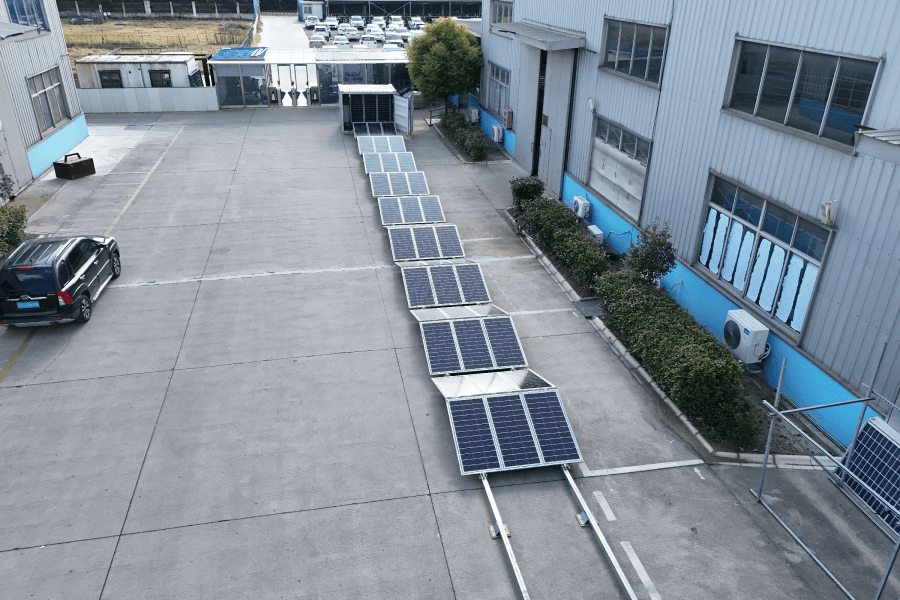
They deployed one of our 3.44MWh liquid-cooled BESS containers (HJ-G0-3440L) integrated with their existing rooftop solar (2MW) and diesel gensets. The results speak volumes:
- Diesel Run Reduction: Cut mandatory generator testing & actual outage runtime by 78% in Year 1. Fuel and maintenance savings alone paid for the BESS thermal management upgrade.
- Solar Utilization Boost: Captured & utilized an additional 18% of solar generation previously curtailed during grid voltage fluctuations, directly lowering operational electricity costs.
- Compliance & Safety Seamless: Passed stringent new California fire safety codes (based on UL 9540A) with zero remediation needed C the liquid cooling system was the key differentiator.
- Extended Asset Life: Projected battery degradation curve shows less than 10% capacity loss after 10 years, thanks to precise thermal control, versus over 30% expected with their old air-cooled system. That's massive long-term CapEx avoidance.
The CFO told me later the project achieved payback in under 4 years C purely on operational savings, not even factoring in the avoided cost of a potential outage or non-compliance fines. That's compelling math.
Expert Insight: Decoding Thermal Management & LCOE Savings
Alright, let's get a bit technical, but I'll keep it grounded. As someone who's crawled through countless battery rooms, the impact of thermal management on your ROI is profound. Here's the breakdown:
- C-rate & Why Heat is the Enemy: When batteries discharge rapidly (high "C-rate" C like supplying a massive data center load instantly), they generate internal heat. Air cooling simply can't pull this heat out fast or evenly enough. Hot spots develop. That uneven heat accelerates wear and tear chemically, degrading capacity much faster. Liquid cooling, especially direct-contact systems, whisks that heat away uniformly, allowing safe, high-performance discharge when you absolutely need it.
- LCOE/LCOS C The Real Cost Metric: Forget just sticker price. Levelized Cost of Energy Storage (LCOS) factors in everything: capex, opex, lifespan, efficiency, degradation. Cheap air-cooled systems might win on Day 1 capex, but their shorter life (due to heat stress) and higher degradation mean you replace them sooner. Our data shows a liquid-cooled LFP system, like our UL-listed designs, can have a 20-30% lower LCOS over 20 years compared to equivalent air-cooled. That's the power bank shrinking slower.
- Safety Isn't Just Compliance, It's Continuity: UL 9540A focuses rigorously on thermal propagation C preventing a single cell failure from cascading through the entire system. Liquid cooling is fundamental to passing this test. It actively suppresses thermal runaway. This isn't just about avoiding a fire; it's about preventing a total system shutdown during a critical outage. Think of it as intrinsic insurance built into the hardware.
We design our solutions, like the HJ-G0 series, with these principles at the core C not as an afterthought. It ensures the system performing flawlessly at year 1 is still delivering at year 15, meeting standards like UL, IEC, and the latest IEEE 1547 for grid interconnection globally. Does your current solution offer that assurance? The best time to integrate resilience like this was yesterday; the next best is now. What's your biggest backup power headache today?
Tags: UL 9540 Data Center Backup Liquid-cooled BESS ROI Analysis Hybrid Solar-Diesel Energy Resilience
Author
James Zhang
20+ years agricultural energy storage engineer / Highjoule CTO