
Benefits and Drawbacks of Scalable Modular 1MWh Solar Storage for Construction Sites
Contents
- The Problem: Why Construction Sites Are an Energy Nightmare
- The Agitation: The Real Cost of Getting Power Wrong
- The Solution: Enter the Scalable, Modular 1MWh Power Block
- The Benefits: More Than Just Off-Grid Power
- The Honest Drawbacks (And How to Mitigate Them)
- The Case Study: A 12-Month Project in California's Central Valley
- The Expert Insight: Thinking Beyond the Spec Sheet
The Problem: Why Construction Sites Are an Energy Nightmare
Let's be honest. For most project managers, securing reliable power on a new construction site ranks somewhere between "logistical headache" and "absolute nightmare." You're dealing with temporary needs, massive and variable loads (from cranes to welding stations), and often, a grid connection that's either non-existent, prohibitively expensive, or painfully slow to secure. I've been on sites where crews were literally waiting for the utility transformer to show up, burning budget every single day. The traditional answer? Diesel generators. They're loud, they're dirty, they need constant refueling, and honestly, in 2024, they feel like a relic. They solve the power problem but create a host of others C emissions, noise complaints, volatile fuel costs, and let's not forget the carbon footprint that more and more clients and regulations are demanding you reduce.
The Agitation: The Real Cost of Getting Power Wrong
This isn't just an inconvenience. The financial and operational ripple effects are massive. According to the National Renewable Energy Laboratory (NREL), construction site energy costs can eat up 3-8% of total project soft costs, and delays from power issues are a primary culprit. Think about it: idle labor, missed milestones, liquidated damages. On a large commercial project, a single day's delay can cost tens of thousands. Then there's the sustainability angle. Major corporations and public entities now mandate clean energy use in their RFPs. Showing up with a fleet of diesels can disqualify you from the bid before you even start. The old way isn't just inefficient; it's becoming commercially non-viable.
The Solution: Enter the Scalable, Modular 1MWh Power Block
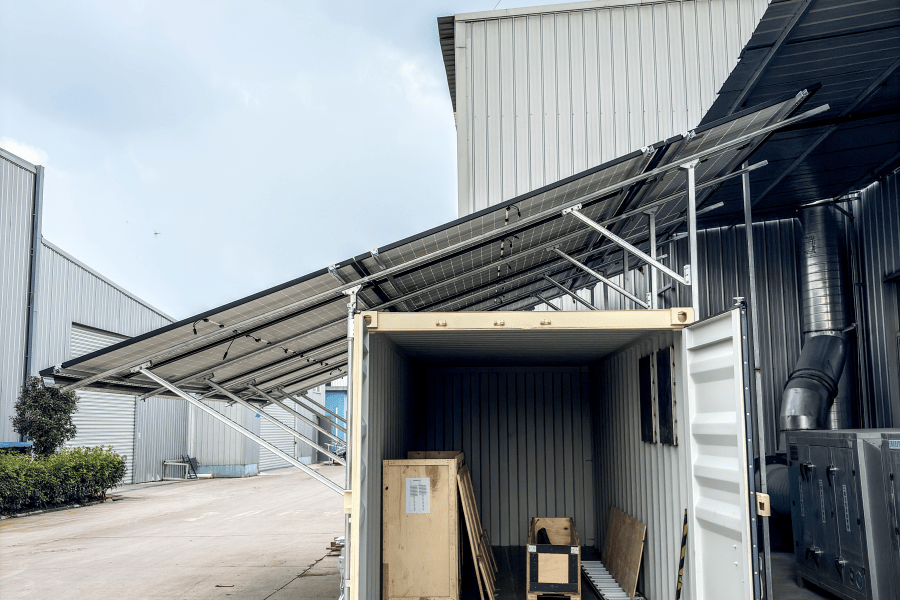
This is where the concept of a scalable, modular 1-megawatt-hour (MWh) battery energy storage system (BESS), paired with solar, becomes so compelling. It's not a silver bullet, but it's a fundamentally smarter toolkit. Imagine a system built from standardized, containerized or skid-mounted "power blocks." Each block delivers around 1MWh of energy. Need more power? Add another block, just like stacking LEGO bricks. This modularity is a game-changer for construction, which is, by nature, a phased and evolving beast.

The Benefits: More Than Just Off-Grid Power
The advantages go way beyond simply replacing a diesel gen-set.
- True Scalability & Flexibility: Start with a single 1MWh unit for the initial site office and earthworks. As the project scales up to steel erection and finishing, add more units. This "pay-as-you-grow" model matches capital expenditure perfectly to project cash flow and need.
- Dramatic Fuel & Cost Savings: Solar by day charges the batteries; batteries power the site through the night and cloudy periods. Diesel gensets become the backup, not the primary, slashing fuel consumption by 60-80% in my experience. That's a direct, predictable line-item saving.
- Silence and Clean Air: This is a big one for sites in urban or sensitive areas. No more noise violations, no fumes, and a happier, healthier workforce and community relations.
- Peak Shaving & Grid Services (If Connected): If you do have a grid connection, these systems are smart. They can charge during low-cost, off-peak hours and discharge during expensive peak times, cutting your demand charges C a huge part of commercial power bills. In some markets, they can even provide grid services for extra revenue.
- Future-Proof Asset: At project end, these units don't go to scrap. They can be redeployed to the next site, sold, or used for permanent facility power. This residual value completely changes the total cost of ownership (TCO) calculation.
The Honest Drawbacks (And How to Mitigate Them)
Now, I've seen this firsthand on site: if you go in with rose-tinted glasses, you'll get burned. Let's talk real drawbacks.
- High Upfront Capital Cost (CAPEX): This is the biggest hurdle. A 1MWh BESS+solar setup costs more upfront than a diesel generator. Full stop. The business case is in the operational savings (fuel, maintenance) and risk mitigation (no delays). You must model the Levelized Cost of Energy (LCOE) C the total lifetime cost per kWh C to see the win.
- Site Logistics & Space: These are substantial pieces of equipment. You need a stable, accessible pad, proper spacing for ventilation and safety, and a plan for moving them in and out. It's more complex than parking a generator.
- Energy Density & Weather Dependence: A 1MWh block has finite energy. If you have a week of heavy rain and high load, you'll need the diesel backup. Smart energy management software and accurate load forecasting are critical to avoid running dry.
- Regulatory & Safety Hurdles: This isn't plug-and-play. You're dealing with high-voltage DC systems. Permitting, fire code compliance (like NFPA 855 in the US), and interconnection studies are mandatory. This is where working with a provider like Highjoule, whose systems are pre-certified to UL 9540 and IEC 62619 standards, cuts through months of red tape. Our designs have the safety protocols C from thermal management systems to gas detection C baked in from the start.
The Case Study: A 12-Month Project in California's Central Valley
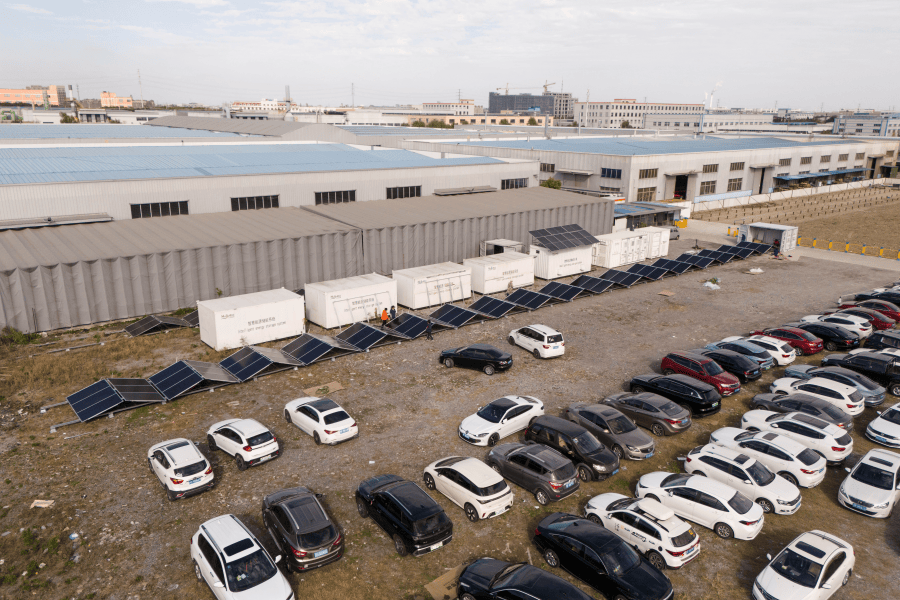
Let me give you a real example. We deployed a solution for a 50-acre logistics park build in California. The challenge: no grid for 9 months, a strict local emissions ordinance, and a tight schedule.
The solution was a phased approach: Two 1MWh modular BESS units paired with a 500kW solar canopy over the material staging area. We used a sophisticated controller that prioritized solar, managed battery C-rate (that's the speed of charge/discharge C crucial for battery health) to avoid stress, and automatically fired up a single diesel gen-set only when the battery state-of-charge fell below 20%.
The result? They eliminated an estimated 85,000 gallons of diesel consumption over the project. The noise reduction allowed for extended work hours. And crucially, when the grid finally arrived, the system seamlessly transitioned to peak-shaving mode, continuing to save money. The modular design meant when Phase 2 started, we simply trucked in a third power block. The project manager told me the energy system was the one thing he didn't have to worry about.
The Expert Insight: Thinking Beyond the Spec Sheet
If you're considering this, my advice is to think like an operator, not just a purchaser. The technology is proven. The real questions are about execution:
- Who manages the thermal system? Batteries generate heat. A poorly managed thermal system kills cycle life. Look for liquid cooling or advanced forced-air systems with independent monitoring.
- Is the software intuitive? Your site foreman needs to see the state of charge at a glance, not interpret engineering schematics. Remote monitoring and control are non-negotiable.
- What's the service model? When something goes wrong at 4 PM on a Friday, who shows up? Our model at Highjoule is based on local service hubs and rapid part replacement C downtime is your enemy, and we treat it as ours too.
The scalable 1MWh solar-storage unit isn't a magic box. It's a sophisticated, high-value tool. For the right project C one where reliability, sustainability, and total cost matter C it doesn't just replace a generator; it transforms site power from a cost center into a strategic, manageable asset. The question isn't really "can we afford it?" but rather, "can we afford not to at least run the numbers?"
What's the single biggest energy cost driver on your current site C is it fuel, demand charges, or the risk of delay? Let's talk about which one a modular system could tackle first.
Tags: Construction Site Power UL Standard BESS LCOE Modular Energy Storage Renewable Energy
Author
James Zhang
20+ years agricultural energy storage engineer / Highjoule CTO