
Real-world Case Study: How C5-M Anti-corrosion Solar Containers Solve Construction Site Power Challenges
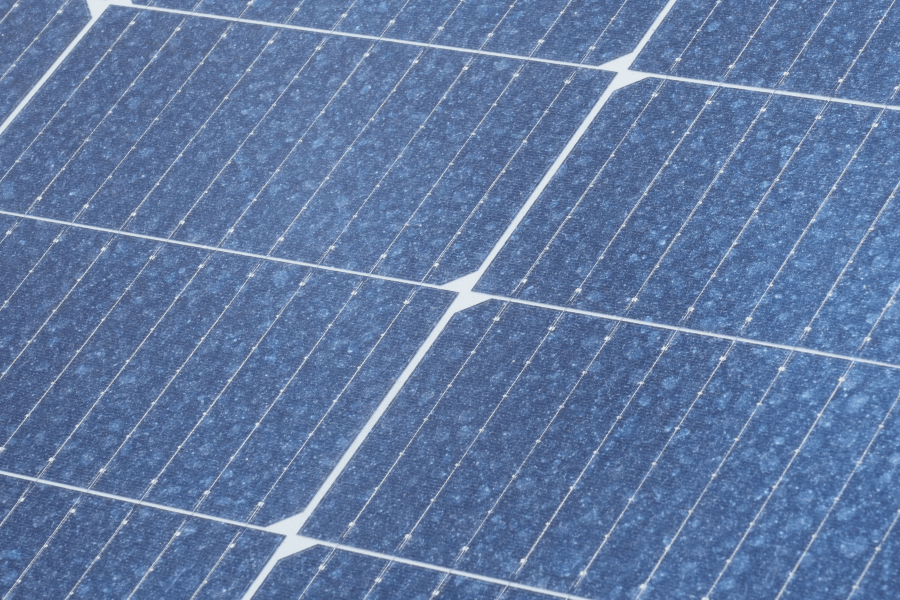
Table of Contents
- The Diesel Headache on Modern Job Sites
- Why This Hurts More Than Just Your Budget
- A Better Way: The Solar-Powered, Self-Contained Power Plant
- Case Study: Powering a Texas Data Center Build in Corrosive Conditions
- The Tech Inside: It's Not Just About the Panels
- Making the Move: What to Look For
The Diesel Headache on Modern Job Sites
Let's be honest. If you're managing a large-scale construction project in the US or Europe C be it a new data center in Texas, a logistics hub in Germany, or a remote infrastructure upgrade C your initial power plan probably involves diesel generators. They're the familiar, "reliable" devil we know. You rent them, fuel them, and deal with the noise and the fumes. But I've been on enough sites over 20 years to see the real cost. It's not just the line item for fuel, which, as we all know, is volatile. The IRENA reports that diesel generation for off-grid power can have a Levelized Cost of Electricity (LCOE) exceeding $0.30/kWh, and honestly, in some remote spots I've worked, it's been even higher. The real pain is in the logistics, the environmental mandates, and the sheer operational fragility.
Why This Hurts More Than Just Your Budget
Let me agitate that pain a bit, based on what I've seen firsthand. First, access and cost. Getting a consistent, affordable diesel supply to a remote site is a project in itself. Second, emissions and compliance. With strict environmental regulations in places like California or the EU, running diesels 24/7 can attract fines and community pushback. Third, and this is a big one, corrosion. Many construction sites, especially near coasts or industrial areas, have corrosive atmospheres. I've seen standard equipment housings start to pit and degrade within months. This isn't just an aesthetic issue; it's a major safety and reliability risk for any electrical system. You're there to build something, not constantly maintain or replace your temporary power source.

A Better Way: The Solar-Powered, Self-Contained Power Plant
So, what's the solution? It's moving from a fuel-dependent generator to a self-contained, renewable energy asset. This is where the concept of the C5-M anti-corrosion solar container comes in. Think of it as a plug-and-play power plant delivered to your site. It combines high-efficiency solar panels with a robust battery energy storage system (BESS), all housed in a container built to withstand harsh environments. The goal isn't necessarily to be 100% off-grid from day one (though it can be), but to drastically reduce diesel runtime, stabilize your power costs, and provide silent, emission-free power for critical loads. At Highjoule, we've focused on engineering these units not just for performance, but for the brutal reality of construction sites.
Case Study: Powering a Texas Data Center Build in Corrosive Conditions
Let me walk you through a recent project. We deployed a system for a major data center construction project in coastal Texas. The challenge was triple: the site had no stable grid connection for the first 9 months, the salty, humid air was eating away at temporary electrical gear, and the developer had ambitious sustainability targets to meet.
The solution was a 250kW/500kWh C5-M rated solar container. Here's how it worked on the ground:
- Deployment: The unit was delivered, positioned, and commissioned in under 48 hours. It was positioned to power the site office, tool charging stations, and key evening security lighting.
- The C5-M Difference: The entire container, from its steel frame to its electrical cabinet coatings, was built to ISO 12944 C5-M standards for severe marine and industrial atmospheres. This wasn't an afterthought; it was baked into the design. No more worrying about salt spray.
- Diesel Integration: The system was integrated with the site's existing diesel generators in a hybrid setup. The BESS and solar provided base load power during the day, with the generators only kicking in for peak demand or during extended cloudy periods. We cut their runtime by over 70%.
- Standards Met: Every component, from the battery racks to the power conversion system, was built to relevant UL (UL 9540, UL 1973) and IEC standards, which was non-negotiable for the client's risk and insurance teams.
The result? Predictable power costs, a quieter, cleaner site, and a temporary power solution that didn't look like it was falling apart after six months. The client was so impressed they leased a second unit for another site.
The Tech Inside: It's Not Just About the Panels
When you look at one of these containers, the solar panels are the visible part. The magic C and the reliability C is inside. Let me break down two key aspects in plain English:
1. Thermal Management (The Battery's Air Conditioning): Batteries hate being too hot or too cold. In a sealed container in the Texas sun or a German winter, this is a huge challenge. A cheap system will overheat, throttle power, or degrade rapidly. Our approach uses a dedicated, N+1 redundant cooling system that maintains an optimal temperature range year-round. This isn't just for comfort; it's directly tied to the system's lifespan and safety, something we take extremely seriously based on UL's rigorous testing protocols.
2. C-rate and Real-World Power: You might hear specs like "1C" or "0.5C". Simply put, the C-rate tells you how fast you can pull energy from the battery relative to its size. A 500kWh battery at 1C can deliver 500kW of power. For a construction site, you need high power (a high C-rate) to start equipment or handle simultaneous loads. We design our systems with a buffer, so you're not straining the batteries at their maximum rate every day, which extends their life and keeps them safe. It's about designing for the worst-case site scenario, not the lab perfect scenario.

Making the Move: What to Look For
If you're considering this route for your next project, my advice is to look beyond the brochure's "solar + storage" label. Ask the hard questions:
- What is the actual corrosion protection standard? (It should be ISO 12944 C5-M or equivalent for harsh sites).
- Can you show me the UL/IEC certification documents for the core BESS components?
- How is thermal management handled, and what is the guaranteed operating temperature range?
- What's the projected Levelized Cost of Electricity (LCOE) for my site compared to my current diesel spend? A good provider should be able to model this for you.
The shift from diesel to intelligent, resilient solar-storage isn't just an environmental one. It's an operational and financial decision. It turns a cost center (temporary power) into a showcase of efficiency and innovation for your project. What's the first power-hungry, noisy process on your site you'd like to silence?
Tags: Construction Site Power UL Standard BESS Europe US Market Off-grid Power Solar Container Renewable Energy C5-M Anti-Corrosion
Author
James Zhang
20+ years agricultural energy storage engineer / Highjoule CTO