
Scalable Modular 5MWh BESS for Military Bases: Pros, Cons & Real-World Insights
Table of Contents
- The Silent Challenge: Energy Security Beyond the Fence
- Why Modularity Isn't Just a Buzzword for Bases
- The Benefits, Unpacked (From an Engineer's Notebook)
- The Other Side of the Coin: Honest Drawbacks & Mitigations
- A Case in Point: Learning from the Field
- Making the Right Call: Your Next Step
The Silent Challenge: Energy Security Beyond the Fence
Let's be honest. When we talk about military base infrastructure, the conversation usually revolves around physical security, communications, and hardware. But over two decades of deploying energy systems globally, I've seen a critical vulnerability firsthand: a fragile, centralized grid connection. A base can have the most advanced defenses, but if the power goes down - whether from a cyber event, a natural disaster, or simple grid congestion - operational readiness plummets. The problem isn't just blackouts; it's the volatile energy costs and the carbon footprint of relying on 24/7 diesel gensets as the primary backup. It's a triple threat to security, budget, and sustainability goals.
Why Modularity Isn't Just a Buzzword for Bases
This is where the scalable, modular 5MWh utility-scale Battery Energy Storage System (BESS) enters the chat. Forget the massive, one-of-a-kind power plants of the past. Think Lego blocks. A single 5MWh unit is a powerful building block. Need 15MWh? Deploy three. Need 25MWh and want to phase the capital expenditure? Start with five, add more later. This modular approach aligns perfectly with the phased, budget-conscious, and rapidly adaptable needs of modern military logistics. It's a strategic fit, not just a technical one.

The Benefits, Unpacked (From an Engineer's Notebook)
So, what do you really gain with a system like this? Let's move beyond the brochure.
- Resilience You Can Measure: A 5MWh block can provide critical backup for command centers, comms hubs, and medical facilities for extended periods. It seamlessly bridges the gap between grid failure and generator startup, or better yet, integrates with on-base solar to form a true microgrid. I've seen setups where the BESS is the grid's "shock absorber," smoothing out fluctuations and preventing upstream disturbances from affecting sensitive base operations.
- Financial Sense (The LCOE Story): Everyone talks upfront cost. I look at Levelized Cost of Energy (LCOE) - the total lifetime cost per MWh. Modular systems have lower installation costs and can be financed in stages. They also earn their keep daily by providing "peak shaving" - storing cheap off-peak grid energy or solar power and using it during expensive peak hours. The NREL has shown how strategic storage can reduce energy costs for critical facilities by double-digit percentages. That's budget freed up for other missions.
- Future-Proofing by Design: Technology evolves. A monolithic 50MWh system from 2020 might be obsolete by 2030. A modular fleet allows you to upgrade or augment with newer, higher-density 5MWh blocks as they become available, protecting your long-term investment.
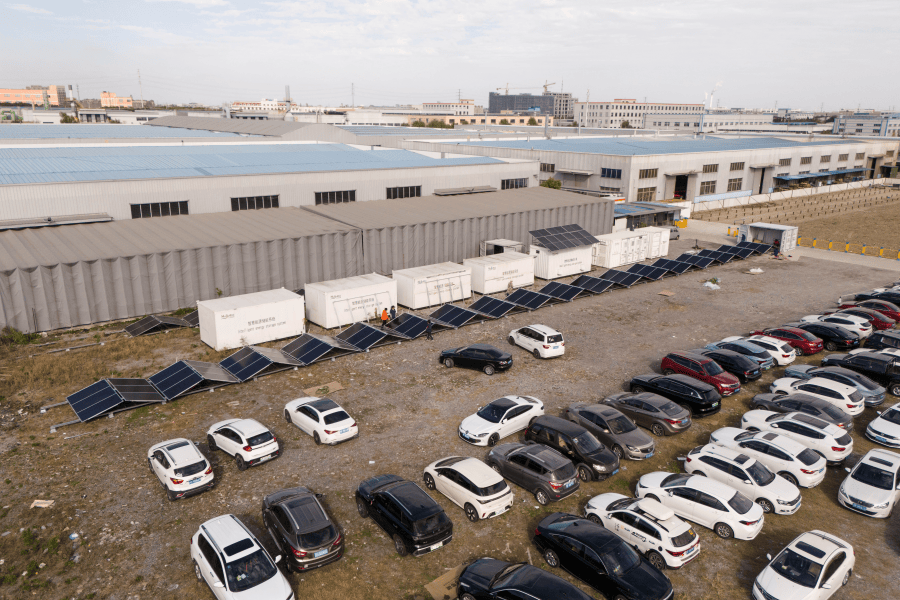
- Deployment Speed & Simplified Logistics: These are containerized solutions. They're transported, craned into place, and connected. I've overseen projects where a 20MWh system was energized in weeks, not years. For a base with urgent needs or temporary deployment scenarios, this speed is a force multiplier.
The Other Side of the Coin: Honest Drawbacks & Mitigations
No technology is a silver bullet. A good engineer tells you the downsides and how to manage them.
- Footprint & Siting: Yes, multiple 5MWh units can take up more physical space than a single, dense mega-system. The mitigation? Smart site planning. We work with base engineers from day one to utilize perimeter spaces, existing pads, or even design multi-level configurations. The modularity itself offers siting flexibility.
- Interconnection Complexity: More units mean more power conversion systems (PCS) and more points of interconnection to manage. This is where our experience at Highjoule matters. We use a centralized, UL 9540-certified energy management system that treats the entire fleet as one cohesive resource, dramatically simplifying control and monitoring. It's one dashboard, not twenty.
- Thermal Management Consistency: Each module has its own cooling system. Ensuring uniform performance and lifespan across all units requires intelligent, predictive thermal management, not just basic fans. We design with liquid cooling and AI-driven climate control that proactively adjusts based on load and ambient conditions, a lesson learned from projects in extreme environments like Arizona and Norway.
- Initial Unit Cost Premium: Per kWh, the first few modular units might carry a slight premium over a custom mega-system. But this is offset by the phased CAPEX, lower financing risk, and the operational savings (lower LCOE) we discussed earlier. The total project economics often tell a different story.
A Case in Point: Learning from the Field
Let me share a relevant, though sanitized, example. We deployed a scalable 20MWh BESS for a forward-operating base in Europe. Their pain points were classic: grid instability, soaring peak demand charges, and a mandate to integrate a new solar array.
The challenge was deploying without disrupting ongoing operations. We started with a 5MWh unit, co-located with the new solar inverters. It provided immediate peak shaving and smoothed the solar output. Within 18 months, three more identical 5MWh blocks were added in a separate, secured zone. The phased approach matched their budget cycle, and the identical modules simplified spare parts inventory and operator training. The system now runs as a single 20MWh asset, slashing their peak demand charges by over 30% and providing a 48-hour critical load backup. The key was treating each phase as a complete, functional project while ensuring the master control system was designed for scale from day one.
Expert Insight: The C-Rate & Longevity Trade-off
You'll hear specs about "C-rate" - how fast you can charge or discharge the battery. For a base, a high C-rate sounds great for sudden, high-power needs. Honestly, pushing lithium-ion batteries at very high C-rates constantly accelerates degradation. For a system meant to last 15+ years, we often recommend a moderate C-rate design. It provides more than enough power for most base contingencies while ensuring the battery lives a long, healthy life. It's about sustainable resilience, not just peak performance. We model this for clients, showing the long-term capacity retention curves under different usage scenarios.
Making the Right Call: Your Next Step
The decision isn't just "battery or no battery." It's about choosing an architecture that aligns with your base's specific mission profile, risk tolerance, and fiscal reality. The scalable 5MWh modular BESS is a compelling answer, but its success hinges on integration expertise, a control system that unifies the fleet, and a partner who understands the unique regulatory and safety (UL 9540A, IEC 62933) landscape for critical infrastructure.
At Highjoule, we've built our service model around this. We don't just ship containers; we provide the brain (the EMS) and the ongoing nerve center (24/7 performance monitoring and proactive maintenance) to make sure your investment delivers security and savings, year after year. The question I'd leave you with is this: How would your base's operational readiness change if your next power disruption was not a crisis, but a seamlessly managed event?
Tags: UL Standard BESS LCOE Utility-Scale Energy Storage Military Energy Security Modular Design
Author
James Zhang
20+ years agricultural energy storage engineer / Highjoule CTO