
Benefits and Drawbacks of Tier 1 Battery Cell 5MWh Utility-scale BESS for High-altitude Regions
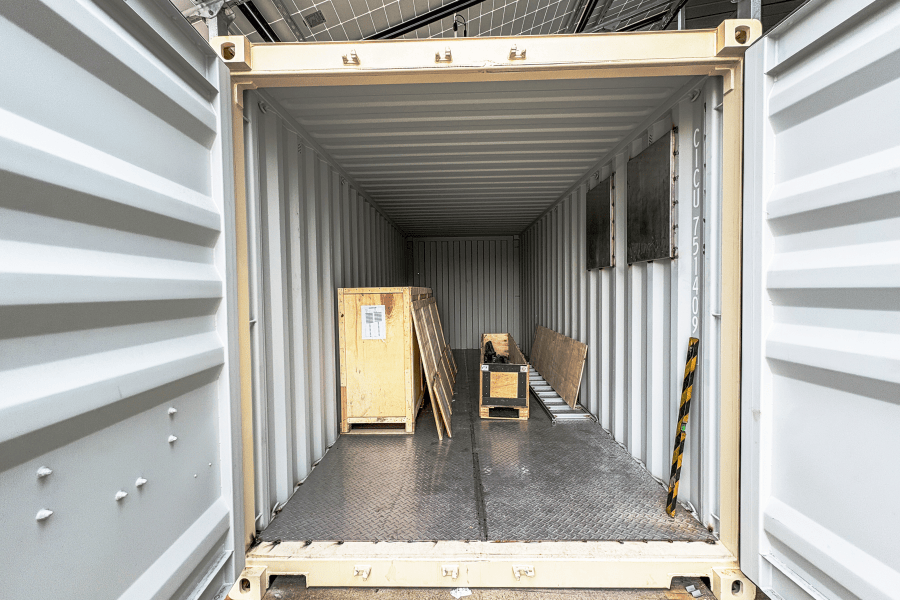
Navigating Thin Air: The Realities of Big Battery Storage in the Mountains
Honestly, if I had a dollar for every time a client asked me about putting a large-scale battery system "up there" C in the mountains, near wind farms, or at remote microgrid sites C I'd probably be retired by now. It's a hot topic, especially in North America and Europe where prime real estate for renewables is often, well, elevated. The promise is clear: pair that solar or wind generation with a robust 5MWh Battery Energy Storage System (BESS) using top-tier (Tier 1) cells to smooth out intermittency and provide grid services. But from two decades of boots-on-the-ground experience, from the Alps to the Rockies, I can tell you it's not as simple as dropping a container and plugging it in. Let's have a coffee chat about what really works, what doesn't, and what you need to know before you commit.
What We'll Cover
- The High-Altitude Conundrum: More Than Just a View
- Why Getting It Wrong Costs More Than Just Money
- Tier 1 Cells in a 5MWh Package: A Strategic Answer
- What the Numbers Say About Mountain-Top Storage
- A Real-World Test: Lessons from a European Alpine Site
- The Engineer's Notebook: C-rate, Thermal Runaway, and LCOE at 3,000 Meters
The High-Altitude Conundrum: More Than Just a View
The phenomenon is straightforward. We're building more renewables in high-altitude regions. Think of the wind corridors in Wyoming or the solar farms in the Spanish Pyrenees. The grid infrastructure there can be weak or non-existent, making storage not just beneficial but essential. The immediate thought is to deploy a proven, utility-scale workhorse: a 5MWh BESS built with Tier 1 lithium-ion cells. These cells, from manufacturers with proven financial and operational scale, promise reliability, good energy density, and a degree of safety pedigree. The problem? Standard BESS units are typically validated for conditions at or near sea level. Up high, the rules of the game change dramatically.
Why Getting It Wrong Costs More Than Just Money
I've seen this firsthand on site. Lower atmospheric pressure at altitude isn't just a problem for people; it's a fundamental challenge for thermal management systems. Air is less dense, which means it carries away less heat. Your standard cooling system, designed for a plant in Texas, can become drastically less efficient at 2,500 meters. This isn't a minor efficiency dip. Inefficient cooling leads to accelerated cell degradation, reduced cycle life, and crucially, it elevates the risk of thermal runaway. A single cell going into thermal runaway in a poorly managed high-altitude environment can cascade faster due to the altered cooling dynamics. The financial impact? Your Levelized Cost of Storage (LCOS) can balloon due to premature replacement needs and potential downtime. It turns a capital expenditure into a recurring operational nightmare.
Tier 1 Cells in a 5MWh Package: A Strategic Answer
So, is the solution to avoid Tier 1 cells or avoid high altitudes? Absolutely not. The solution is to understand and strategically leverage the benefits and drawbacks of Tier 1 battery cell 5MWh utility-scale BESS for high-altitude regions. The key is intentional, altitude-aware engineering. At Highjoule, when we spec a system for the mountains, we start with the benefits of Tier 1 cells: their consistent quality, extensive third-party testing data (vital for insurance and financing), and their well-understood degradation profiles. This gives us a predictable, high-integrity foundation. Then, we engineer around the drawbacks - primarily their sensitivity to thermal stress - with solutions like pressurized or liquid-cooled enclosures that are independent of ambient air density.
What the Numbers Say About Mountain-Top Storage
Let's ground this in some data. The National Renewable Energy Laboratory (NREL) has published work indicating that for every 1,000 meters in elevation, the cooling capacity of air-based systems can drop by 15-20%. That's a staggering figure when you're talking about a system holding 5MWh of energy. Furthermore, the International Energy Agency (IEA) notes that grid stability services from storage are disproportionately valuable in remote or weak-grid areas, often justifying a higher upfront cost for a more resilient system. The math shifts from pure CAPEX to a total lifecycle value calculation.
A Real-World Test: Lessons from a European Alpine Site
Let me share a case that's close to home. We deployed a 5MWh system in the Austrian Alps, at about 1,800 meters, to support a hybrid hydro/wind microgrid. The challenge was brutal: temperatures from -25C to +30C, rapid weather changes, and a site accessible only by a specific road for part of the year. The client initially wanted the lowest-cost, off-the-shelf BESS.
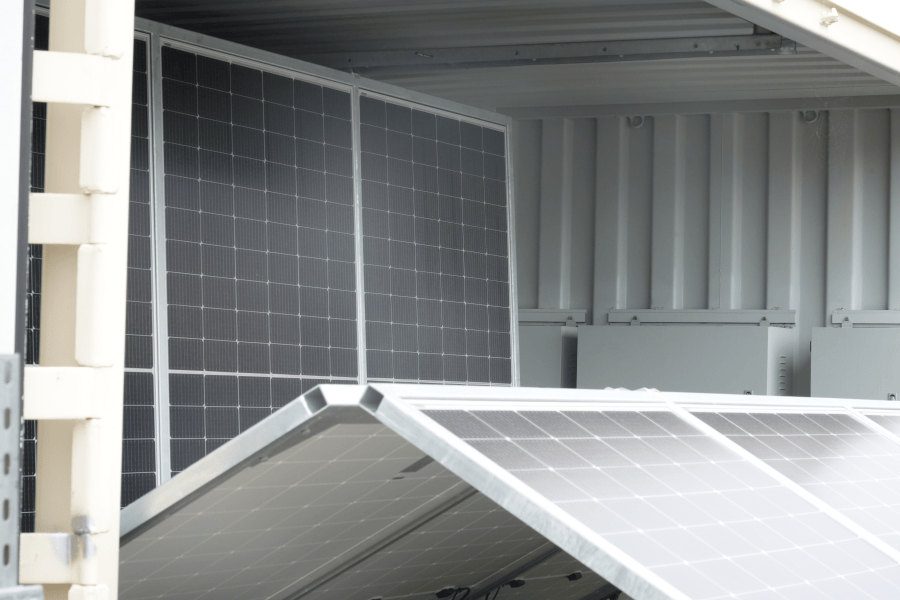 We advocated for a Tier 1 cell-based system but with a fully integrated, glycol-based liquid thermal management system. It maintained optimal cell temperature regardless of the thin outside air. The drawback was a 5-7% higher initial cost. The benefit? Three winters in, the system's state of health (SOH) is tracking 8% higher than a comparable air-cooled system at a lower altitude. The reduced degradation and zero downtime during peak winter demand have already made up the cost difference. It validated the approach of using premium cells but not using a premium system designed for a different environment.
The Engineer's Notebook: C-rate, Thermal Runaway, and LCOE at 3,000 Meters
Here's my take, from the control room and the service truck. When evaluating a system for high-altitude use, you need to think differently about common specs.
- C-rate Isn't Just a Performance Number: A 1C discharge rate sounds great on paper. But at altitude, the heat generated during that discharge is harder to remove. You might need to de-rate the system (e.g., operate at a max of 0.8C) to keep temperatures in check, or you need a vastly superior cooling design. This directly impacts your revenue if you're selling frequency regulation or capacity.
- Thermal Management is Your #1 Safety System: Forget the BMS for a second. The physics of thermal runaway depends on heat transfer. In thin air, containment and isolation of a cell event become even more critical. We design our Highjoule systems with compartmentalized, fire-rated barriers and cooling loops that can isolate a module. It's not just an UL 9540A test; it's about real-world, high-altitude physics.
- LCOE is King, But Calculate It Right: The Levelized Cost of Energy (LCOE) model must include altitude factors. A cheaper system with a 10-year warranty might only deliver 7 years of useful life at high altitude due to stress. A more robust system, perhaps with our purpose-built cooling, might have a 20% higher CAPEX but a 30% lower LCOE over 15 years because it's still performing at 85% capacity. You have to model the actual degradation, not the datasheet degradation from sea-level testing.
The bottom line? The benefits and drawbacks of Tier 1 battery cell 5MWh utility-scale BESS for high-altitude regions create a compelling, but nuanced, value proposition. The benefit is a bankable, high-quality energy core. The drawback is its vulnerability to an environment it wasn't natively designed for. The winning move is to partner with an integrator who doesn't just sell you a container, but engineers a solution that recalibrates that equation. One who thinks about UL and IEC standards not as checkboxes, but as the baseline for a much more demanding set of real-world conditions. So, what's the one altitude-specific challenge in your project that keeps you up at night?
Tags: UL Standard BESS Europe US Market Tier 1 Battery Cells High-altitude Energy Storage Utility-Scale
Author
James Zhang
20+ years agricultural energy storage engineer / Highjoule CTO