
20ft High Cube ESS Container Comparison for Agricultural Irrigation
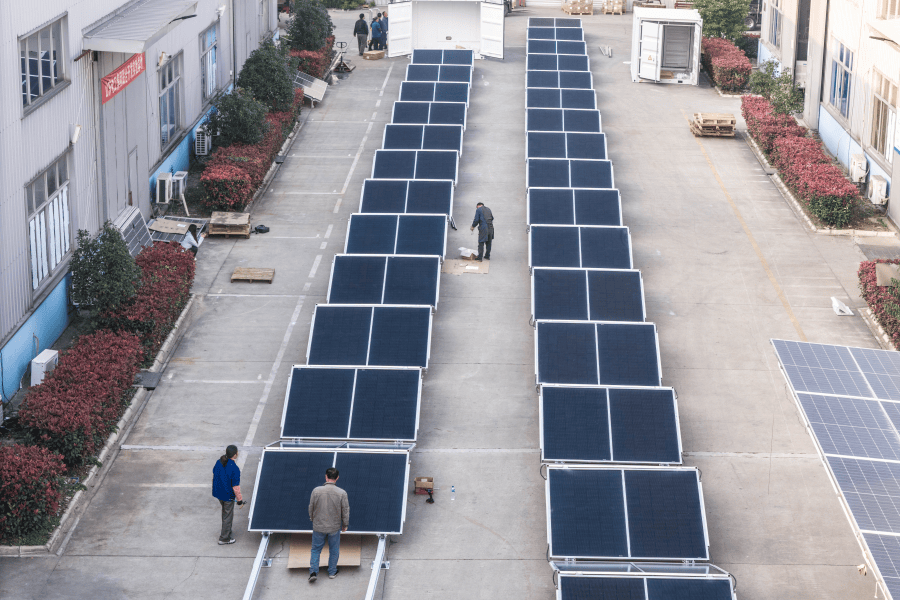
Table of Contents
- The Real-World Problem: Powering Pumps When the Grid Can't (or Costs Too Much)
- Why This Isn't Just an Inconvenience C It's a Business Risk
- The 20ft High Cube Container: More Than Just a Big Battery Box
- From Blueprint to Harvest: A Real-World Look in California's Central Valley
- The Engineer's Notebook: What Really Matters Inside That Container
The Real-World Problem: Powering Pumps When the Grid Can't (or Costs Too Much)
Let's be honest. If you're managing a large-scale agricultural operation in North America or Europe, you've probably had this conversation. You need to run massive irrigation pumps during peak growing season, but that's exactly when everyone else is cranking up their air conditioning. The grid gets strained, and your utility hits you with a demand charge that feels like a penalty for trying to grow food. Or maybe you're in a more remote area where the grid connection is weak, and you can't rely on it for the consistent, high-power draw your pivot irrigation systems demand.
I've seen this firsthand on site. A farmer shows me his electricity bill, pointing to the spikes that coincide with his irrigation schedules. He's invested in solar to offset some costs, but the sun doesn't always shine when he needs to pump water at 3 AM to beat the heat. The problem isn't a lack of energy; it's a profound mismatch between when energy is available (and affordable) and when it's critically needed.
Why This Isn't Just an Inconvenience C It's a Business Risk
This mismatch isn't just a line item on a bill. It directly threatens operational resilience and profitability. During critical growth stages, a lack of water for even 24 hours can impact yield. Relying on diesel generators is a noisy, expensive, and carbon-heavy backup plan. And let's talk about those demand charges. In many commercial/industrial rate structures in the U.S., you're billed not just for the total energy (kWh) you use, but for the highest 15-minute average power draw (kW) in a billing cycle. An irrigation pump starting up can create a massive "peak," setting a high cost for the entire month. The National Renewable Energy Laboratory (NREL) has highlighted how demand charge management is a primary value stream for BESS in agricultural and commercial settings.
The agitation deepens when you consider the "standard" solutions. Piecing together a system from disparate components - battery racks, inverters, climate control - creates a integration nightmare. Safety, compliance, and long-term maintenance become your problems to solve. For a farm manager, your expertise is in agriculture, not being a full-time energy systems engineer.
The 20ft High Cube Container: More Than Just a Big Battery Box
This is where the pre-engineered, industrial-grade 20ft High Cube Energy Storage System (ESS) container enters the picture. It's not a product; it's a power plant in a box, specifically designed to solve the precise problems we just outlined. Think of it as the difference between building a computer from individual chips and circuit boards versus buying a robust, tested, plug-and-play workstation.
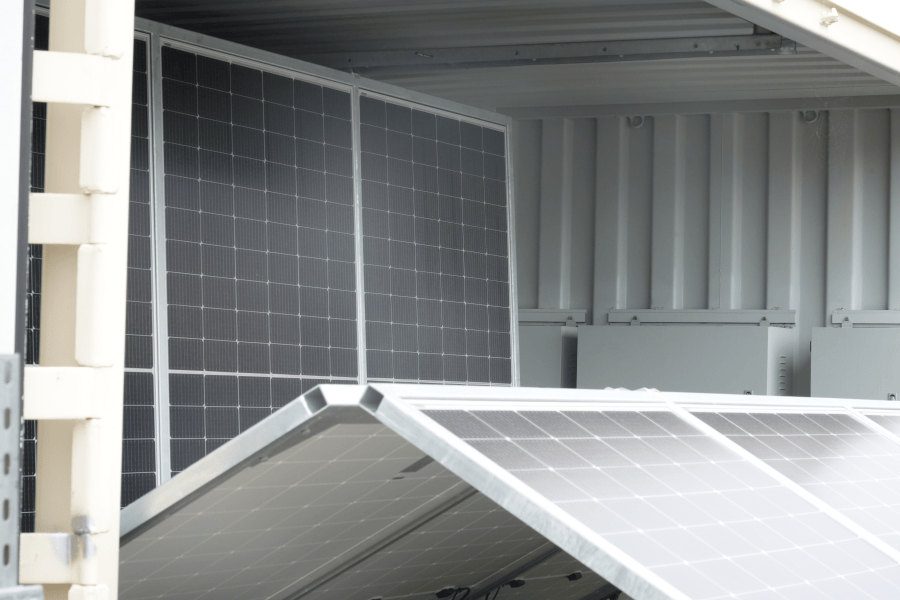
For agricultural irrigation, the High Cube design is key. That extra vertical space isn't just for more batteries. It allows for a proper, segregated layout: battery modules on one side, power conversion system (PCS) and control cabinets on the other, with a wide central aisle for safe maintenance and superior airflow. This isn't a cramped shed; it's an industrial machine room on wheels, built to UL 9540 and IEC 62933 standards, meaning it's been rigorously tested for safety as a complete unit.
At Highjoule, when we deploy a container like this, we're delivering a solution with a calculated Levelized Cost of Storage (LCOS). We factor in not just the upfront cost, but the lifetime value: how its C-rate affects longevity, how its thermal management minimizes degradation, and how its grid-forming capabilities can potentially keep your microgrid running if the main connection fails. The goal is predictable, low-cost kilowatt-hours for your pumps, year after year.
What You're Actually Comparing
When you look at a comparison of 20ft High Cube containers, you should be looking beyond simple "capacity in MWh." You're comparing:
- Safety Architecture: Is the thermal runaway propagation prevention designed into the module and container level?
- Grid Compliance: Does it have the grid codes (like UL 1741 SB, IEEE 1547) pre-certified for seamless interconnection in your region?
- Thermal Management: Is it a simple air-conditioning unit, or a liquid-cooled system that maintains optimal cell temperature with far less energy? Honestly, I've seen air-cooled systems in Arizona struggle, cycling compressors constantly and eating into the very energy they're meant to save.
- Serviceability: Can a local technician safely access and replace a module without a three-day specialist fly-in? Our design prioritizes this.
From Blueprint to Harvest: A Real-World Look in California's Central Valley
Let me give you a concrete example from our project portfolio. A large almond grower in California's Central Valley was facing annual demand charges exceeding $180,000, primarily driven by their irrigation load. Their existing solar PV was being clipped during the day because local grid constraints limited export.
We deployed a single 20ft High Cube ESS container with 1.5 MWh of storage. The integrated system was designed to do two things: 1) Peak Shaving: Discharge during the short, high-power irrigation windows to flatten the grid draw and eliminate 95% of demand charges. 2) Solar Self-Consumption Optimization: Store excess midday solar generation that would have been clipped, shifting it to evening irrigation runs.
The deployment was turnkey. The container arrived on a flatbed, pre-commissioned at our facility. We poured the simple concrete pad, connected the AC and communication cables, and had the system online in under a week. There was no juggling of multiple vendors. The farm's manager has a single dashboard to monitor performance and savings. In the first year, the system paid down a significant portion of its capital cost from demand charge savings alone, while providing peace of mind during Public Safety Power Shutoff (PSPS) events.
The Engineer's Notebook: What Really Matters Inside That Container
If we were having coffee, and you asked me, "What's the one thing I shouldn't compromise on?" I'd say thermal management. Batteries are like people; they perform best and live longest in a comfortable, stable temperature range. A poorly managed system will degrade faster, losing capacity and eating into your ROI. Liquid cooling, which we use, directly targets the cells with coolant, maintaining even temperature with about 30-40% less energy than fighting the air in the entire container. This directly lowers your LCOS.
The second thing is C-rate. Think of it as the "speed limit" for charging and discharging. A 1C rate means a 1 MWh battery can discharge at 1 MW for one hour. A 0.5C rate means it can only discharge at 500 kW, so it would take two hours to empty. For irrigation, you often need high power for a short duration (a high C-rate). But a consistently high C-rate stresses batteries. A quality container system will use a battery chemistry and system design that balances the needed power with long-term health. We often spec a chemistry that comfortably handles the required discharge peaks without pushing thermal or degradation limits.
Finally, think about the software and controls. The hardware is the muscle, but the brain is what makes you money. Can it seamlessly switch between operational modes - peak shaving, solar smoothing, backup power - based on real-time electricity prices and your irrigation schedule? That intelligence is where the true optimization happens.
Choosing the right ESS container isn't about buying a commodity. It's about selecting a long-term partner for your energy resilience. The right partner doesn't just drop off a box; they understand that your success depends on the reliable, affordable operation of that system for the next 15+ years. So, what's the real cost of unreliable power for your next harvest?
Tags: Energy Storage Container UL Standard BESS LCOE Agricultural Irrigation Renewable Energy
Author
James Zhang
20+ years agricultural energy storage engineer / Highjoule CTO