
Corrosion-Resistant BESS for Mining & Industrial Sites: Lessons from Mauritania
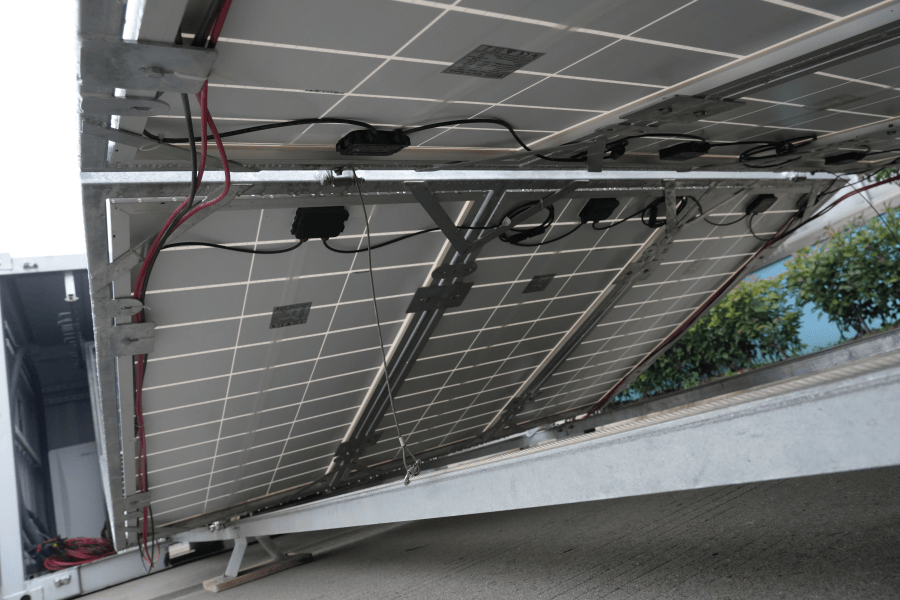
Table of Contents
- The Silent Killer of Your BESS Investment
- Why Your Datasheet Lies About Durability
- The Mauritania Case: When the Desert Eats Batteries
- C5-M Explained (Without the Engineering Jargon)
- What Mauritania Teaches Us About US & European Sites
- Making It Work: The On-Site Reality Check
The Silent Killer of Your BESS Investment
Honestly, when most commercial and industrial clients think about BESS risks, their minds jump straight to thermal runaway or maybe grid compatibility. And those are critical, don't get me wrong. But after 20+ years on sites from the Australian Outback to the Texas coast, I've seen a more insidious, slow-motion failure mode that's just as costly: corrosion.
It doesn't make headlines like a fire. It creeps in. A white powdery residue on busbars here. A compromised seal on a HVAC unit there. Suddenly, your promised 15-year asset is facing major component replacement in year 7. The financial model? Shattered. I've had those tough conversations with asset managers, and it's never pleasant.
Why Your Datasheet Lies About Durability
Here's the thing. A standard containerized BESS might be rated for a "standard" environment. But what's "standard"? A mild European climate? Maybe. But let's talk real-world industrial sites:
- Coastal Plants (US Gulf Coast, North Sea): Salt-laden air is like a constant, abrasive spray attacking every connection.
- Mining & Quarry Operations (Nevada, Chile, Australia): Dust isn't just dirt; it's often chemically active particulate that accelerates galvanic corrosion.
- Agricultural or Waste Processing Facilities: Ammonia, methane, and other gases create highly corrosive atmospheres.
The International Energy Agency (IEA) notes in their Energy Storage Outlook that long-term reliability is the single biggest factor impacting the Levelized Cost of Storage (LCOS) for industrial applications. Every unplanned maintenance event, every early replacement, drives that cost up. A system that can't handle its environment is a liability, not an asset.

The Mauritania Case: When the Desert Eats Batteries
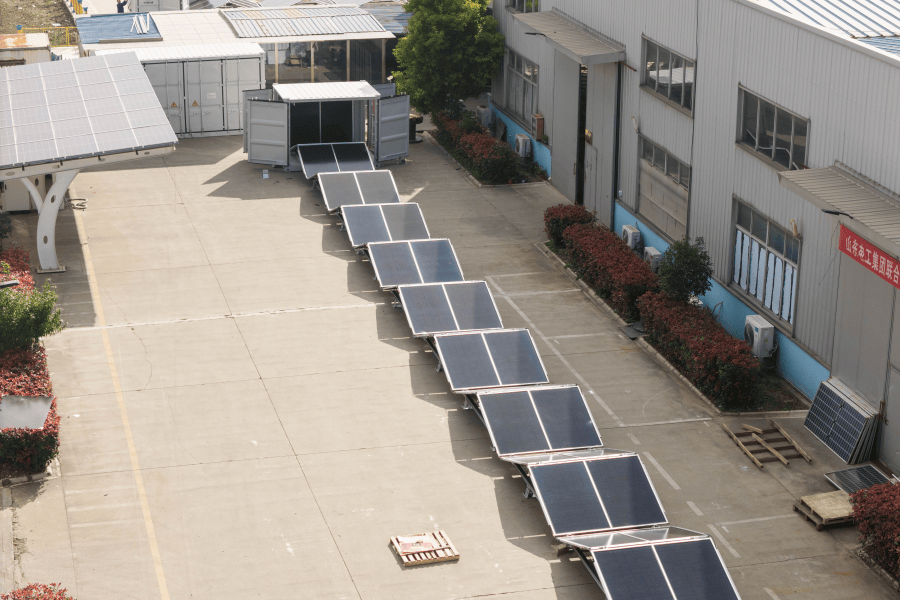
This brings me to a project that perfectly illustrates the point C our deployment for a remote mining operation in Mauritania. The brief was "extreme":
- Environment: Blowing Saharan sand (abrasive & invasive), 50C+ daytime heat, significant diurnal temperature swings, and occasional humidity spikes.
- Challenge: Previous power solutions using standard enclosures failed within 18 months. Control boards fried, cooling fans seized, electrical contacts degraded. Downtime was costing a fortune in diesel and lost production.
- Goal: A BESS to hybridize with solar and slash diesel genset runtime, but it had to last.
This wasn't about peak efficiency specs. It was about survival. We needed a system built from the ground up for a C5-M environment.
C5-M Explained (Without the Engineering Jargon)
You'll see C5-M (or ISO 12944-2) on specs. In plain English, it means "Very High severity, Industrial & Marine." Designing for it isn't just a thicker coat of paint. It's a holistic approach:
- Materials & Coatings: We're talking hot-dip galvanized steel frames, aluminum alloys chosen for compatibility, and multi-layer paint systems with epoxy primers and polyurethane topcoats. It's the difference between a raincoat and a full hazmat suit.
- Sealing & Filtration: The entire enclosure is a pressurized fortress. IP65 is a minimum. Air intake for thermal management uses high-grade filters to keep abrasive particulates out of the battery compartment. I've seen standard filters clog in weeks in dusty sites; ours are serviceable and designed for the long haul.
- Component Selection: Every single item - from the HVAC unit's condenser coils (coated to resist salt) to the stainless-steel fasteners and conformally coated PCBs - is specified for the environment. This is where UL and IEC standards are your baseline, but you have to go beyond.
In Mauritania, this meant designing a thermal management system that could keep the batteries in their sweet spot (critical for longevity) without sucking in a sandstorm. We used indirect cooling with a sealed refrigerant loop. More complex? Yes. But it keeps the corrosive environment outside where it belongs.
What Mauritania Teaches Us About US & European Sites
You might think, "That's a desert mine, not my facility in Ohio or Bavaria." But the principle is universal. Let me give you a real example from Germany.
A chemical park in North Rhine-Westphalia wanted a BESS for peak shaving. The air had low levels of acidic compounds from nearby processes. A standard BESS was installed. Within two years, accelerated corrosion was found on copper connections inside the container. The cost of decommissioning, repairing, and reinstalling dwarfed the initial "savings" from choosing a cheaper, non-hardened unit. They're now replacing it with a corrosion-resistant design.
The lesson? Conduct a proper site corrosivity assessment. Don't guess. Is your site near a de-icing road (salt spray)? Downwind of a fertilizer plant? The extra 5-15% CapEx for a C5-M rated system like the one we built for Mauritania is the cheapest insurance you'll ever buy for a 10-15 year asset. It directly protects your LCOE (Levelized Cost of Energy) by ensuring availability and minimizing opex surprises.
Making It Work: The On-Site Reality Check
So, how does this translate for a company like Highjoule Technologies when working with clients in the US or Europe? It starts with the right questions in the feasibility study, questions born from on-site headaches I've witnessed firsthand:
- "What's the 5-mile radius around this site look like? Agriculture, coastline, industry?"
- "Can we get historical data on particulate matter or corrosive gases from the facility's own EHS reports?"
- "What's the maintenance access like? If we need a more robust filter, can site staff easily service it?"
Our approach is to engineer the resilience in upfront. It's in our DNA, shaped by projects in places like Mauritania. It means our standard industrial BESS platform already incorporates many C5-M principles - like coated steel and advanced sealing - because we know "standard" environments are rarer than you think. For the truly extreme sites, we have a dedicated hardened product line.
Ultimately, the goal is to make the BESS the most reliable part of your energy infrastructure. You shouldn't be losing sleep over whether a salt fog or chemical haze is eating your investment. The right design, informed by real-world, harsh-environment case studies, lets you focus on what matters: the energy savings and resilience the system delivers.
What's the most challenging environment at one of your facilities? Is it something you've considered in your energy storage planning?
Tags: UL Standard BESS LCOE Industrial Energy Storage C5-M Anti-Corrosion Battery Energy Storage System Mining Operations Harsh Environment
Author
James Zhang
20+ years agricultural energy storage engineer / Highjoule CTO