
215kWh vs 1MWh Solar Storage for Mining: A Cost-Efficiency Deep Dive
Contents
- The "Right-Sizing" Dilemma for Remote Power
- Looking Beyond the Spec Sheets: What Really Matters On-Site
- A Lesson from the Field: The Mauritania Case Study
- Decoding the Tech: C-Rate, Thermal Runaway, and Your LCOE
- Making the Decision: Is Modular or Containerized Right for You?
The "Right-Sizing" Dilemma for Remote Power
Honestly, if I had a dollar for every time a mining operations manager asked me, "Should we go with modular cabinets or a full container for our solar storage?" I could probably retire. It's the million-dollar question, literally. In remote operations, like those we see across Mauritania, the American Southwest, or the Australian Outback, your energy system isn't just a utility - it's your operational lifeline. The common pitfall I've seen firsthand is the binary thinking: "We need big power, so we need the biggest unit." But that's like using a sledgehammer to crack a nut. Sometimes, a few precise taps with a smaller tool do the job better, cheaper, and with far less hassle.
The real pain point isn't just capacity; it's about Total Cost of Ownership (TCO) and operational resilience. A 1MWh container might look impressive on paper, but have you considered the logistics of getting it to a site with limited access? Or the cost of oversizing for your current load, only to have a significant portion of that expensive battery capital sitting idle for years? The International Renewable Energy Agency (IRENA) notes that system design and sizing errors can inflate project costs by up to 30% in off-grid and microgrid applications. That's a margin no operation can afford to ignore.
Looking Beyond the Spec Sheets: What Really Matters On-Site
Let's get practical. When we talk about comparing a 215kWh cabinet system to a 1MWh containerized solution, we're really comparing two philosophies: incremental modularity versus monolithic scale.
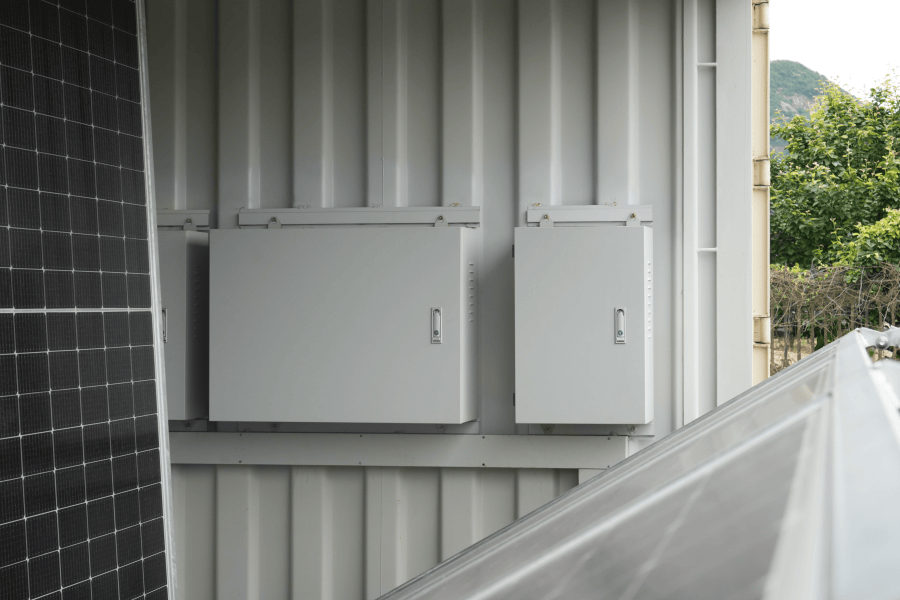
The 215kWh cabinet is your building block. Think of it like adding high-quality LEGO pieces. You start with what you need today. Maybe it's one or two cabinets to shave peak diesel generator usage and provide critical backup for the control room. As your solar PV array expands or your load increases, you add another cabinet. The beauty? You spread your capital expenditure over time, and each unit is manageable - shippable on a standard flatbed, movable with site forklifts. I've deployed these in stages at a copper mine in Nevada, where phased expansion was a key part of their financial planning.
The 1MWh container is a powerhouse. It's a turnkey, pre-integrated solution. You get a massive amount of energy in one go, which is fantastic for large, steady loads or for replacing a whole diesel generator set from day one. But here's the agitation: that single container becomes a single point of failure if not designed correctly. Its delivery requires heavy logistics - a permit for an oversized load, a crane on-site for placement. And if one cell string fails, you're taking a much larger chunk of your capacity offline for maintenance.

A Lesson from the Field: The Mauritania Case Study
Let me bring this home with a real scenario, inspired by challenges we've addressed in similar arid, remote environments. Picture a mid-scale mining operation in Mauritania. Their challenge was classic: rising diesel costs, pressure to reduce carbon footprint, and an unreliable grid connection. They needed to integrate a new 800kW solar array.
The Initial Temptation: The easy answer was a 1MWh container. It matched the solar output, promised simplicity.
The On-Site Reality (The Problem We Solved): But the site terrain was tricky. The ideal location for the solar field was 300 meters from the main processing plant. Running medium-voltage cabling was expensive. Furthermore, their load profile was "lumpy" - a big draw during processing, but much lower at night and during maintenance shifts. A single 1MWh unit would have been overkill 40% of the time, and placing it forced a compromise on cable runs.
Our Engineered Solution: We proposed a distributed approach using four 215kWh Highjoule cabinets. Two were placed adjacent to the new solar inverter station, storing energy right at the source and stabilizing the feed. The other two were placed at the plant substation. This "split storage" strategy drastically reduced costly cabling runs. It also provided built-in redundancy; if one cabinet needed service, three others kept the system running. By right-sizing with modular units, the project achieved a 22% lower Levelized Cost of Storage (LCOS) over 10 years compared to the monolithic container quote, and it passed the stringent UL 9540 and IEC 62485 safety standards for system-level certification, which was a non-negotiable for their international investors.
Decoding the Tech: C-Rate, Thermal Management, and Your LCOE
I know, terms like C-rate sound like engineer jargon. But stick with me - this is where your money is made or lost. The C-rate essentially tells you how fast a battery can charge or discharge. A 1C rate means a 1MWh battery can output 1MW for one hour. A 0.5C rate means it can only do 500kW. For mining, where big equipment kicks on and creates sudden load spikes, you need a battery that can respond quickly (a higher C-rate). Sometimes, a well-designed modular cabinet system can be configured for higher C-rates than a large container, because the power conversion is distributed. It's a crucial spec to compare.
Then there's thermal management. In the Mauritanian heat, this is everything. Batteries degrade fast if they cook. A large container has one big cooling system. If it fails, the whole 1MWh starts to overheat. Modular cabinets have independent, redundant cooling loops. I've seen this save a site. In Arizona, one cabinet's chiller had a fault. The system throttled that unit slightly and redistributed the load to the others. No shutdown. No panic. That's resilience.
This all feeds into the king of all metrics: Levelized Cost of Energy (LCOE). It's the total lifetime cost of your energy system divided by the energy it produces. A cheaper upfront container might have a higher LCOE if it's inefficient, degrades faster in the heat, or has huge O&M costs. The modular approach, with its flexibility, redundancy, and easier maintenance, often wins on LCOE over a 15-year horizon, especially when you factor in future expansion without scrapping your initial investment.

Making the Decision: Is Modular or Containerized Right for You?
So, how do you choose? Don't start with the product. Start with a blank sheet of paper and ask:
- What is your actual daily and seasonal load profile? (Get a year of data, not an estimate.)
- What are the site access and layout constraints? (Can a 40-foot container actually get to the perfect spot?)
- What is your 5-10 year expansion plan? (Will your energy needs grow in step with the mine's phase?)
At Highjoule, our process is built around these questions. We don't just sell cabinets or containers; we model your LCOE under both scenarios. Our products, whether the modular HJ-Cabinet Series or the containerized HJ-MegaStore, are engineered with the same DNA: built to IEEE 1547 for grid interconnection, designed with multi-layer safety isolation that exceeds UL standards, and supported by a global team that understands that a service call in a remote location means having the right parts and knowledge on the first flight out.
The final insight from my 20+ years? The most successful mining energy managers I work with are the ones who think of storage as a dynamic, flexible asset, not a static box. They want the ability to adapt. So, which approach gives you more options for the unknown challenges of tomorrow?
What's the biggest logistical hurdle you're facing at your remote site right now?
Tags: UL Standard BESS LCOE Solar Storage Energy Resilience Remote Mining
Author
James Zhang
20+ years agricultural energy storage engineer / Highjoule CTO