
All-in-One Mobile Power Container: The Flexible Backup Power Solution for Modern Data Centers
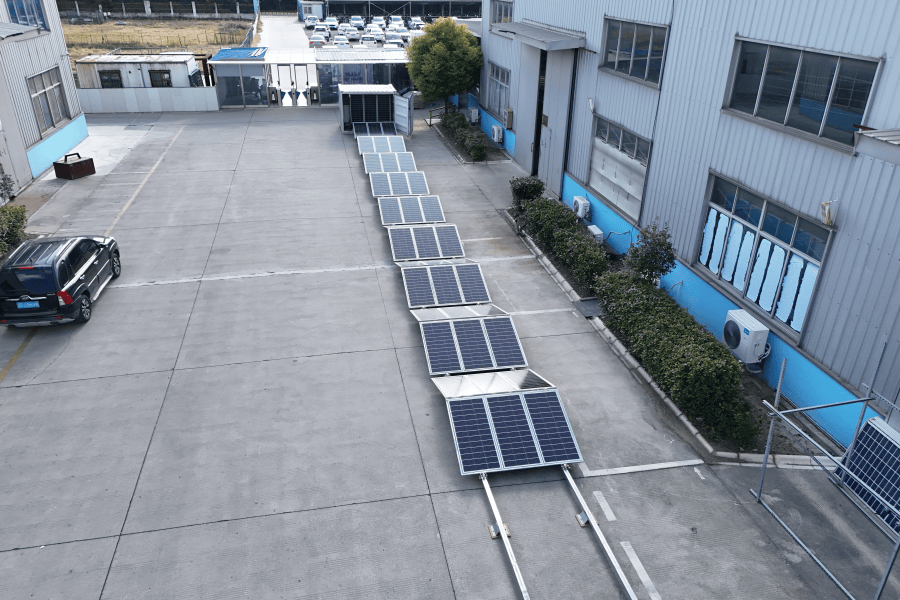
Table of Contents
- The Growing Power Problem for Data Centers
- Beyond Generators: Why Traditional Backup Falls Short
- The All-in-One Mobile Container: A Game-Changer for Backup Power
- Key Factors in Your Mobile Power Container Comparison
- Real-World Proof: A Case from Northern Germany
- Making the Right Choice for Your Facility
The Growing Power Problem for Data Centers
Honestly, if you're managing a data center in the US or Europe right now, you're likely facing a perfect storm. The demand for compute power is skyrocketing, grid reliability feels more unpredictable, and sustainability targets are staring you down from every boardroom presentation. I've seen this firsthand on site: the anxiety when storm season hits, or when a local utility announces rolling brownouts. Your backup power system isn't just an insurance policy anymore; it's a critical component of your operational resilience and, frankly, your bottom line.
The International Energy Agency (IEA) notes that data centers' electricity consumption could double by 2026. That's a staggering load to manage, and the traditional "set it and forget it" approach to backup power simply doesn't cut it in this new reality. The pressure is on to find solutions that are not only reliable but also faster to deploy, more efficient, and adaptable to future needs.
Beyond Generators: Why Traditional Backup Falls Short
For decades, the diesel generator has been the king of backup. But let's have a coffee-chat about its real cost. It's not just the capital expense. It's the ongoing fuel contracts, the stringent emissions compliance (especially in places like California or the EU), the noise permits, the maintenance cycles, and the sheer footprint. When a generator kicks in, you're looking at seconds of interruption - which can be an eternity for critical servers - and then you're burning expensive fuel at a terrible efficiency.
The other common route, building a permanent, fixed Battery Energy Storage System (BESS) from the ground up, comes with its own headaches. The construction timeline can stretch for 12-18 months. You're dealing with complex civil works, separate procurement for containers, battery racks, power conversion systems (PCS), and thermal management units. Coordinating all that, ensuring everything meets UL 9540 or IEC 62933 standards, and getting it all commissioned is a massive project in itself. What if your power needs change in three years? You're somewhat locked in.
The All-in-One Mobile Container: A Game-Changer for Backup Power
This is where the conversation around the Comparison of All-in-one Integrated Mobile Power Container for Data Center Backup Power gets really interesting. Think of it as a "data center power slice" in a box. Instead of a construction site, you get a fully integrated, tested, and certified system delivered on a truck.
At Highjoule, we've moved beyond just selling battery racks. Our mobile containers arrive with the batteries, the PCS, the fire suppression (we're talking about advanced aerosol or early detection gas systems that meet NFPA 855), the thermal management (liquid cooling for high C-rate performance, honestly the only way to go for fast response backup), and the control system - all pre-wired and pre-tested in a single, UL/IEC-compliant enclosure. It's plug-and-play for critical power. I've supervised deployments where we went from empty pad to grid-sync in under 8 weeks, not 18 months.
Key Factors in Your Mobile Power Container Comparison
When you're comparing these solutions, don't just look at the price per kWh on the spec sheet. You need to dig into the total lifecycle value. Here's what we always discuss with our clients:
- Deployment Speed & Flexibility: This is the biggest advantage. Is it truly pre-integrated? Can it be relocated if your campus layout changes? This flexibility protects your long-term investment.
- Safety & Certification: This is non-negotiable. The entire container, not just its components, must be certified to UL 9540 or the relevant IEC standards. Ask for the certification documents. Check the fire suppression design - is it a generic solution or engineered for dense lithium-ion battery arrays?
- Thermal Management: This is the heart of reliability and longevity. Air-cooling might look cheaper upfront, but for the high C-rate discharges needed in backup events (think going from 0 to 100% power in milliseconds), liquid cooling is superior. It maintains optimal cell temperature, preventing degradation and hotspots. Over 10 years, this difference in battery degradation can massively impact your Levelized Cost of Energy (LCOE).
- Grid Intelligence: Can it do more than just backup? The best systems offer dual-mode operation. During normal times, they can perform peak shaving, buying cheap grid power to charge and discharging during expensive peak hours - paying for themselves. Then, in a millisecond, they switch to backup mode. This revenue generation is a key part of the value proposition.
- Local Support & Service: A container isn't an appliance. You need a provider with local service hubs and engineers who understand both the technology and your local grid codes (like IEEE 1547 in the US). Our team in Stuttgart, for example, supports all our Central European deployments with 24/7 remote monitoring and a physical presence when needed.
Real-World Proof: A Case from Northern Germany
Let me give you a concrete example. We worked with a hyperscale data center developer in Schleswig-Holstein, Germany. Their challenge was classic: they had secured a site with great connectivity, but grid reinforcement was 2 years out. They needed 10 MW/20 MWh of backup capacity to start operations, but also wanted to participate in the German primary control reserve market for revenue.
A traditional build was too slow. They compared several mobile container options. The winner was a solution based on Highjoule's fully integrated platform. Why? Speed: Four 2.5 MW containers were deployed and interconnected in 10 weeks. Compliance: Full IEC 62933 certification smoothed the permitting process. Performance: The liquid-cooled system allowed for sustained high C-rate output during testing and could seamlessly switch between grid services and backup modes. Today, that system isn't just sitting idle; it's generating significant grid service income while standing guard as their primary backup.

Making the Right Choice for Your Facility
So, when you're deep in your own Comparison of All-in-one Integrated Mobile Power Container for Data Center Backup Power, shift the question. Don't ask "Which battery is cheapest?" Ask, "Which total solution gets me secure, compliant power the fastest, with the lowest total cost of ownership and the most operational flexibility?"
Look for a partner that treats the container as a unified system, not a collection of parts. Ask them about their thermal management strategy under peak backup load. Press them on local service capabilities and their track record with your local utility interconnections. The right mobile power solution should feel less like a piece of equipment and more like a strategic extension of your operations team - scalable, smart, and utterly dependable.
What's the biggest bottleneck you're facing in securing your data center's power future? Is it timeline, capex, or finding a solution that's both robust and revenue-generating? The technology to solve it is already here, on wheels.
Tags: UL Standard BESS Data Center Backup Microgrid Mobile Power Container Energy Storage System
Author
James Zhang
20+ years agricultural energy storage engineer / Highjoule CTO