
Black Start Hybrid Solar-Diesel Systems for Reliable EV Charging
Contents
- The Silent Roadblock to Mass EV Adoption
- When the Grid Goes Dark: More Than Just an Inconvenience
- The Hybrid Bridge: Solar, Diesel, and a Smart Brain
- A Peek Under the Hood: What Makes a System Truly "Black Start Capable"?
- Beyond Theory: A Glimpse from the Field
- Your Next Step Towards Uninterrupted Power
The Silent Roadblock to Mass EV Adoption
Let's be honest. Over my two decades on sites from California to Bavaria, the conversation around EV charging infrastructure has been laser-focused on one thing: charge speed. How fast can we get drivers back on the road? But there's a more fundamental question we've been overlooking, one that becomes painfully obvious when you're standing at a remote highway charging hub or a critical fleet depot: what happens when the grid isn't there at all?
The push for renewables is fantastic, but it introduces variability. Pair that with aging grid infrastructure and increasing climate-related disruptions, and you've got a recipe for instability. For a gas station, a short outage is a nuisance. For an EV charging station, it's a complete operational halt. No grid, no electrons, no revenue. Period. This isn't a future hypothetical; it's a present-day pain point I've seen firsthand delaying projects and eroding operator confidence.
When the Grid Goes Dark: More Than Just an Inconvenience
Let's agitate that pain point a bit. Imagine you're a commercial operator. You've invested heavily in a bank of DC fast chargers to serve a growing EV fleet. A storm knocks out local distribution, or a grid fault triggers a protective shutdown. Now you're facing:
- Direct Revenue Loss: Every minute of downtime is money lost. For a 4-station site, even a 4-hour outage can mean thousands in foregone charging fees.
- Contractual Penalties: More fleets are demanding uptime guarantees in their charging service agreements. Grid dependency makes those promises risky.
- Reputational Damage: A stranded driver tweets, and suddenly your "reliable" station is infamous. Trust is hard to rebuild.
- The Diesel Dilemma: The classic backup is a diesel generator. But running it 24/7 for potentially days is financially and environmentally unsustainable. Fuel costs soar, emissions skyrocket, and noise complaints roll in. It's a lose-lose.
The data backs this up. The National Renewable Energy Laboratory (NREL) has highlighted that resilience is becoming a primary driver for distributed energy resource adoption, not just cost savings. We're moving beyond pure economics to risk mitigation.
The Hybrid Bridge: Solar, Diesel, and a Smart Brain
This is where the concept of a Black Start Capable Hybrid Solar-Diesel System isn't just another tech spec - it's the operational lifeline your charging station needs. Honestly, it's the most elegant solution I've seen for this specific challenge. The philosophy is simple but powerful: use each component for what it does best.
Think of it as a symphony. Solar PV is your first violin, providing clean, low-cost energy during the day and charging the battery. The Battery Energy Storage System (BESS) is your conductor and percussion section - it regulates frequency, provides instant power, and stores energy. The diesel generator? It's the reliable double bass, sitting silently in the wings, only coming in for powerful, sustained support when absolutely necessary.
The magic word is "Black Start." This isn't just backup power. A true black-start system can boot itself up from a complete shutdown - from a state of zero energy - without relying on the grid. It's like having a jump-starter for your entire microgrid. The BESS, with its instant response, provides the initial "cranking" power to start the generator and synchronize the system, creating an island of power where there was none.

A Peek Under the Hood: What Makes a System Truly "Black Start Capable"?
From an engineer's perspective, making this work reliably is where the rubber meets the road. It's more than just wiring components together. Here's what we focus on at Highjoule when designing these systems:
- BESS C-Rate & Surge Capacity: That initial "jolt" to start a cold diesel gen-set requires high discharge power. We spec batteries with a high C-rate - meaning they can discharge their stored energy very quickly - to handle that surge without breaking a sweat. Oversizing on power capacity is often more critical than energy capacity here.
- Intelligent Thermal Management: A black-start sequence is a high-stress event. The battery management system (BMS) and thermal controls must be robust. We've learned that passive cooling often isn't enough; active liquid cooling maintains optimal cell temperature during these high-power bursts, extending battery life and ensuring reliability when you need it most.
- The Brain: Advanced Controller: This is the system's quarterback. It must execute a flawless start-up sequence, manage the handoff between battery and generator, and optimize fuel use. It decides when to run the generator at its most efficient point to recharge the battery, not just to meet immediate load. This dance is what slashes your Levelized Cost of Energy (LCOE) and diesel consumption.
- Safety & Standards First: In the US and EU, this isn't optional. Every component, especially the BESS, must be certified to standards like UL 9540 and IEC 62619. The system integration itself needs to meet IEEE 1547 for grid interconnection and islanding. This is non-negotiable for insurance, permitting, and frankly, for sleeping well at night knowing your site is safe.
Beyond Theory: A Glimpse from the Field
Let me give you a real example, though I'll keep the client name confidential. We deployed a system for a logistics company in Northern Germany. They have a depot with 12 electric delivery vans that charge overnight. Their challenge? Frequent brief grid dips at their rural location would disrupt charging, delaying fleet deployment each morning.
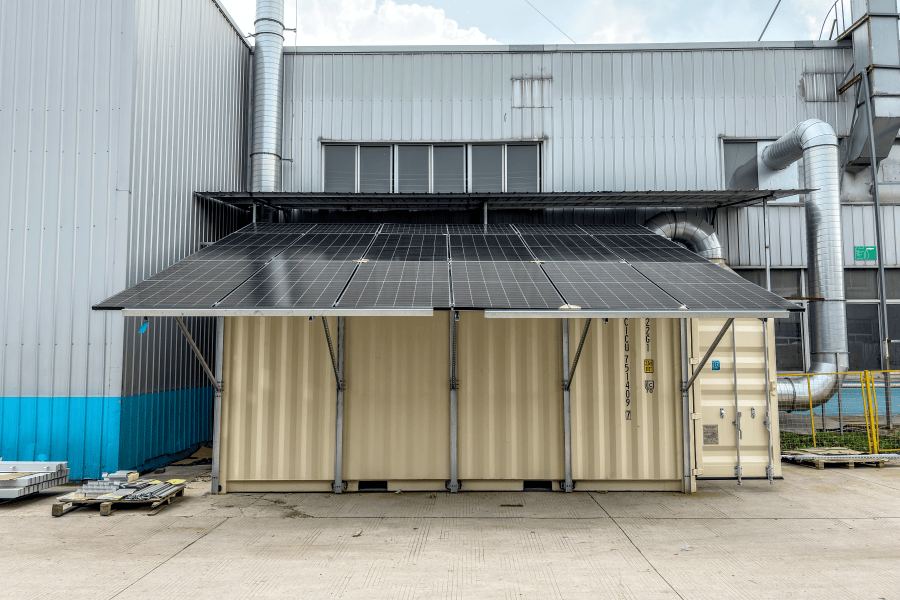
We installed a containerized 500 kWh / 250 kW BESS coupled with their existing rooftop solar and a new 150 kVA diesel generator. The system is configured for seamless islanding. Now, when a grid fault occurs, the BESS instantaneously takes over, maintaining charging without a blink. For longer outages, the controller initiates a black-start sequence if needed, using the battery to start the generator only after the battery reaches a certain discharge threshold. The result? Their charging uptime went to 99.9%, and they've cut their generator runtime by over 70%, saving significantly on fuel and maintenance. The site manager told me it's the "invisible insurance policy" he never knew he needed.

Your Next Step Towards Uninterrupted Power
The comparison between a standard grid-tied charger and a black-start capable hybrid system isn't just about technology; it's about business philosophy. Are you building a cost-sensitive asset, or are you building a resilient, revenue-generating fortress? For mission-critical EV charging, the choice is becoming clear.
The technology is proven, the standards are in place, and the need is only growing. The real question is, how much revenue and customer goodwill are you willing to risk on the next grid disturbance? What would full charging resilience allow you to promise your customers that your competitors can't?
Tags: UL Standard BESS LCOE Black Start Microgrid Hybrid Solar-Diesel EV Charging
Author
James Zhang
20+ years agricultural energy storage engineer / Highjoule CTO