
Environmental Impact of C5-M Anti-corrosion BESS for Remote Island Microgrids
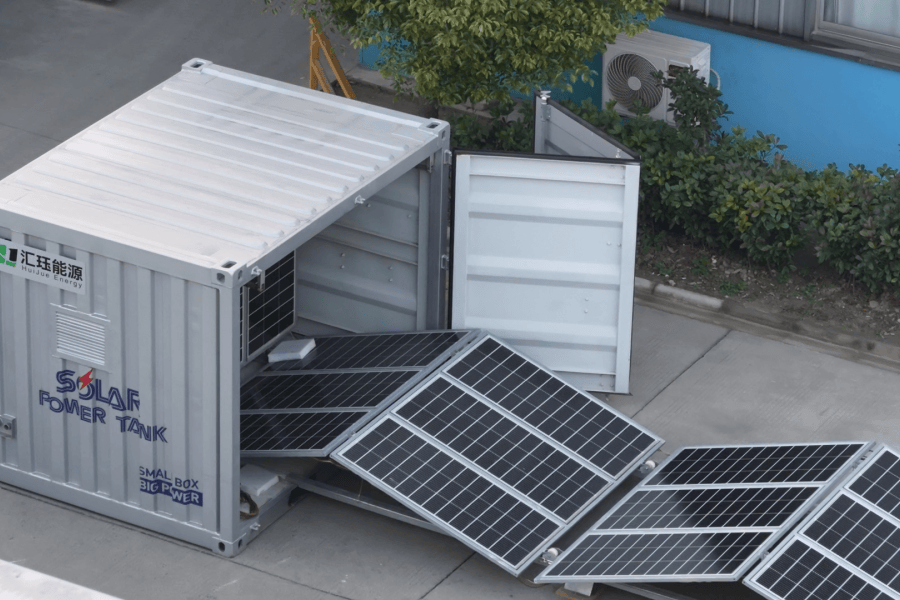
Beyond the Salt Spray: Why Your Remote Island Microgrid's Container is an Environmental Decision
Hey there. Let's be honest, when you're planning a battery storage system for a remote island community, the container it comes in is probably the last thing on your mind. You're focused on the battery chemistry, the inverter efficiency, the grid code compliance - the "sexy" tech specs. I get it. I've spent over two decades on sites from the Scottish Isles to the Caribbean, and I've seen this firsthand. But here's the hard truth we've learned: that steel box housing your precious lithium-ion batteries isn't just a box. It's your first and most critical line of defense against the environment, and its own environmental footprint can make or break your project's long-term viability and sustainability promise.
Quick Navigation
- The Silent Killer: Corrosion in Paradise
- The Real Cost Isn't Just Financial
- Building a Fortress, Not Just a Box: The C5-M Standard
- Lessons from the Field: A Pacific Island Story
The Silent Killer: Corrosion in Paradise
Remote islands offer the perfect conditions for renewable energy. They also offer the perfect storm for metal corrosion: constant salt-laden air, high humidity, intense UV radiation, and sometimes even volcanic compounds in the atmosphere. A standard, off-the-shelf industrial container might look robust on day one, but I've seen them start to show rust blooms in under 18 months in aggressive marine environments. This isn't a cosmetic issue.
Once corrosion compromises the structural integrity of the container, you're looking at a cascade of risks. Moisture ingress can lead to electrical faults, ground faults, and catastrophic thermal events. The thermal management system - the HVAC or liquid cooling unit that keeps your battery at its optimal temperature - has to work exponentially harder, spiking your auxiliary energy consumption (your "parasitic load"). Suddenly, a system designed to optimize clean energy is wasting it just to keep itself alive. According to a National Renewable Energy Laboratory (NREL) report on offshore energy systems, corrosion-related failures are a leading cause of increased Levelized Cost of Storage (LCOS) in coastal deployments.
The Real Cost Isn't Just Financial
Let's talk about impact. When a standard container fails prematurely, you face a nightmare scenario:
- Project Downtime: Replacing a container isn't a quick swap. It means a full system shutdown, complex logistics to a remote location, and potential loss of critical grid stability for the community.
- Waste & Embodied Carbon: That giant steel box becomes scrap. All the energy and carbon emissions embodied in its manufacturing and transport are wasted. You're now manufacturing and shipping another one, doubling the upfront carbon footprint of your enclosure.
- Community Trust: On an island, the microgrid isn't just infrastructure; it's the lifeblood. Repeated failures erode trust in the renewable transition, pushing communities back towards reliance on expensive, polluting diesel gensets.
The environmental impact isn't just about leaks or spills (though containment is crucial). It's about the total lifecycle: manufacturing, shipping, protecting the asset for 15-20 years, and eventual decommissioning.

Building a Fortress, Not Just a Box: The C5-M Standard
This is where the specification gets serious. For these environments, "weatherproof" or "IP55" isn't enough. You need a container built to the C5-M anti-corrosion classification as defined by ISO 12944. This isn't just a thicker coat of paint.
C5-M is the highest category for severe marine and industrial atmospheres. It mandates a multi-stage process: abrasive blasting to a pristine surface, a zinc-rich primer for cathodic protection, multiple intermediate epoxy coats, and a final topcoat formulated for extreme UV and chemical resistance. Every weld, every seam, every bolt is treated. At Highjoule, our C5-M containers undergo thousands of hours of salt spray chamber testing before they ship. We build them to be a 20-year asset, not a consumable.
The payoff is profound. A truly corrosion-resistant container:
- Protects the billion-cycle investment inside (the batteries).
- Maintains optimal thermal efficiency, keeping parasitic loads low.
- Eliminates the waste and carbon hit of mid-life replacement.
- Is designed for eventual decommissioning, with material recycling in mind from the start.
Lessons from the Field: A Pacific Island Story
A few years back, we worked on a microgrid for a small island chain aiming to cut diesel use by over 70%. The initial bid from another vendor used a standard container. During our review, we pushed hard for a C5-M spec. The upfront cost was about 15% higher. Fast forward three years: I visited the site. Our container looked as it did on installation day. A competing system on a neighboring island, using a standard "marine-grade" (but not C5-M) enclosure, already showed significant corrosion around the HVAC unit and door seals. Their O&M team was already budgeting for premature replacement and dealing with humidity alarms.
The lesson? The true LCOE (Levelized Cost of Energy) calculation must include the replacement cost and downtime risk of the enclosure. That initial 15% premium for C5-M bought decades of peace of mind and protected the overall project ROI. It was the sustainable choice, both economically and environmentally.
Expert Insight: It's About Total Lifecycle Impact
As an engineer on the ground, my view is simple: sustainability in energy storage is holistic. You can't claim a green project if the system's housing is rotting away, demanding constant repair and early replacement. The "C-rate" and cycle life of your battery are irrelevant if the environment inside the container becomes hostile due to a failed seal or rust penetration.
When we design systems at Highjoule for remote islands, we start with the enclosure specification. It dictates the ambient conditions for all the internal components - the batteries, the thermal management system, the fire suppression. We design to UL 9540 and IEC 62933 standards, but we also engineer for the real-world, harsh environment the standards can't fully simulate. This means passive ventilation designs that minimize salt intake, stainless steel fittings, and integrated secondary containment that exceeds local regulations.
The goal is to deliver a system where the container itself has a service life matched to the core BESS assets. This minimizes embodied carbon waste, maximizes energy efficiency over the full lifecycle, and delivers on the true promise of a sustainable, resilient microgrid.
So, next time you're evaluating a BESS proposal for a coastal or island site, dig into the container specs. Ask for the corrosion certification. Ask about the paint system warranty. It might feel like a small detail, but trust me, it's the decision that determines whether your project is a long-term environmental asset or a future liability. What's the one specification you now realize you can't compromise on for your next remote deployment?
Tags: UL Standard BESS Renewable Energy C5-M Anti-Corrosion Microgrid Environmental Impact Remote Island
Author
James Zhang
20+ years agricultural energy storage engineer / Highjoule CTO