
Black Start Capable Off-Grid Solar Generators: The Grid Resilience Solution for Utilities
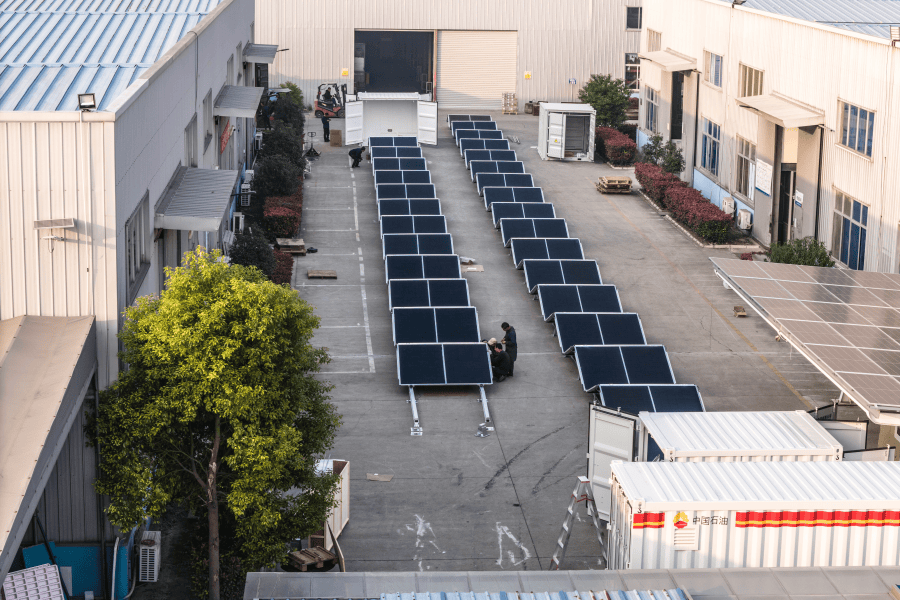
Table of Contents
- The Silent Grid Problem: When the Lights Go Out for Good
- Beyond Backup Power: What "Black Start" Really Means for Utilities
- Comparing the Options: Solar + Storage vs. Traditional Generators
- The Thermal Management Factor: Why It's a Deal-Breaker
- A Case in Point: Lessons from a European Microgrid
- Making the Economic Case: It's About LCOE, Not Just Capex
- What to Look For in a Modern Black Start Solution
The Silent Grid Problem: When the Lights Go Out for Good
Let's be honest, over a coffee chat, most utility folks I talk to share a quiet, growing concern. It's not just about outages anymore. It's about the character of those outages. We're seeing more frequent extreme weather events, and the old playbook - where a centralized power plant fires up its diesel gensets and re-energizes the grid section by section - is showing its age. The real pain point? The "last mile" of grid restoration, especially for critical infrastructure like hospitals, water treatment plants, and communication hubs in remote or islanded areas. I've been on site after a major storm, and the waiting game isn't just inconvenient; it's economically devastating and, frankly, a public safety crisis.
Beyond Backup Power: What "Black Start" Really Means for Utilities
Here's where terminology matters. A standard backup generator provides power to a load when the grid is down. A black start capable system does something fundamentally different: it can create a stable voltage and frequency island from a completely dead state and then actively synchronize to re-energize a section of the public utility grid. This isn't just an off-grid solar generator; it's a grid-forming asset. According to a pivotal report by the National Renewable Energy Laboratory (NREL), the ability to integrate inverter-based resources like solar-plus-storage for black start duties is a key pathway to a more resilient and flexible grid. The challenge has always been finding a solution that's both reliably autonomous and economically sensible.
Comparing the Options: Solar + Storage vs. Traditional Generators
So, when we do a real-world comparison for public utility grids, what are we looking at?
| Feature/Capability | Traditional Diesel Genset (for Black Start) | Advanced Off-Grid Solar + BESS (Black Start Capable) |
|---|---|---|
| Start-up Time & Reliability | Minutes, but dependent on fuel supply & maintenance cycle. Can fail in cold/wet conditions. | Sub-second response from battery. Solar generation is fuel-independent. Honestly, the reliability shift is dramatic. |
| Operational Cost & Fuel | High. Requires secured, on-site fuel logistics, which is a major vulnerability during widespread disasters. | Near-zero marginal cost. "Fuel" is sunlight. Storage provides the instantaneous power. |
| Grid-Forming Capability | Inherent (rotational inertia). | Advanced inverters must be specifically engineered for this (IEEE 1547-2018 is your bible here). Not all BESS can do it. |
| Emissions & Noise | High. Local emissions and noise can be problematic, especially near communities. | Zero operational emissions. Silent operation. This matters more and more for permitting. |
| Maintenance & Lifespan | Intensive, engine-based maintenance. Shorter lifespan under frequent cycling. | Solid-state, predictive maintenance. Long lifespan (15-20 years) with proper battery management. |
The gap is narrowing fast, but the critical differentiator is in the intelligence of the power conversion system (PCS) and the battery's ability to deliver high surge currents.
The Thermal Management Factor: Why It's a Deal-Breaker
This is where my 20 years in the field screams for attention. Everyone talks about battery chemistry and power rating (C-rate). But I've seen more black start attempts fail because of poor thermal management than anything else. A black start event demands a huge, sustained current draw from the battery to energize transformers and cables. This generates immense heat. If the BESS container's cooling system can't handle that thermal load, the system will derate or shut down right in the middle of the recovery. It's a catastrophic failure mode. At Highjoule, we design our containerized systems with N+1 redundancy in cooling, using direct liquid cooling for the battery racks. It's not a nice-to-have; for a utility-grade black start asset, it's the core of reliability.
A Case in Point: Lessons from a European Microgrid
Let me give you a real example. We worked with a municipal utility in Northern Germany. Their challenge was a remote sewage treatment plant that, if offline for >6 hours, would create an environmental hazard. They had an old diesel genset that failed more often than not during tests.
We deployed a 1.2 MWh, black start capable BESS paired with a 500 kWp solar canopy. The system is designed to form a stable 50Hz grid from a total blackout, using the battery's inverter. It then sequentially energizes the plant's massive motors (the big load surge we talked about), and finally, the solar kicks in to sustain operations and recharge the battery.
The key to approval? Meeting the German BDEW (their utility association) mid-voltage guidelines and having full UL 9540 (system level) and UL 9540A (fire hazard) certifications. Regulators and insurers demanded it. The system has now successfully performed multiple automated black start tests and one real, weather-induced outage. The utility manager told me his peace of mind is now worth more than the capital cost.

Making the Economic Case: It's About LCOE, Not Just Capex
Sure, the upfront capital expenditure (CapEx) for a solar-plus-storage black start system can be higher than a diesel genset. But if we're not looking at Levelized Cost of Energy (LCOE) and total cost of ownership, we're doing the math wrong. A diesel genset for black start sits idle 99.9% of the time, degrading, requiring fuel maintenance, and providing zero value. Our solar-BESS hybrid? It operates daily. It can provide peak shaving, frequency regulation (FERC 841 is enabling this in the US), and renewable energy integration when it's not standing guard for a blackout. It transforms a cost center (backup power) into a revenue-generating or cost-saving grid asset. The International Energy Agency (IEA) consistently highlights this stacked-value model as the key driver for storage economics.
What to Look For in a Modern Black Start Solution
So, for my utility colleagues evaluating options, here's my field checklist:
- Grid-Forming Inverter Certification: Does it explicitly meet IEEE 1547-2018 or equivalent EU grid codes for islanding and re-synchronization?
- Safety First: Demand full UL 9540/9540A or equivalent IEC 62933 standards. Don't compromise.
- Thermal System Spec: Ask for the thermal derating curve under maximum 1-hour discharge. The answer tells you everything.
- Autonomy & Fuel: Model your worst-case scenario (e.g., 3 days of cloud cover). Size the solar and storage for that, not just the instantaneous load.
- Local Support: Who shows up at 3 AM during a storm to support the system? Choose a partner with boots-on-the-ground service in your region.
At Highjoule, we've built our entire product line around this utility-grade resilience. It's not just about selling a container; it's about providing a guaranteed slice of energy certainty. The transition from diesel to intelligent, renewable-based black start isn't just coming - it's already here, and it's proving itself more reliable and smarter every day.
What's the single biggest vulnerability in your current grid restoration plan that keeps you up at night?
Tags: UL Standard BESS Black Start Grid Resilience Off-grid Solar Utility-scale Storage
Author
James Zhang
20+ years agricultural energy storage engineer / Highjoule CTO